
Preserving the Native Joint: Double Pelvic Osteotomy (DPO) in a 6-Month-Old Golden Retriever with Hip Dysplasia
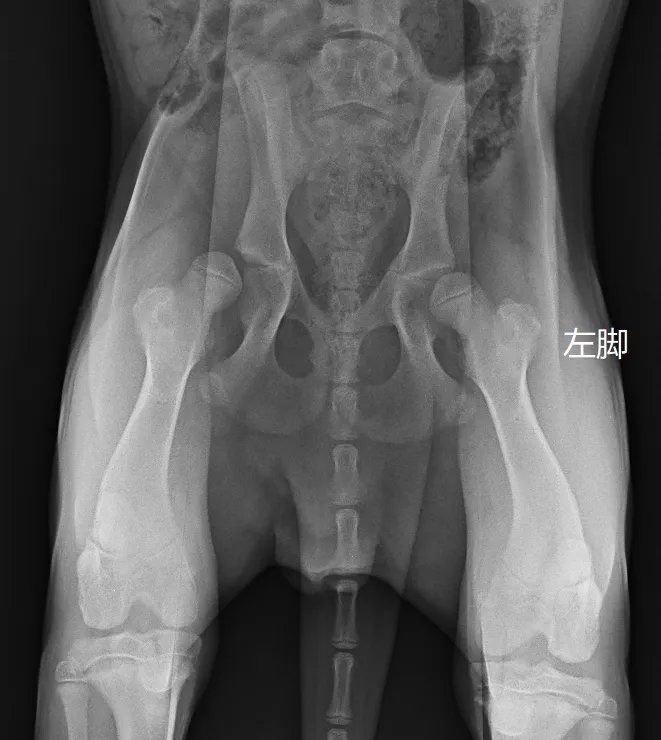
Many in the veterinary community know me as someone who performs a high volume of total hip replacements. But total hip replacement is ultimately a salvage procedure—we replace a joint only when the native cartilage is irrevocably destroyed. My true clinical priority is always joint preservation: saving the animal's own, natural hip whenever possible. In this case, a 6-month-and-24-day-old Golden Retriever (23 kg) presented with abnormal hindlimb ambulation. Comprehensive screening under sedation revealed significant bilateral laxity. The right hip had extreme laxity (DI 1.03), ruling out osteotomy, but the left hip (DI 0.71, subluxation angle 18°, reduction angle 37°) sat squarely within the golden window for Double Pelvic Osteotomy (DPO). By performing a DPO on the left pelvis, I rotated the acetabulum to dramatically increase dorsal coverage over the growing femoral head. At the two-month follow-up, the dog's left thigh muscle diameter was 20% larger than the non-operated right side, demonstrating restored weight-bearing and proving the immense power of early proactive joint preservation.
Bilateral Total Hip Replacement in a Corgi: Navigating Thick Fat, Muscular Power, and Unique Breed Anatomy
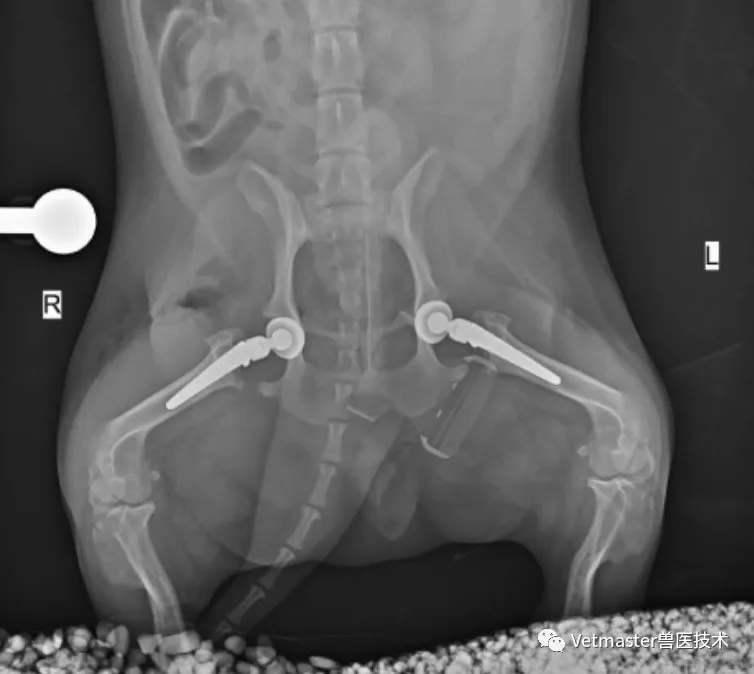
Corgis are an orthopedic paradox: powerful musculature and short, stout limbs coupled with long lumbar spines and a notorious genetic predisposition to joint laxity. In this case, a 1-year-old intact male Corgi weighing 14 kg was brought to Guangzhou Boss Animal Hospital due to pronounced "waist swaying" during ambulation. Sedated examination and digital imaging confirmed severe bilateral hip laxity without end-stage bone deformity. Operating on Corgis is never routine: their dense subcutaneous adipose layers, deep surgical corridors, and wide medullary canal proportions demand meticulous execution. Using the Vetmaster biological dual-mobility hip system, I performed sequential bilateral total hip replacements (THR) spaced one month apart. Postoperative CT confirmed near-perfect mechanical symmetry—a 44° cup abduction on the left and 43° on the right—completely eliminating his gait instability and restoring true, pain-free athletic power.