
THR & TKA Surgical Cases
Total Hip Replacement (THR) & Total Knee Arthroplasty (TKA) surgical cases.
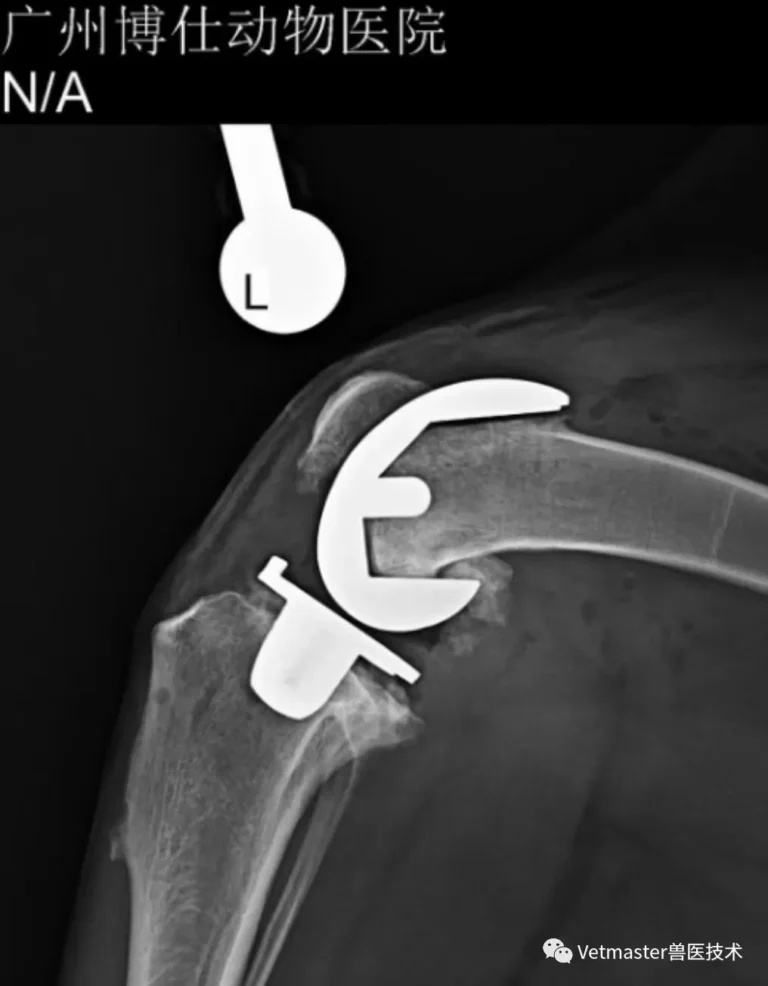
Total Knee Arthroplasty (TKA) in a 41 kg Doberman Pinscher: Overcoming End-Stage Osteoarthritis with a Biological Dual-Mobility System
When an owner drives hundreds of miles from outside the province to bring a 41 kg adult male Doberman Pinscher to Guangzhou Boss Animal Hospital, you know you are dealing with a severe, chronic crisis. The dog had suffered from recurrent bouts of severe knee swelling and lameness that temporarily waxed and waned, masking an insidious, chronic cranial cruciate ligament rupture. By the time he reached my operating table, the left stifle was in end-stage collapse—encased in massive osteophytes with complete destruction of both the femorotibial and patellofemoral articular cartilage. In a destroyed joint like this, standard TPLO is useless because it cannot heal eburnated, grinding bone. Using our VVV digital surgical planning software, I mapped out the reconstruction and implanted a Size 40 Vetmaster biological dual-mobility total knee replacement. Despite dense fibrous joint contractures that made joint space distraction an intense physical and technical battle, we achieved textbook alignment with an exact 12° posterior tibial slope. Today, this massive working dog has regained painless, powerful athletic function.
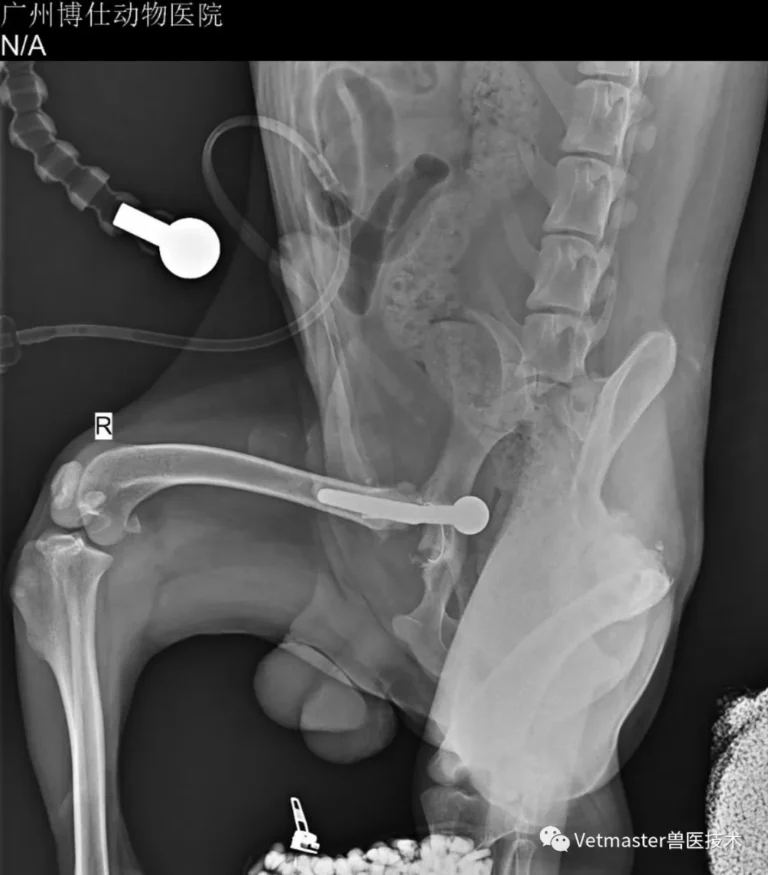
Salvaging a Disaster: Revision of a Four-Times Luxated Total Hip Replacement in a Border Collie Using a Dual-Mobility System
When this desperate owner drove over 1,000 kilometers to bring his 5.5-year-old, 22.5 kg Border Collie to Guangzhou Boss Animal Hospital, the dog was facing his fifth hip surgery in just over two months. Following an initial hybrid replacement at another clinic, the dog had suffered four consecutive dorsal hip luxations, each recurring within two to five days despite repeated attempts to alter cup angles down to an extreme 25°. Analyzing the patient's CT, I identified a striking biomechanical contradiction: an overly closed cup should cause ventral luxation, yet this dog kept popping out dorsally—proving the dorsal muscular and capsular envelope had been completely destroyed. My colleague Dr. Yu Jiezhou and I revised the joint using the Vetmaster cementless dual-mobility system reinforced with synthetic ligament suspension. By replacing mechanical friction with dual-mobility jump distance, we achieved rock-solid stability—demonstrated intraoperatively by gently lifting the dog off the table by the femoral neck without dislocation. Today, the dog walks soundly, free from the revision nightmare.
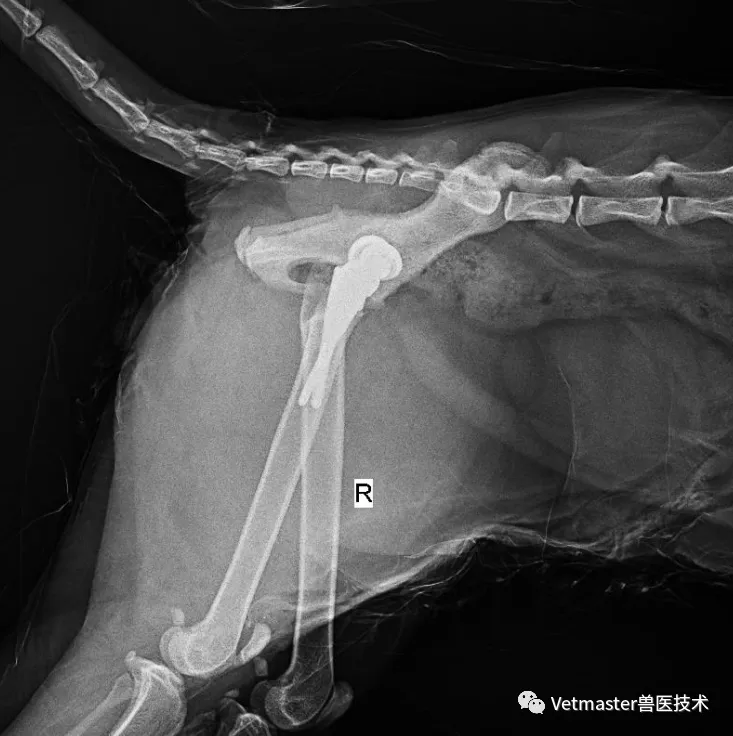
Sequential Bilateral Biological Total Hip Replacement in a British Shorthair Cat: Anatomy, Technique, and Overcoming Contralateral Artifacts
Feline hip dysplasia is vastly underdiagnosed because cats are masters at masking chronic orthopedic pain. In this case, a 2-year-old male British Shorthair weighing 5.8 kg presented with severe bilateral hip laxity, advanced articular wear, and marked lameness. Cats possess unique anatomy: an exceptionally tiny acetabulum paired with a straight, "stovepipe" femoral canal, along with explosive jumping biomechanics requiring extreme range of motion. To restore lifelong, pain-free athletic ability without dislocation, I performed sequential bilateral cementless total hip replacements (THR) using the Vetmaster dual-mobility system (12 mm cup, #3 stem). This report details the technical execution of both stages—including the specific intraoperative challenge during the second stage, where the contralateral metal prosthesis blocked lateral fluoroscopic cup measurement, requiring precise C-arm patient leveling and mechanical alignment guidance.

Custom 3D-Printed Biological Total Knee Arthroplasty (TKA) in a Dog: Clinical Case and 2.5-Month Outcome
In this case, I document what was the first reported biological canine total knee arthroplasty (TKA) using custom 3D-printed implants and disposable patient-matched instrumentation in China. The patient, a 25 kg Husky, suffered from end-stage osteoarthritis and severe meniscal damage triggered by chronic cranial cruciate ligament rupture. Facing a complete lack of off-the-shelf knee prostheses suited to this dog, my surgical team at Guangzhou Boss Animal Hospital collaborated with Associate Professor Zhang Jun and the materials engineering team at the Guangdong Academy of Sciences. Together, we designed and 3D-printed a cementless CoCrMo/porous titanium/Vitamin E-stabilized polyethylene implant system. Following 1:1 benchtop simulation, we successfully placed the prosthesis. By day one post-op, the dog was weight-bearing without pain; at 2.5 months, he was galloping freely off-leash across the grass.