
The Enigmatic Joy of Men: In Pursuit of the "Sublime and Useless"
People often joke that once a man has food on the table, his ultimate happiness comes from obsessing over things that look grand, expensive, and completely "useless." Looking back at my life, I have always been that restless kid driven by an insatiable hunger to understand how the physical world works. From certified gemstone appraisal and micro-mechanical watchmaking to 30-meter single-breath freediving (and somehow, a mermaid certification) and multi-night deep-sky astrophotography, these pursuits might look like chaotic hobbies on the surface. But to me, surgery, physics, and exploration are all cut from the exact same cloth: true joy begins the moment you refuse to stay on the surface and push deep enough to decode the underlying mechanics of reality.
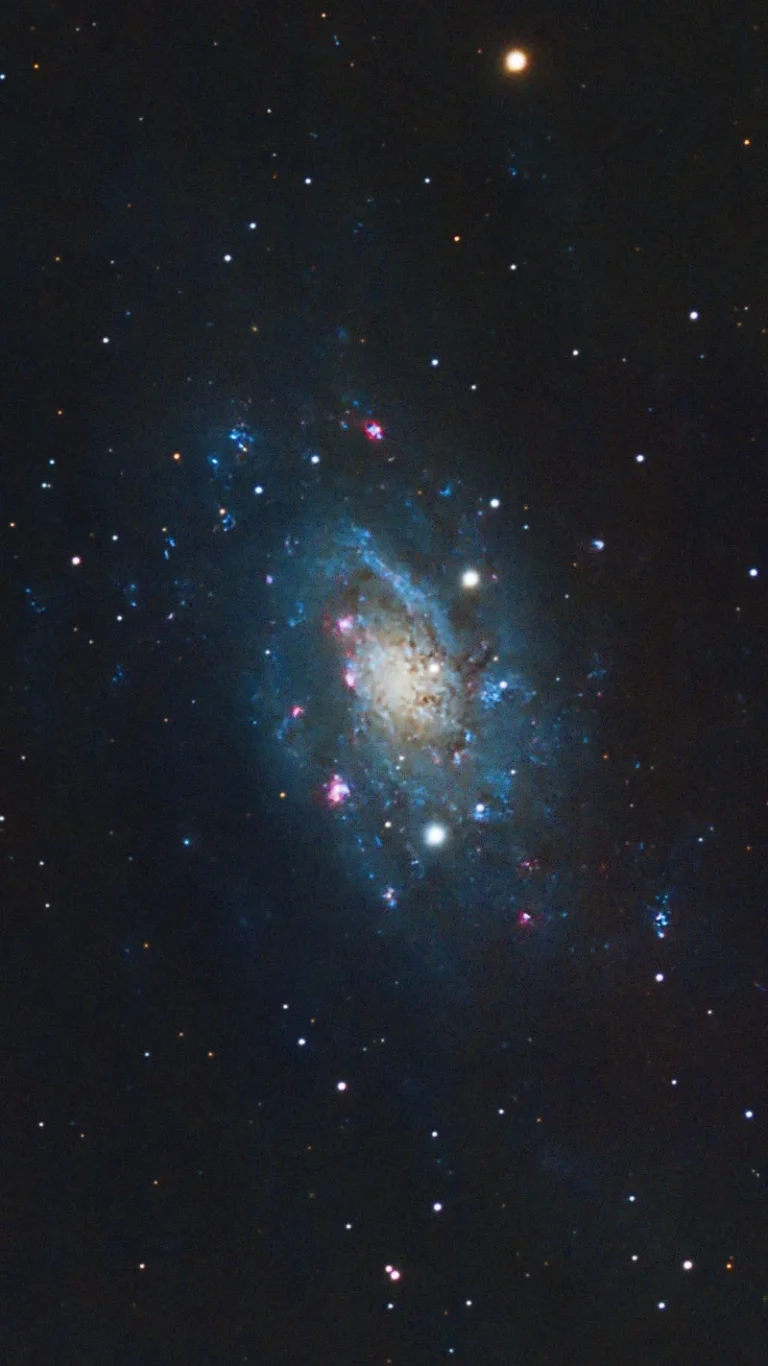
8 Million Light-Years Through Balcony Smog: 60 Hours on Barred Spiral Galaxy NGC 2403 (C7)
In my line of work, precision is everything. But sometimes, you need a pursuit where the payoff has zero practical utility—where the only return on investment is sheer, unadulterated curiosity. Back in early 2023, I set my sights on NGC 2403 (C7), an intermediate barred spiral galaxy spinning 8 million light-years away in Camelopardalis. Shooting from my northeast-facing balcony in downtown Guangzhou under crippling Bortle 7–9 light pollution, the background skyglow was so fierce that any exposure over 120 seconds would completely blow out the frame. My only option was brute force: shooting over 1,000 individual frames to accumulate 60 hours of raw data, stacked on an M1 Ultra Mac Studio. The resulting image certainly won't threaten Hubble or James Webb, but extracting that ancient cosmic whirlpool through city smog with my own hands was intensely rewarding.
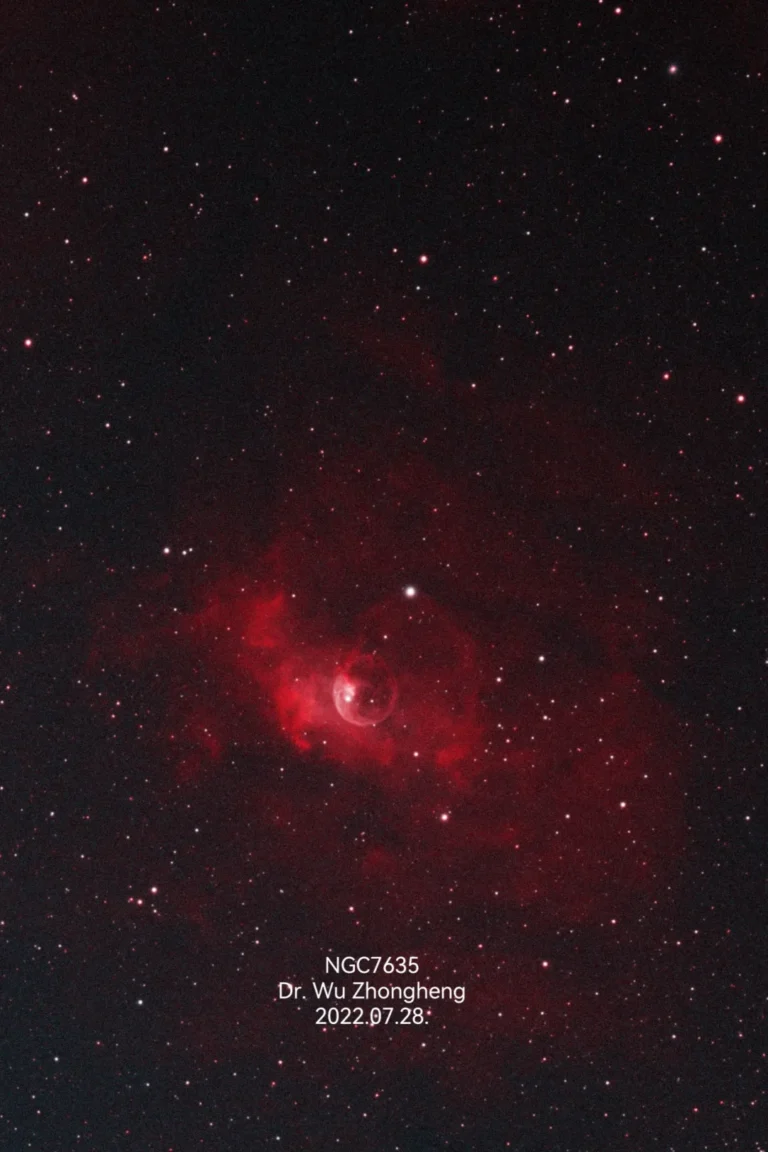
A Cosmic Bubble Over Urban Smog: Capturing the Bubble Nebula (NGC 7635) with an 18-Hour Balcony Exposure
As a child, I constantly stared at the night sky, wondering how vast the universe really was and what was hiding out there in the dark. Growing up and spending my days as an orthopedic surgeon didn't extinguish that curiosity—if anything, it made me hungrier for direct, tangible answers. About four years ago, in the summer of 2022, I turned my optical rig toward the constellation Cassiopeia to capture the Bubble Nebula (NGC 7635) from my northeast-facing balcony in downtown Guangzhou. Shooting through Bortle 7–8 light pollution, I relied on ultra-narrowband filters and an apochromatic refractor to stack 210 five-minute exposures, accumulating 18 hours of raw starlight. I am the first to admit that post-processing is my biggest technical weakness—I still rely on automated PixInsight scripts and quick adjustments on my phone—but seeing this delicate interstellar bubble emerge from the urban haze with my own gear was pure, grounding magic.
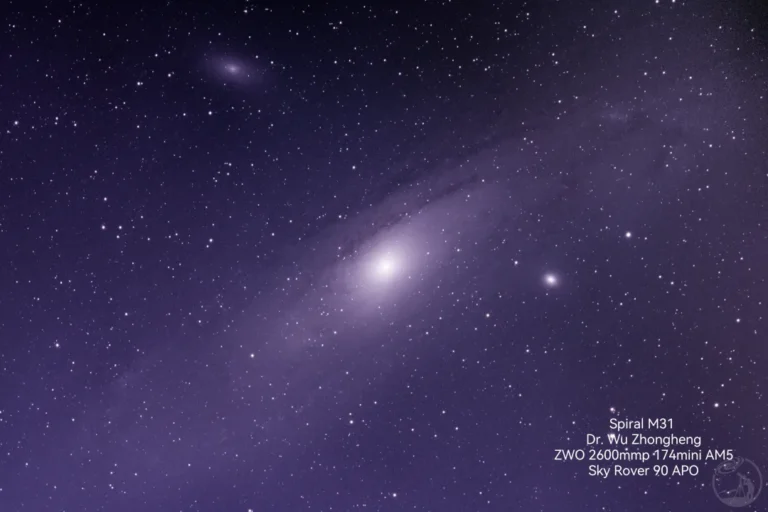
A Surgeon’s Night Sky: Cataloging Deep-Space Wonders from a Light-Polluted Balcony in Guangzhou
By day, my hands hold surgical drills, osteotomes, and bone plates in a laminar-flow operating room. But by night, I find peace under the open sky. About five years ago (back in 2021), driven by curiosity about the cosmos, I fell down the rabbit hole of astrophotography. Starting with a basic catadioptric scope pointed at the Moon and Jupiter, I soon became hooked on deep-sky imaging. From my northeast-facing balcony in central Guangzhou—battling Bortle 7–8 light pollution with narrowband filters and a harmonic mount—I have spent countless nights gathering faint photons that traveled millions of years to reach my sensor. This post is a personal catalog of the telescopes I rely on and the ten deep-space marvels (from Andromeda and the Bubble Nebula to the Fireworks Galaxy) I have managed to capture with my own eyes and instruments.