
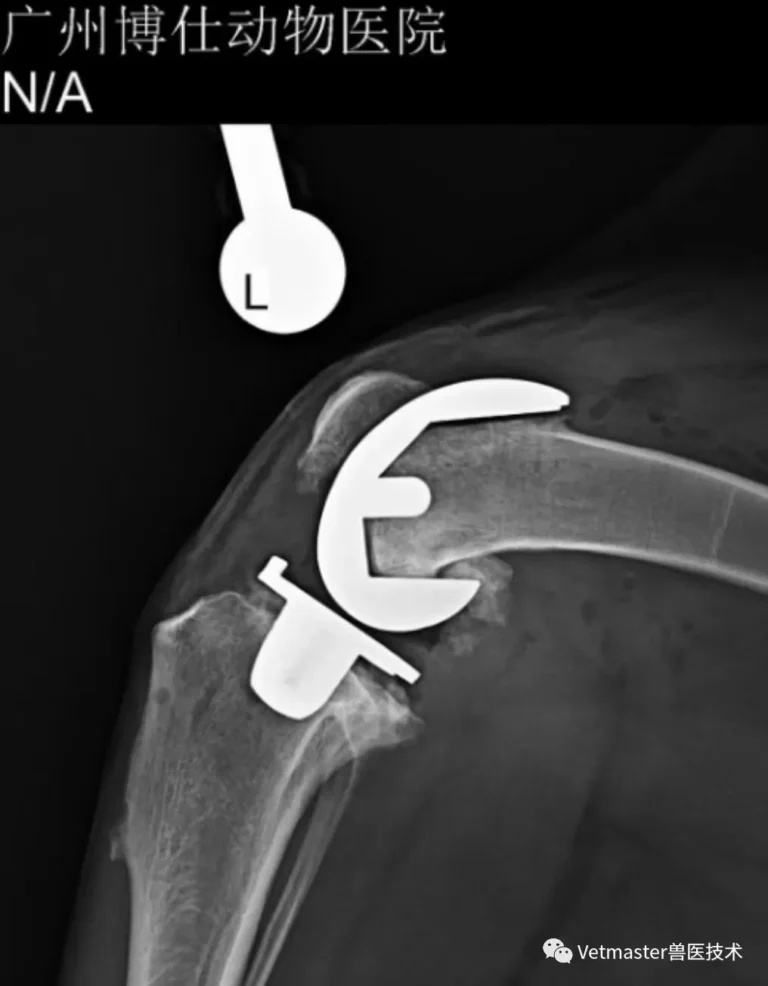
Total Knee Arthroplasty (TKA) in a 41 kg Doberman Pinscher: Overcoming End-Stage Osteoarthritis with a Biological Dual-Mobility System
When an owner drives hundreds of miles from outside the province to bring a 41 kg adult male Doberman Pinscher to Guangzhou Boss Animal Hospital, you know you are dealing with a severe, chronic crisis. The dog had suffered from recurrent bouts of severe knee swelling and lameness that temporarily waxed and waned, masking an insidious, chronic cranial cruciate ligament rupture. By the time he reached my operating table, the left stifle was in end-stage collapse—encased in massive osteophytes with complete destruction of both the femorotibial and patellofemoral articular cartilage. In a destroyed joint like this, standard TPLO is useless because it cannot heal eburnated, grinding bone. Using our VVV digital surgical planning software, I mapped out the reconstruction and implanted a Size 40 Vetmaster biological dual-mobility total knee replacement. Despite dense fibrous joint contractures that made joint space distraction an intense physical and technical battle, we achieved textbook alignment with an exact 12° posterior tibial slope. Today, this massive working dog has regained painless, powerful athletic function.
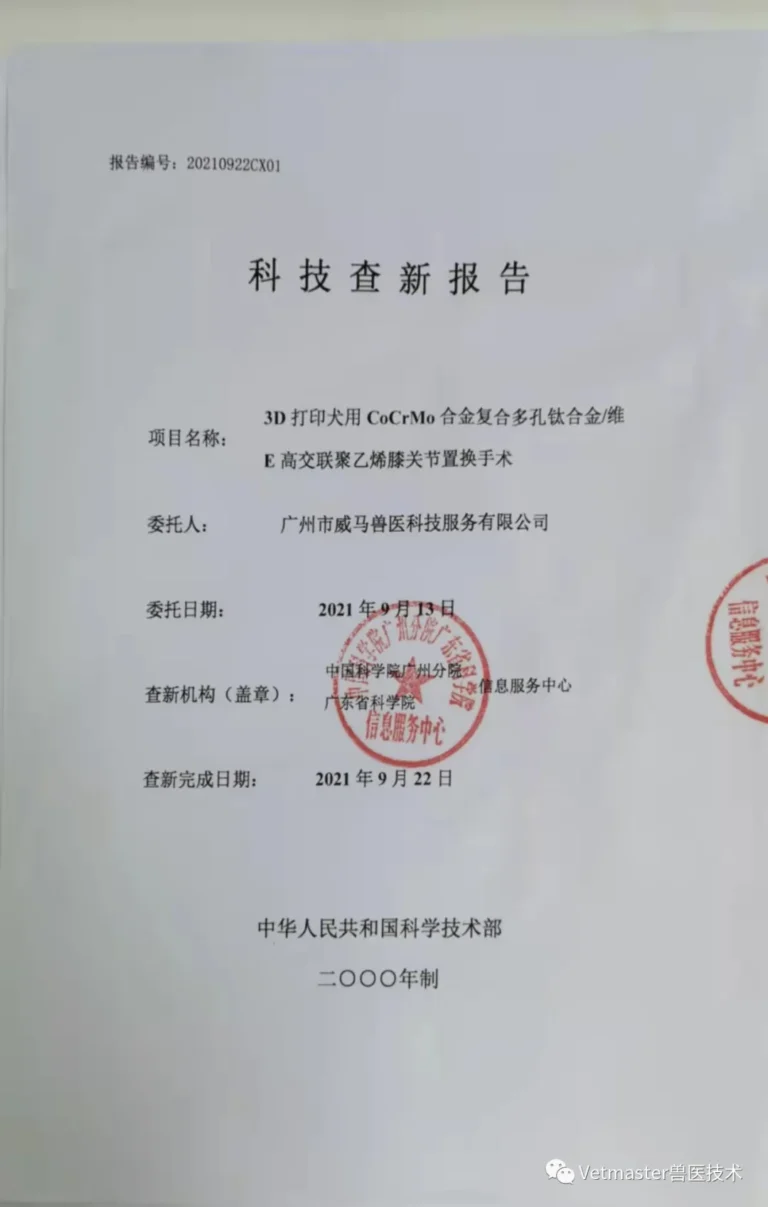
Custom 3D-Printed Biological Total Knee Arthroplasty (TKA) in a Dog: Clinical Case and 2.5-Month Outcome
In this case, I document what was the first reported biological canine total knee arthroplasty (TKA) using custom 3D-printed implants and disposable patient-matched instrumentation in China. The patient, a 25 kg Husky, suffered from end-stage osteoarthritis and severe meniscal damage triggered by chronic cranial cruciate ligament rupture. Facing a complete lack of off-the-shelf knee prostheses suited to this dog, my surgical team at Guangzhou Boss Animal Hospital collaborated with Associate Professor Zhang Jun and the materials engineering team at the Guangdong Academy of Sciences. Together, we designed and 3D-printed a cementless CoCrMo/porous titanium/Vitamin E-stabilized polyethylene implant system. Following 1:1 benchtop simulation, we successfully placed the prosthesis. By day one post-op, the dog was weight-bearing without pain; at 2.5 months, he was galloping freely off-leash across the grass.