1. The Surgeon's Escape: Chasing Photons in the Urban Smog
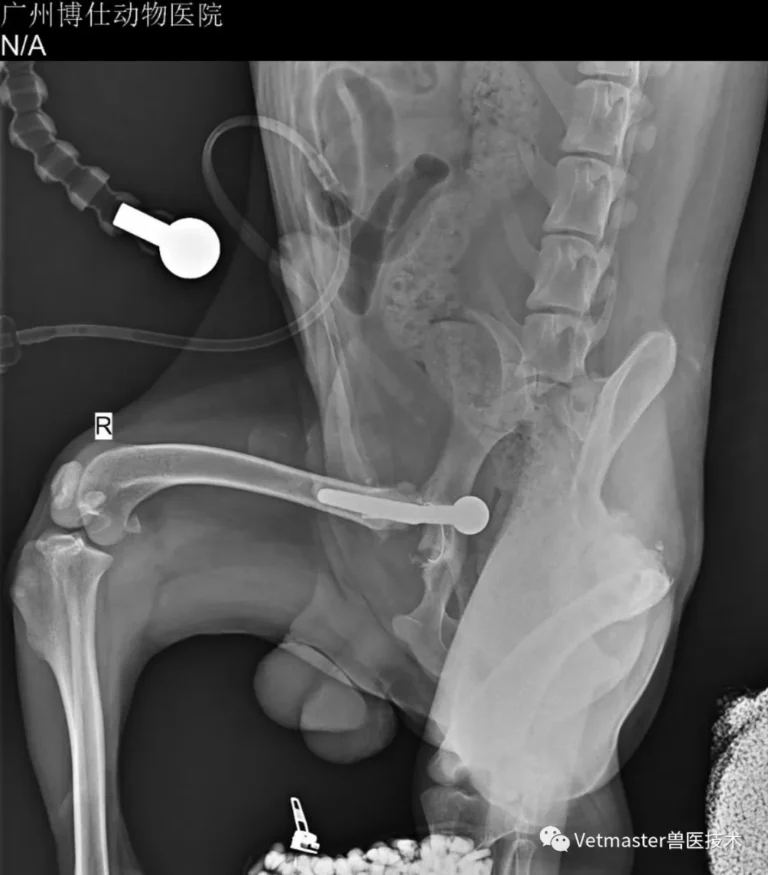
People often ask me why an orthopedic surgeon, who spends ten to twelve hours a day cutting bone, aligning joint cups, and scrubbing in and out of the operating room, would voluntarily lose sleep standing on a drafty apartment balcony at 2:00 AM.
The truth is simple: curiosity.
When I was a boy, I looked up at the night sky and wondered how big the universe really was, how far away the stars were, and what secrets lay behind that velvet curtain. As adults, most of us get buried under the routine of daily life and forget to ask those questions. But that hunger to understand never quite left me.
Five years ago, around 2021, I bought a telescope to take a closer look. I started out like most beginners—photographing easy, bright Solar System targets like the Moon, Jupiter's bands, Saturn's rings, and Venus. But once you see a planet hovering in the blackness, your curiosity doesn't stop. You start wondering what lies between and beyond those stars. Soon, I was completely hooked on deep-sky astrophotography.
My friends joke that men’s hobbies are incomprehensible—spending a small fortune on precision optical tubes, cooled monochrome CMOS cameras, and computerized mounts just to capture faint fuzzy smudges through city smog. On paper, these photographs won't earn me a dime, and they certainly cannot compete with the Hubble or James Webb Space Telescopes. But to me, mastering the optics, understanding the physics, and capturing a galaxy with my own setup is pure, intoxicating joy. As I wrote in an earlier note: If you haven't seen it with your own eyes, how can you truly know it's real?
2. The Balcony Arsenal: Tools for Defeating City Lights
Imaging deep space from Haizhu District in downtown Guangzhou is an astronomical nightmare. We sit under severe Bortle 7 to 8 (sometimes Bortle 9) urban light pollution. To make matters worse, my apartment only has a northeast-facing balcony.
That narrow architectural boundary dictates my entire universe: I can only shoot celestial targets rising through that northeastern window, and my imaging time for any given object is strictly limited before it slips out of view. Over these years, I configured three primary optical setups to make the most of this window:
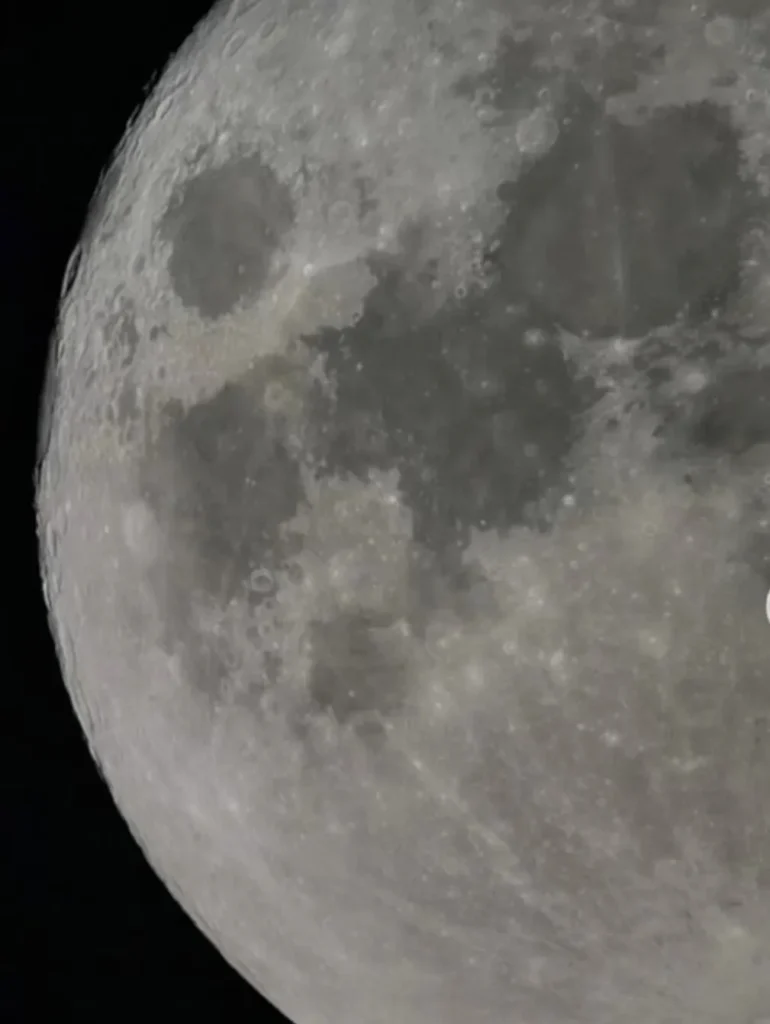
- The Planetary Workhorse: Maksutov-Cassegrain 150/1800 (马卡 150)
- Specs: Catadioptric design, 150 mm aperture, 1800 mm focal length, native focal ratio f/12.
- Field Notes: With its massive focal length and compact folding tube, this scope is fantastic for the Moon and planets. In my early days, I literally clamped my mobile phone to the eyepiece to take lunar shots. While you can image tiny deep-sky objects with it, an f/12 focal ratio is agonizingly slow for faint nebulae in a city; it simply takes too long to gather photons.
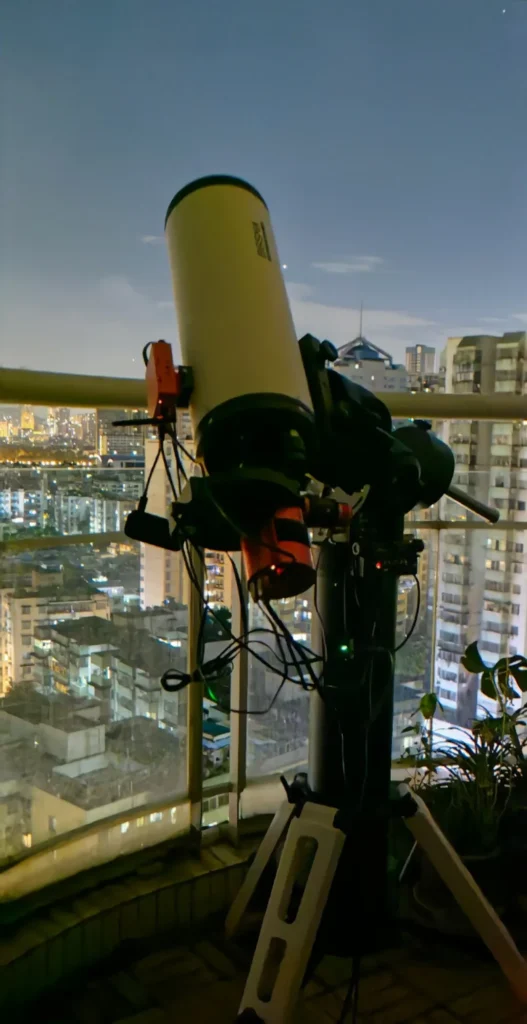
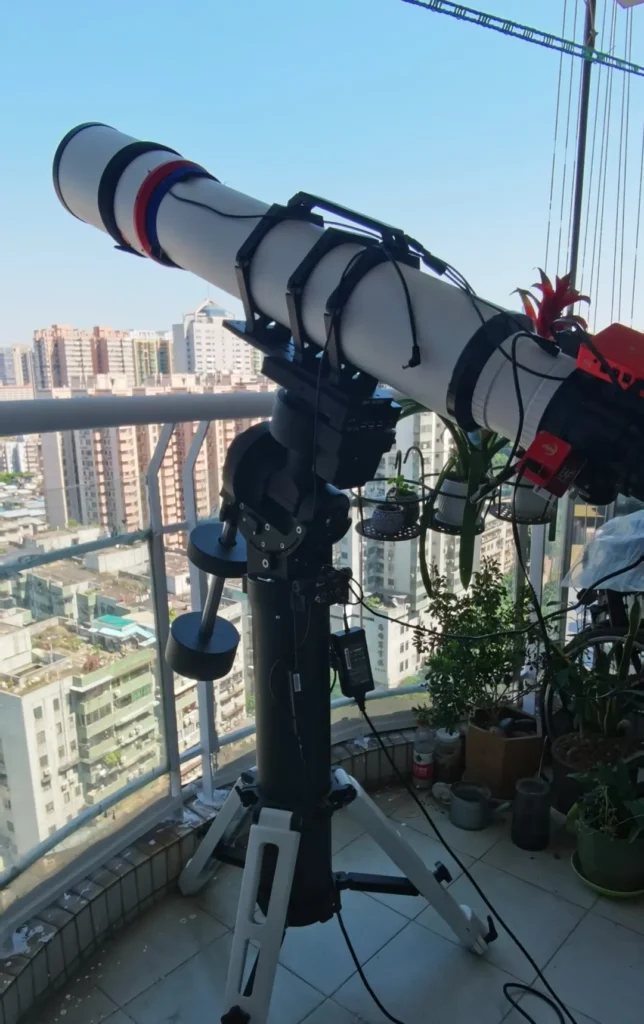
- The Heavyweight Deep-Sky Canon: Sky Rover 155 APO PRO
- Specs: Large-aperture triplet apochromatic refractor, 1240 mm focal length; paired with a dedicated 0.8x reducer, it operates at a fast f/6.4.
- Field Notes: I love refractors for the same reason I love good surgical tools: precision and reliability. Unlike Newtonians or Schmidt-Cassegrains, an APO refractor requires no tedious optical collimation. You set it up, achieve focus, and the stars are pinpoint edge-to-edge. It has become my primary weapon for resolving fine deep-sky structures.
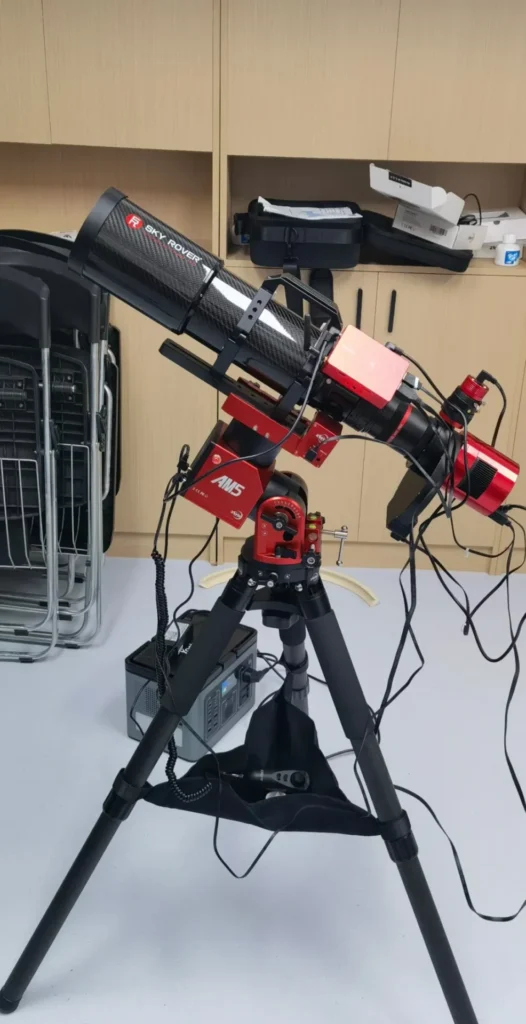
- The Grab-and-Go Specialist: Sky Rover 90 APO PRO + ZWO AM5 Mount
- Specs: 540 mm focal length, native f/6; paired with a 0.8x reducer, it runs at an ultra-efficient f/5.4.
- Field Notes: Mounted on a strain-wave ZWO AM5 harmonic equatorial mount, this setup is lightweight and grab-and-go friendly. It is ideal for wide-field nebulae from the balcony and portable enough to throw in the trunk for field expeditions when I want to escape urban light pollution.
To cut through Guangzhou's skyglow, I shoot with a monochrome cooled camera (ZWO ASI2600MM Pro) through specialized LRGB and ultra-narrowband filters (3nm Hydrogen-alpha, Oxygen-III, and Sulfur-II). Narrowband filters are miraculous: they completely reject streetlamp glare, allowing only the exact spectral emission lines of ionized interstellar gas to reach the sensor.
I upload my raw captures and work to the Xunxingke platform. To be completely candid, advanced post-processing in software like PixInsight is my weak point. I rely on automated scripts, guidance from veteran astro-buddies like "Fei Zong", and simple tweaks on Meitu. My processing skills are still basic, but every single photon in these frames was captured right from my own balcony.
3. A Tour of My Cosmic Targets
Looking back through my logs on Xunxingke, here is an inventory of the celestial objects that have crossed my balcony field of view:
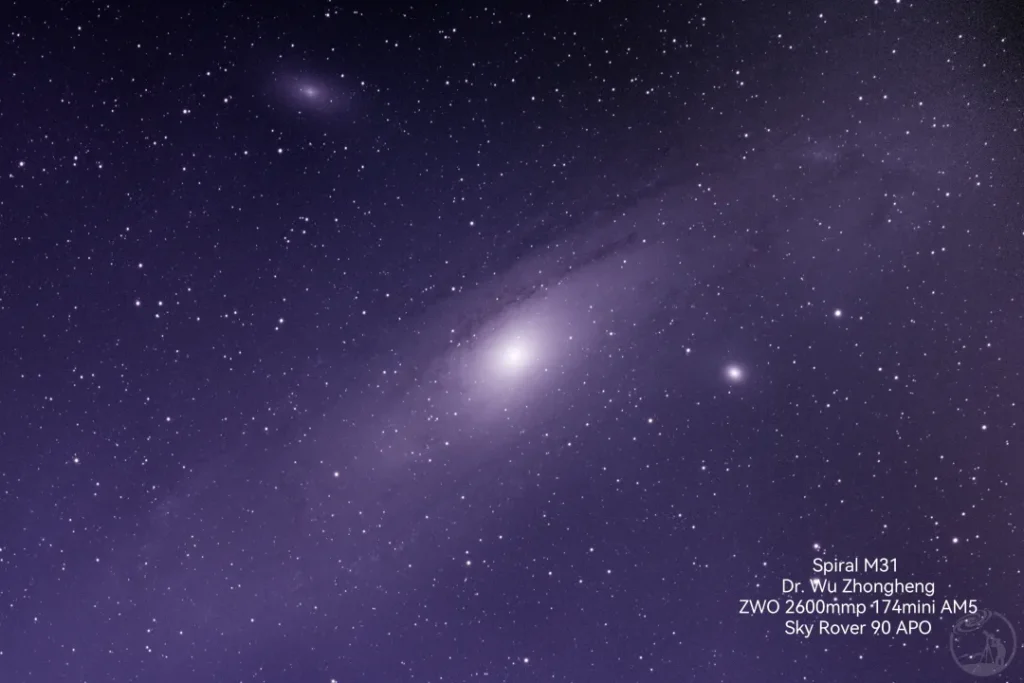
3.1 The Grand Neighbor: Andromeda Galaxy (M31)
The crown jewel of the northern sky. M31 sits roughly 2.54 million light-years away and spans an immense 220,000 light-years in diameter. Under a truly dark sky, it is visible to the naked eye; from my balcony, I can easily spot its glowing core using 2.5x wide-field binoculars. I captured this grand spiral early on using broadband LRGB filters. It is a stunning, humbling target, and I intend to revisit it with deeper integration time.
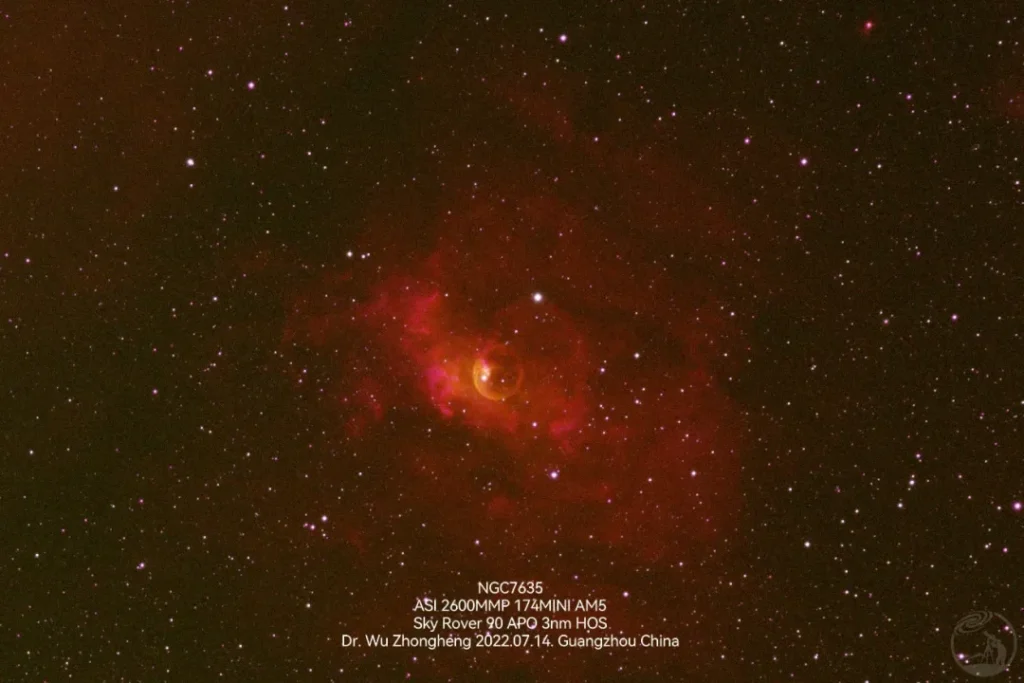
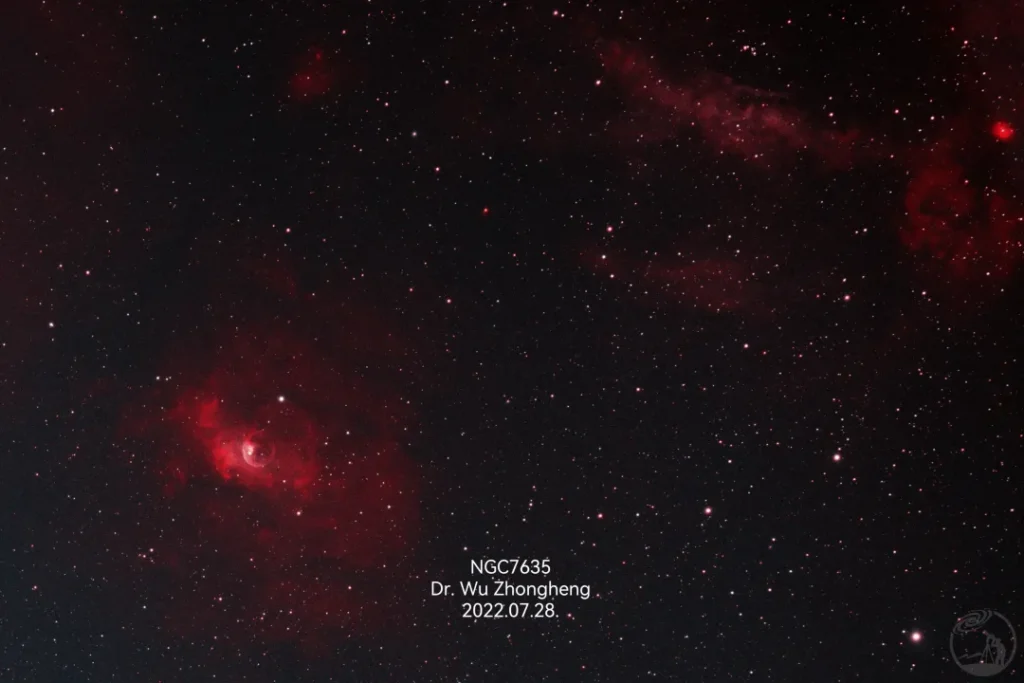
3.2 The Cosmic Marvel: Bubble Nebula (NGC 7635)
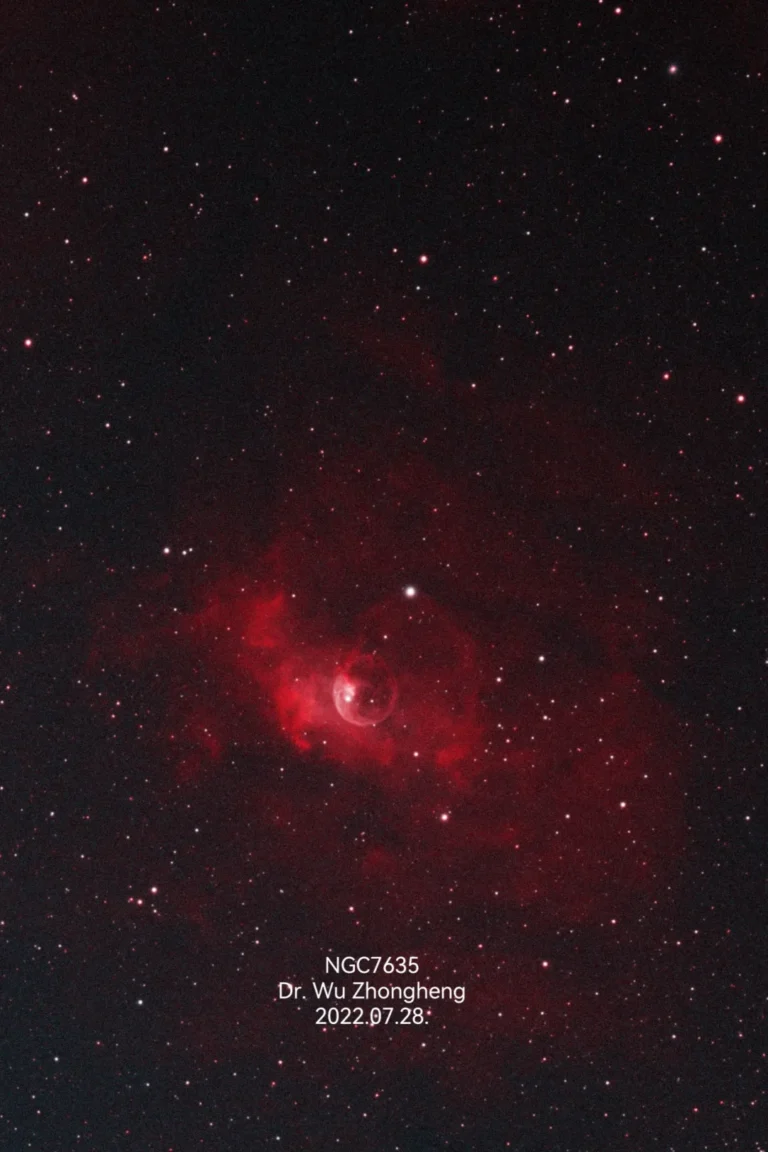
Located in Cassiopeia, this emission nebula features an ethereal, spherical bubble blown into an interstellar gas cloud by the fierce stellar wind of an intense, hot central star. The sight of a delicate cosmic bubble floating through deep space never fails to amaze me. I have re-imaged this target multiple times using SHO narrowband filters to peel back its intricate ionized shockwaves.
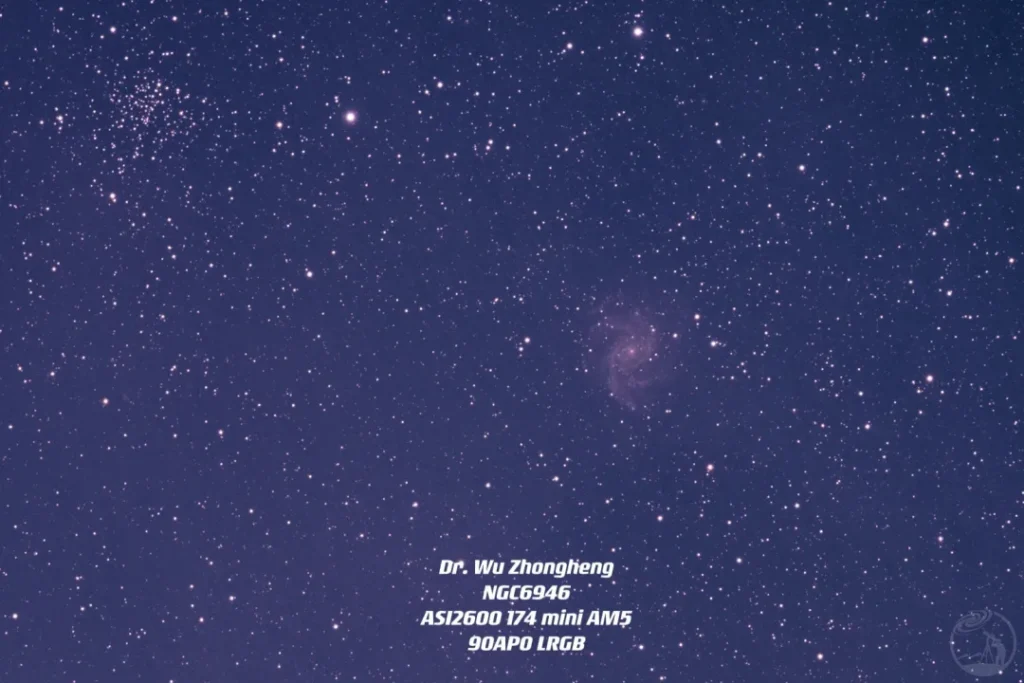
3.3 Deep in Cepheus: NGC 6939 & NGC 6946 (The Fireworks Galaxy)
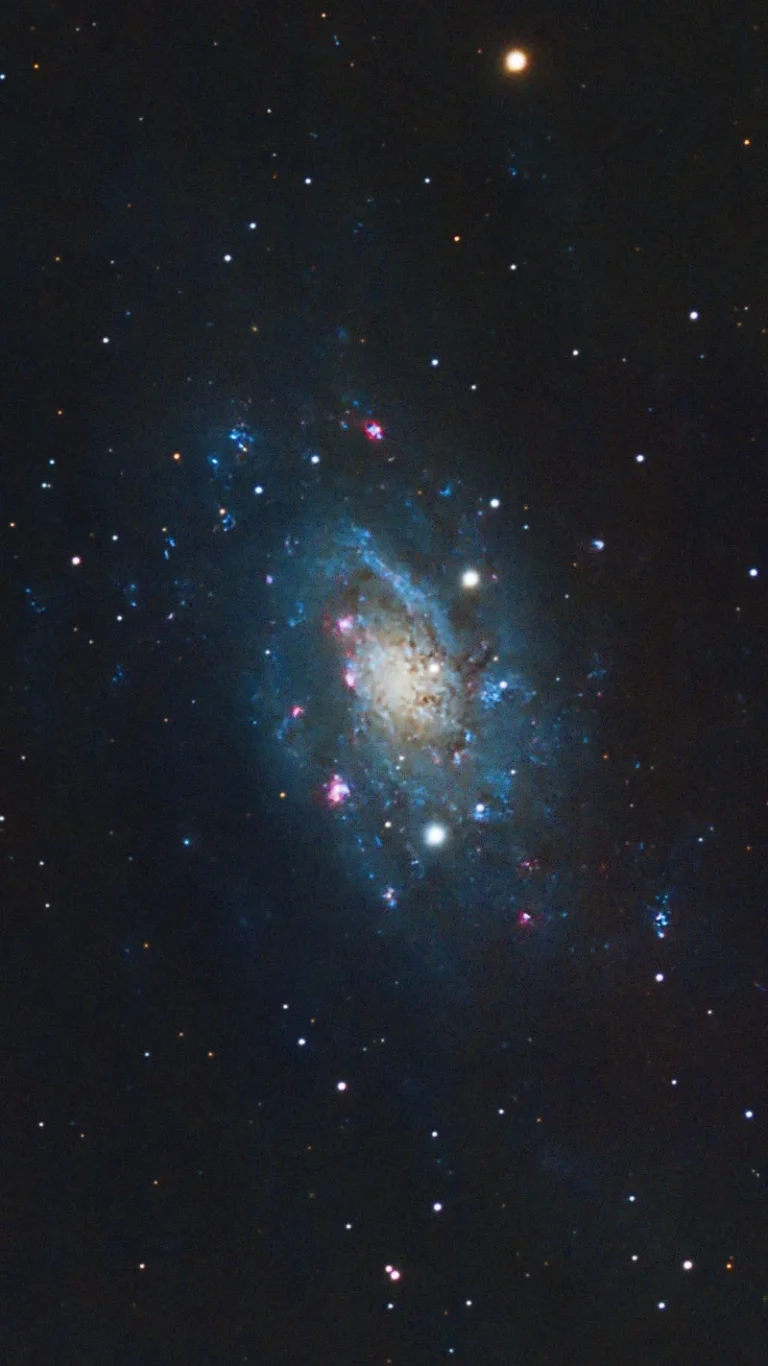
Right on the border of Cepheus and Cygnus, this fascinating pairing features the open star cluster NGC 6939 sitting just next to NGC 6946. Nicknamed the "Fireworks Galaxy," NGC 6946 is an intermediate spiral galaxy roughly 10 million light-years away. Because it is intrinsically faint, pulling out its spiral arms against downtown Guangzhou’s light pollution was a severe test of narrowband and luminance stacking.
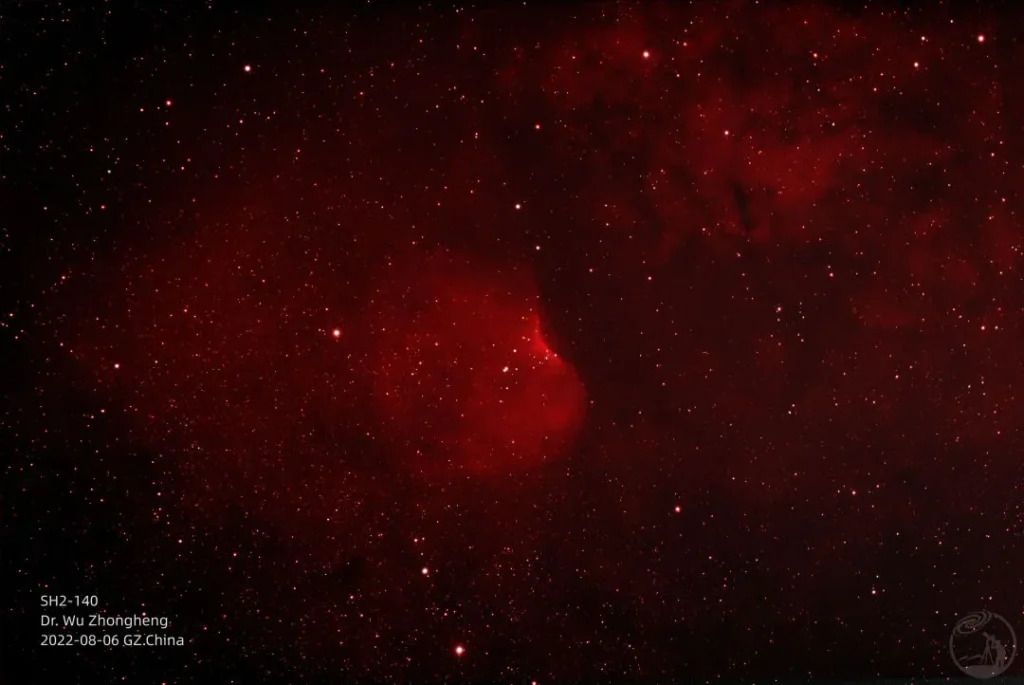
3.4 The Dusty Clouds: Sh2-140
Also located in Cepheus, Sh2-140 is an active star-forming emission region embedded within a complex field of cosmic dust. Capturing its faint hydrogen glow required long, tracked narrowband integrations through the city haze.
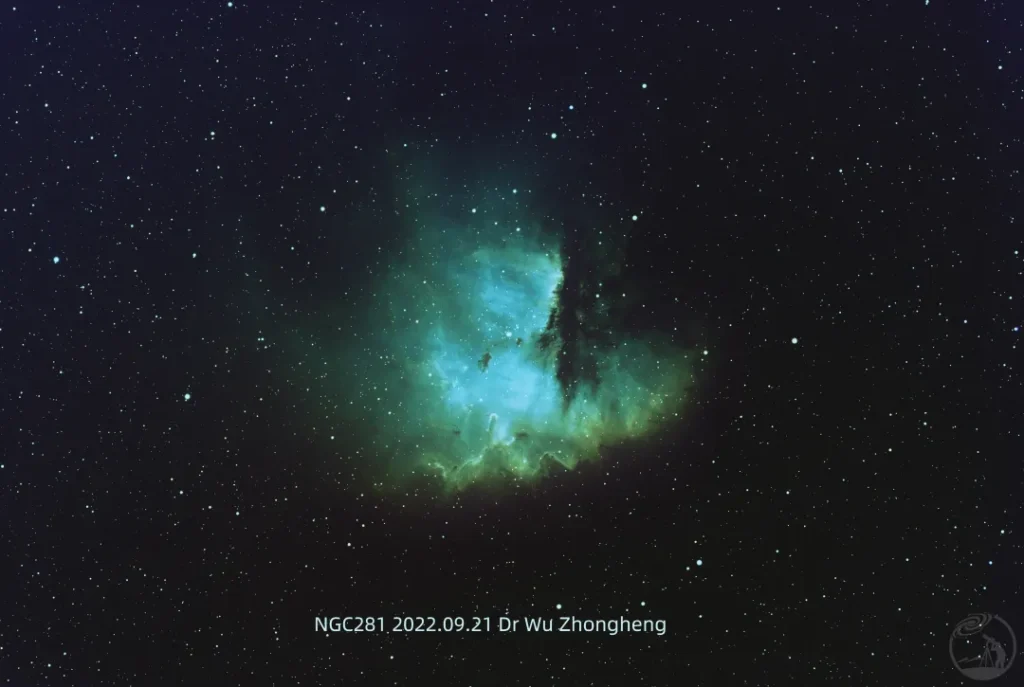
3.5 The Pacman Nebula: NGC 281
Located in the Perseus Spiral Arm of our own Milky Way, toward the constellation Cassiopeia, this bright emission nebula resembles the classic arcade character. It is an active stellar nursery packed with energetic young stars and prominent dark dust lanes.
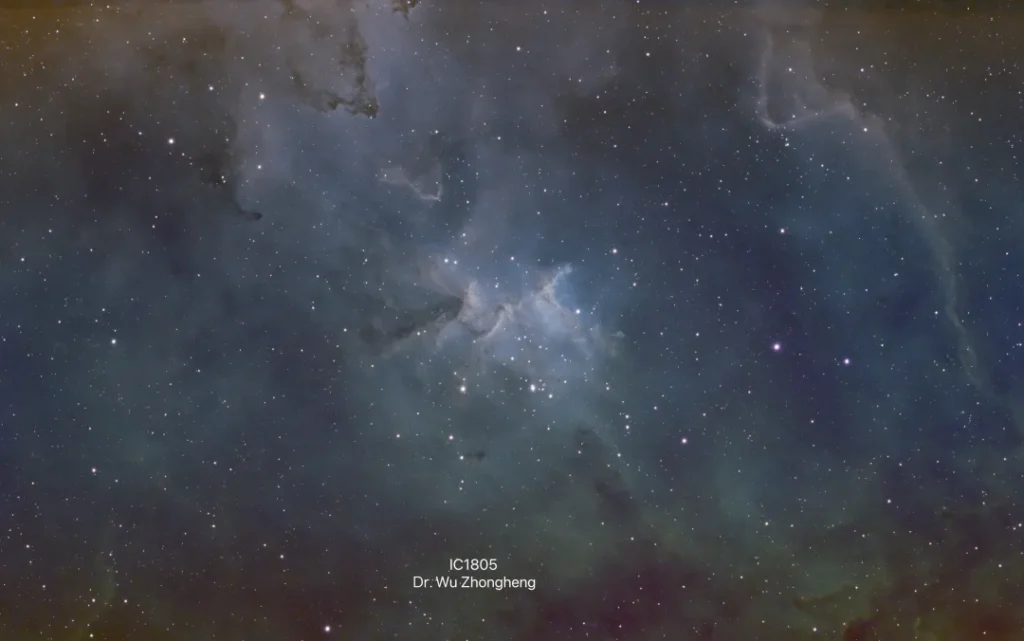
3.6 Interstellar Plasma: The Heart Nebula (IC 1805 / Sh2-190)
Sitting roughly 7,500 light-years away in Cassiopeia, the Heart Nebula is an expansive expanse of glowing interstellar plasma composed predominantly of ionized hydrogen gas and free electrons, carved by dark, dense silhouettes of cosmic dust lanes.
3.7 The Extreme Challenge: Elliptical Galaxy C6
In Perseus, I decided to test the limits of my optical train on the faint elliptical galaxy C6. With an apparent magnitude of 17.9, this object is extraordinarily small and dim. Extracting a usable signal with SHO narrowband filters from an urban balcony pushed both my tracking mount and camera sensor to their absolute limits.
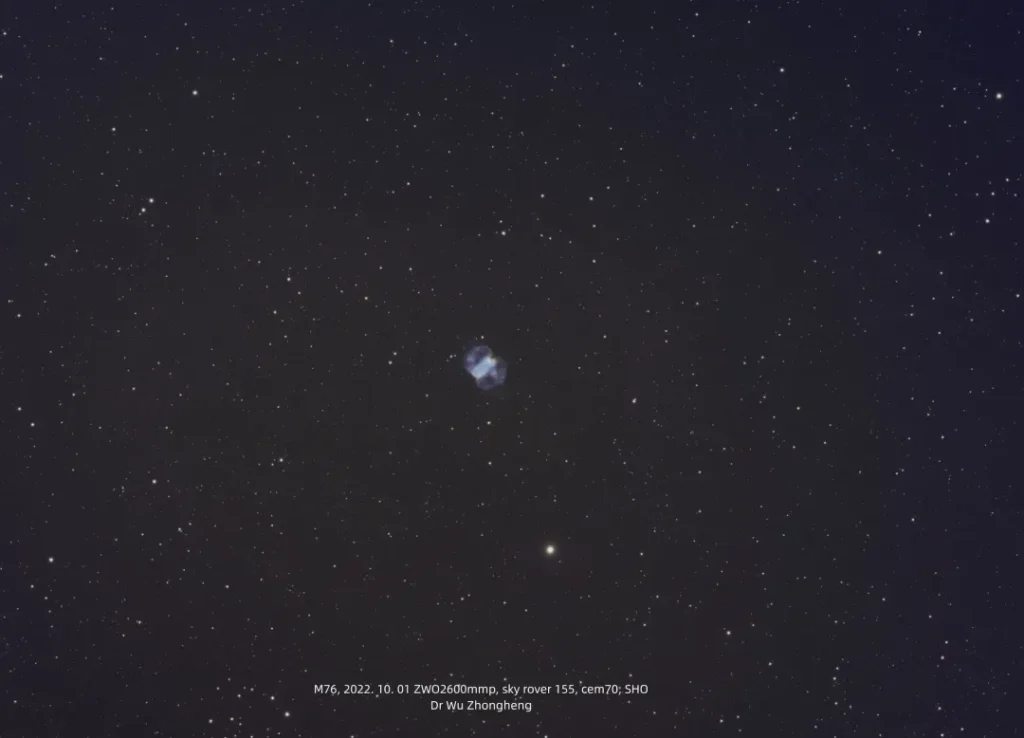
3.8 The Planetary Remnant: Little Dumbbell Nebula (M76 / NGC 650/651)
Also located in Perseus, M76 (often called the Cork Nebula or Barbell Nebula) is the expanding, glowing shell of ionized gas ejected by a dying red giant star. Its intricate bipolar lobes show up beautifully under narrow optical bandpasses.
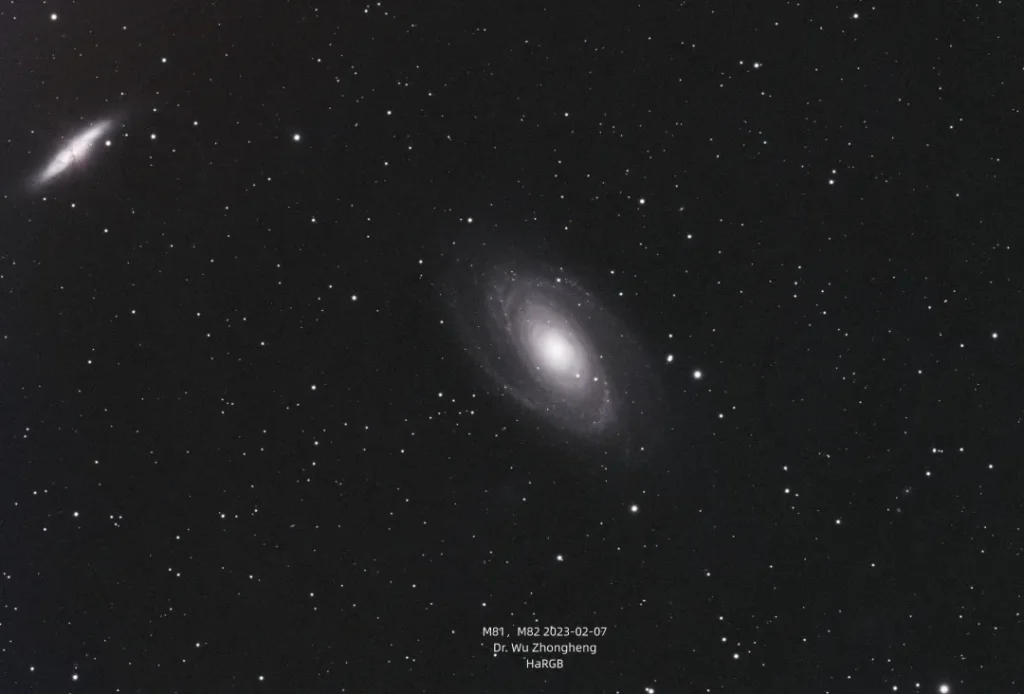
3.9 The Ursa Major Pair: M81 (Bode’s Galaxy) & M82 (The Cigar Galaxy)
A classic galactic duo located in the northern constellation of Ursa Major, imaged using LRGB combined with Hydrogen-alpha filters. M81 is a near-perfect, grand-design spiral galaxy whose core-and-disk architecture resolves crisply in my refractor. Just two degrees to the north sits M82, an edge-on starburst galaxy undergoing furious star formation triggered by past gravitational encounters with M81.
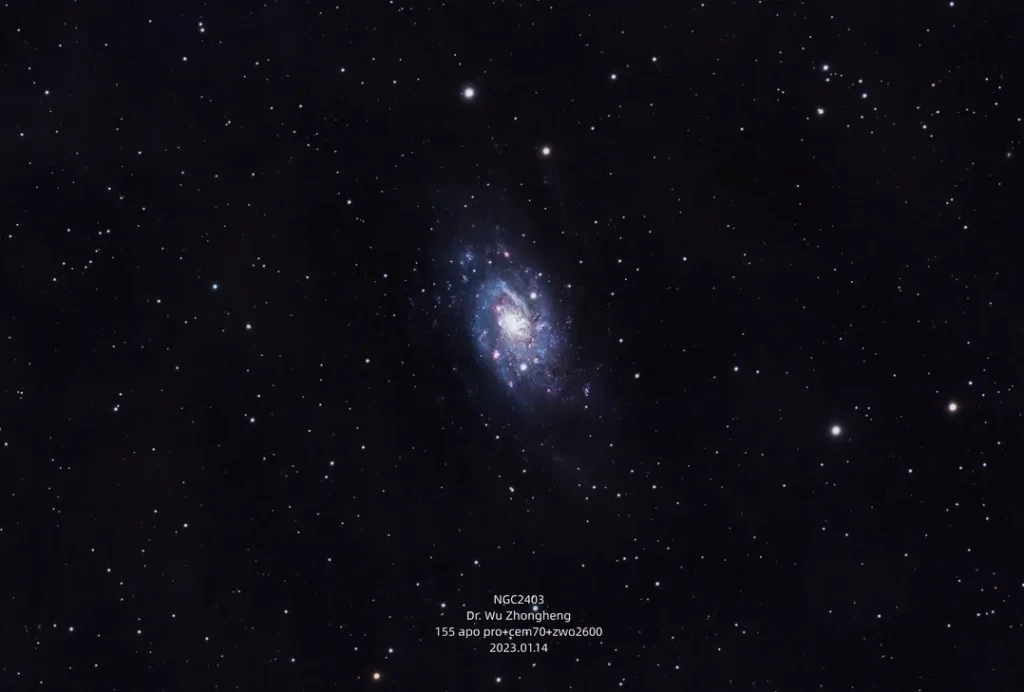
3.10 The Camouflaged Spiral: NGC 2403 (C7)
Located in Camelopardalis, roughly 8 million light-years from Earth, this intermediate barred spiral galaxy is a prominent member of the M81 galaxy group. I spent nearly 60 hours of raw exposure time collecting over a thousand frames through LRGB and Ha filters just to coax out its faint, delicate spiral filaments from the background skyglow.
4. Grounding the Soul Under the Stars
When you spend your professional life in the high-stakes pressure cooker of veterinary surgery—where every millimeter on an osteotomy or acetabular reamer matters, where patients' lives and owners' emotions rest squarely on your shoulders—it is easy to become consumed by clinical stress.
Astrophotography is my grounding rod.
Standing on my balcony late at night, watching photons that left a galaxy during the dawn of human ancestors finally strike a tiny silicon sensor, puts everything in perspective. Our challenges, our rivalries, our daily anxieties—they are infinitesimally small against the vastness of the cosmos.
My images are far from perfect. I am just a surgeon with a telescope on a balcony, learning one script and one nebula at a time. But as long as that northeast sky remains open, I will keep setting up the tripod, cooling the camera, and looking up.