
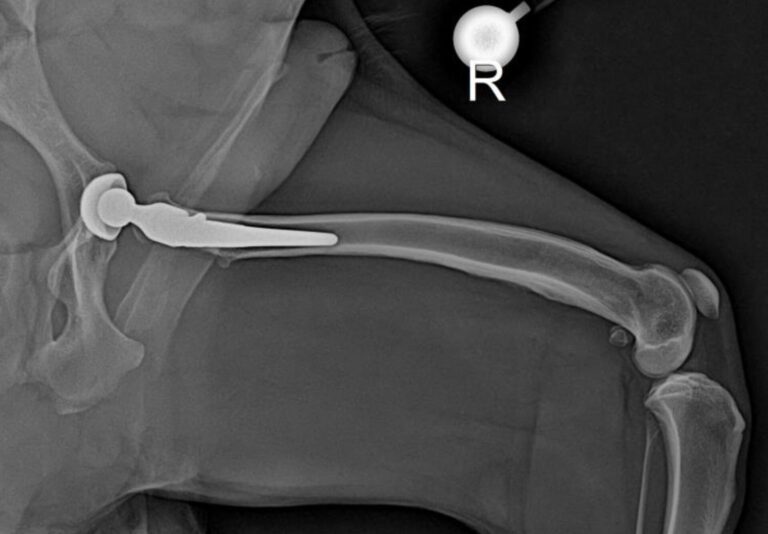
A Samoyed’s Distal Femur Growing Bone: Deciphering Post-THR Periosteal Reaction Through Biomechanics
When young large-breed dogs undergo cementless total hip replacement (THR), postoperative imaging occasionally reveals a surprising phenomenon: periosteal new bone formation along the distal femur. In this case, an 18 kg male Samoyed underwent staged bilateral THR at 9 and 11 months of age due to severe hip laxity. One month after the second surgery, follow-up radiographs revealed marked periosteal reaction along the distal right femur and mild remodeling on the left. Some clinicians instinctively panic at the sight of periosteal changes, suspecting infection or implant failure. However, bone is a living, reactive sculpture. By analyzing Wolff's law, proximal stress shielding, active growth plates, and preoperative subchondral sclerosis, I break down why this distal bone growth represents a benign, mechanically driven adaptive remodeling rather than pathology—and how surgeons should objectively monitor it.