
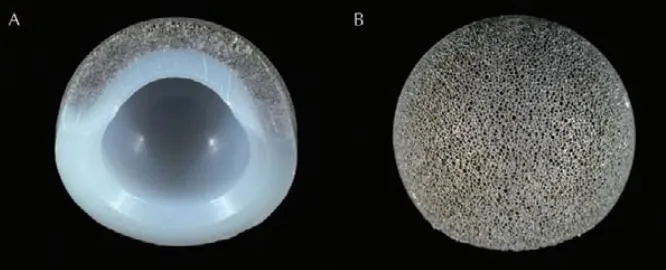
Bone Ingrowth vs. Acrylic Glue: Why Biological Total Hip Replacement Is the Definitive Choice for Cats and Small Dogs
A dangerous myth has circulated in veterinary orthopedics for decades: that delicate, lightweight patients like cats and toy-breed dogs are "adequately served" by 1970s-era acrylic bone cement. Having performed both cemented and cementless procedures over my twenty-three-year career—and having revised far too many loose, infected cement mantles—my clinical conviction is absolute. Bone cement is an inert mechanical grout that never achieves biological fusion; worse, its exothermic curing risks thermal necrosis and Bone Cement Implantation Syndrome (BCIS). Given that cats and small dogs routinely live 15 to 20 years and generate extreme multi-body-height jump forces, relying on a 1 mm plastic mantle is a ticking biomechanical time bomb. Biological 3D-printed titanium implants that achieve true living osseointegration—paired with anti-dislocation dual-mobility articulation—are the only responsible choice. Over the past seven years and through my journey past 1,000 joint replacements, my operating room has maintained an uncompromising 100:1 ratio of biological to cemented hips. Here is the unvarnished science behind that decision.
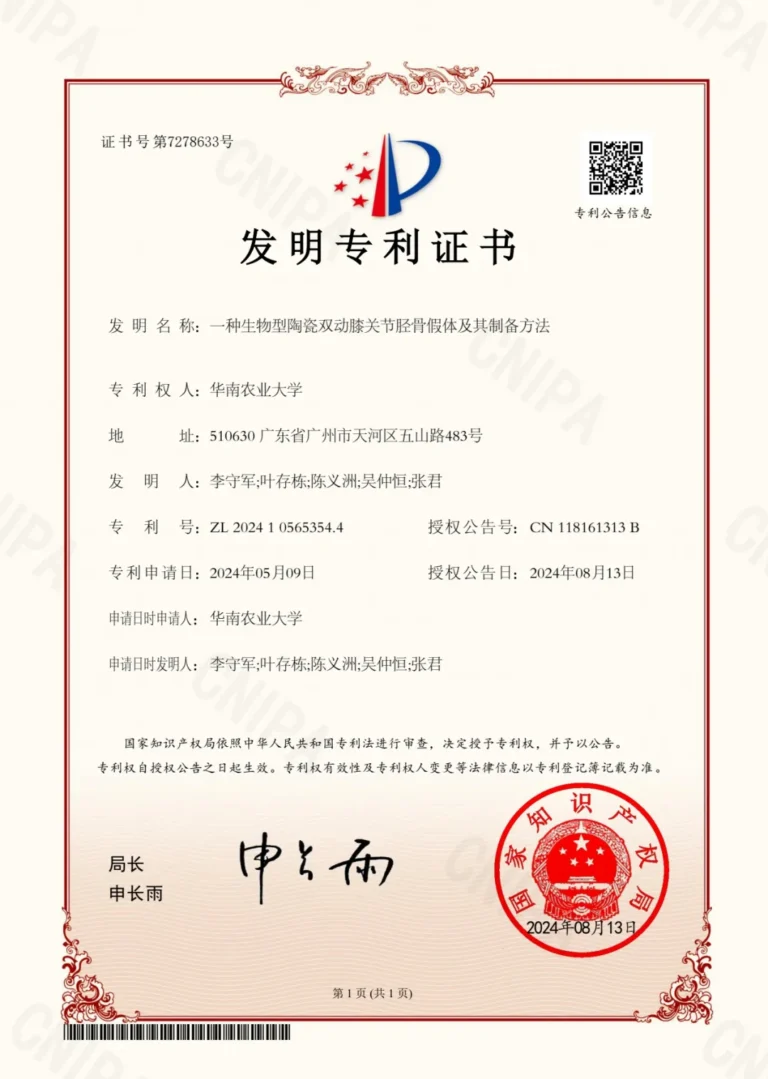
A License to "Brag": Another National Invention Patent in Small Animal Orthopedics
In late 2024, when the official certificate arrived from the National Intellectual Property Administration, I couldn't resist jumping online to do a little completely unapologetic "bragging." Together with our collaborative surgical team at the Clinical Surgery Teaching and Research Section of South China Agricultural University (SCAU), we were officially granted another major National Invention Patent in veterinary orthopedics. In China, thousands of hollow patents are churned out every year simply to check off academic promotion boxes, fulfill university grant quotas, or pad corporate slide decks—only to be discarded as useless paper trophies. Our confidence stems from a completely different reality: this patent was forged under the surgical lamp, vetted through rigorous laboratory trials, and translated into real, 3D-printed biological implants that are actively restoring mobility to animal patients on the operating table.
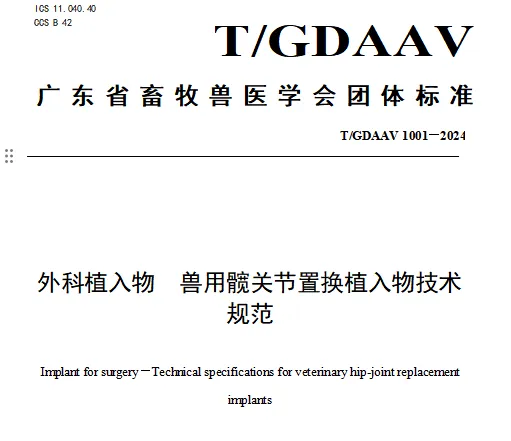
Lifting the Fog: Why I Co-Authored China's First Technical Standards for Veterinary Hip Implants
When severe veterinary device safety failures struck our industry, the heartbreak felt suffocatingly close to home: one of the victims was a devoted pet owner who had previously brought her companion to my clinic for care. Operating in a regulatory vacuum means clinicians are effectively navigating bone-implant mechanics inside a dense fog—where no amount of surgical skill can compensate for substandard metallurgy or poor additive manufacturing. To turn grief into lasting systemic accountability, my team at Guangzhou Boss Animal Hospital joined forces with premier material scientists, engineering researchers, and academic institutions to draft T/GDAAV 1011—2024, China's landmark group standard for veterinary total hip replacement implants. Published in the spring of 2024, this standard represents a vital ethical baseline: ensuring that every titanium stem, ceramic head, and biological cup implanted in our operating rooms is scientifically, mechanically, and legally accountable.
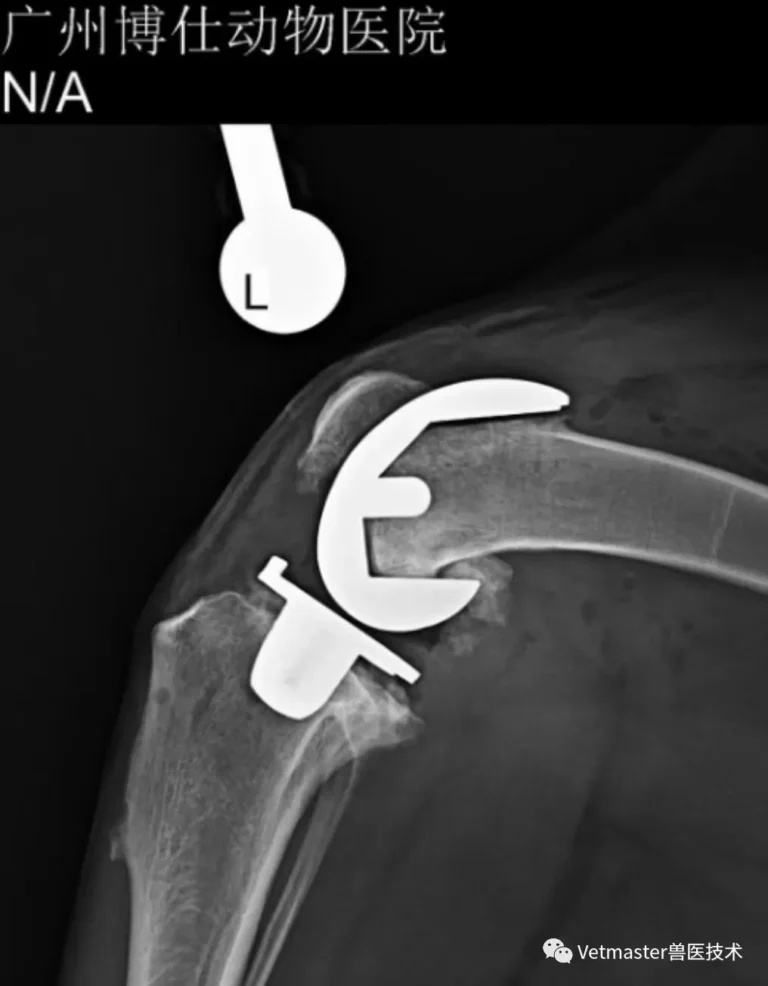
Total Knee Arthroplasty (TKA) in a 41 kg Doberman Pinscher: Overcoming End-Stage Osteoarthritis with a Biological Dual-Mobility System
When an owner drives hundreds of miles from outside the province to bring a 41 kg adult male Doberman Pinscher to Guangzhou Boss Animal Hospital, you know you are dealing with a severe, chronic crisis. The dog had suffered from recurrent bouts of severe knee swelling and lameness that temporarily waxed and waned, masking an insidious, chronic cranial cruciate ligament rupture. By the time he reached my operating table, the left stifle was in end-stage collapse—encased in massive osteophytes with complete destruction of both the femorotibial and patellofemoral articular cartilage. In a destroyed joint like this, standard TPLO is useless because it cannot heal eburnated, grinding bone. Using our VVV digital surgical planning software, I mapped out the reconstruction and implanted a Size 40 Vetmaster biological dual-mobility total knee replacement. Despite dense fibrous joint contractures that made joint space distraction an intense physical and technical battle, we achieved textbook alignment with an exact 12° posterior tibial slope. Today, this massive working dog has regained painless, powerful athletic function.