1. The 1,000-Kilometer Journey: A Patient Facing His Fifth Surgery
When an owner drives more than a thousand kilometers straight to my consultation room at Guangzhou Boss Animal Hospital, carrying a dog that has already been cut open four times in sixty days, you can feel the desperation in the air.
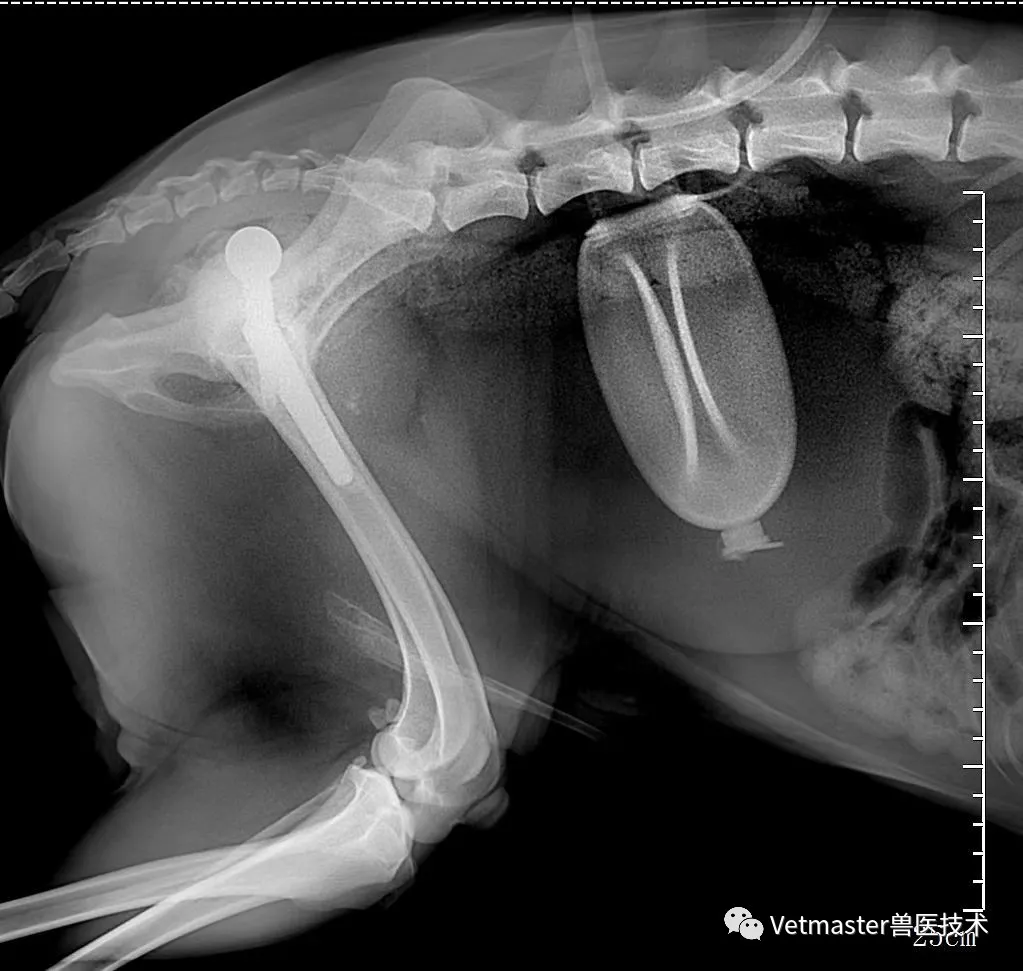
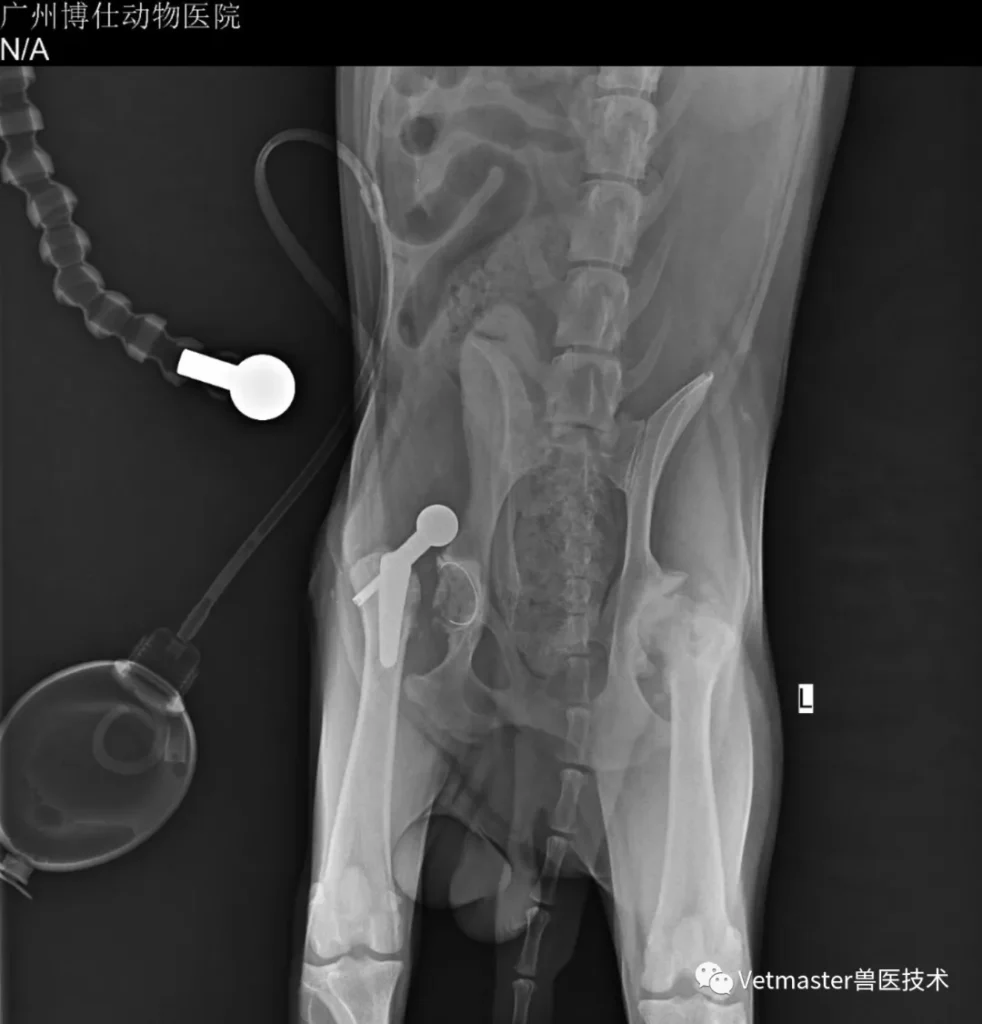
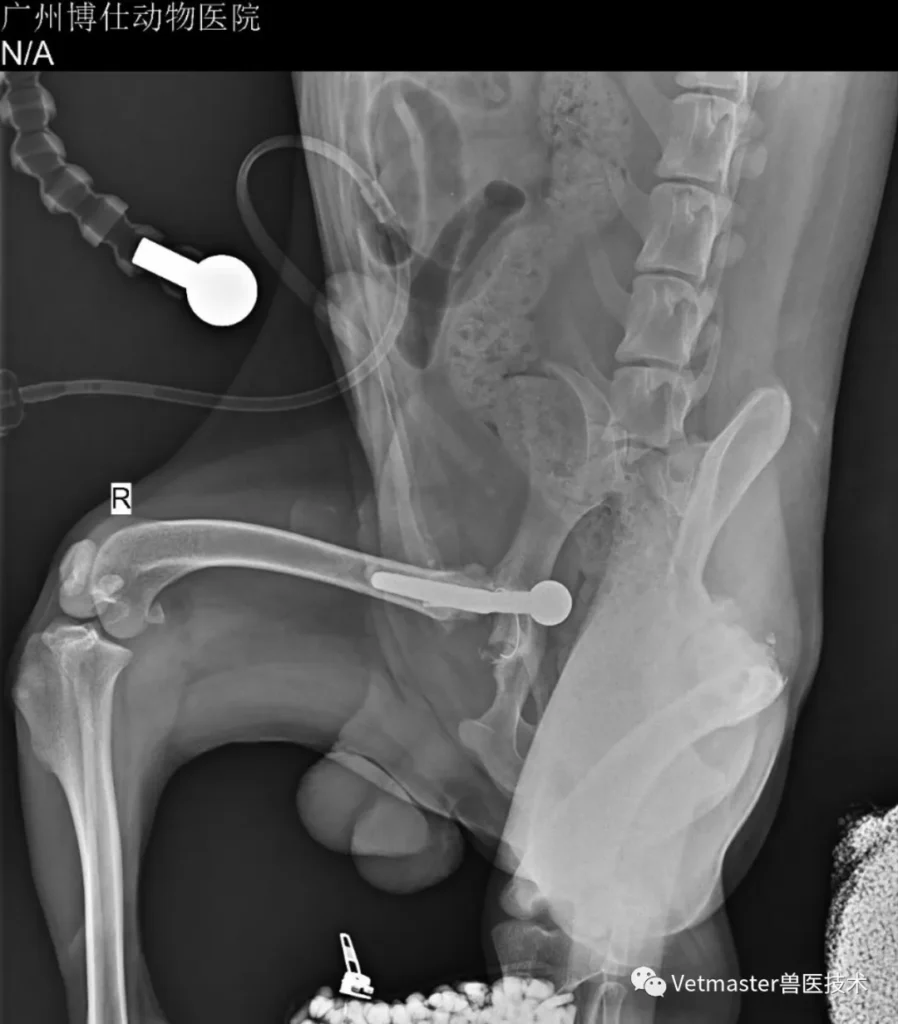
The patient was a 5.5-year-old intact male Border Collie weighing 22.5 kg. Two months prior, he underwent a right total hip replacement at an outside hospital. During that initial procedure, because the acetabular cancellous bed didn't bleed actively, the operating surgeon worried a biological press-fit cup wouldn't osseointegrate and opted for a hybrid construct: a cementless femoral stem combined with a cemented acetabular cup.
That decision triggered a relentless cascade of surgical disasters:
- Day 4 Post-Op (Initial Surgery): The hip suffered a complete dorsal luxation.
- Revision #1 (Day 7): The surgeon re-operated, reducing the cup abduction angle from 40° to 35° and lengthening the neck by several millimeters. Five days later, the femoral head dislocated dorsally again.
- Revision #2: The surgeon opened the joint a third time, steepening the cup further down to an extreme 25°. Five days later: dorsal luxation once more.
- Revision #3: Leaving the cup at 25°, the surgeon manipulated the femoral stem, attempting to re-center it and countersink it deeper into the canal. Just two days later, the joint popped out dorsally for the fourth time.
By the time the dog reached us, his right thigh was an anatomical wasteland. The periarticular soft tissues were shredded, multiple surgical scars crisscrossed the lateral skin, and severe disuse muscle atrophy had set in. The owner was completely traumatized—exhausted financially and emotionally, terrified that his athletic Border Collie would end up with a crippled limb or need a salvage femoral head ostectomy (FHO).
My colleague Dr. Yu Jiezhou and I took on what would be the dog’s fourth revision—his fifth major surgery on the exact same joint.
2. The Biomechanical Paradox on CT: When Changing Angles Fails
Before rushing into the operating theater, we needed to understand why four consecutive surgeries had failed so predictably.
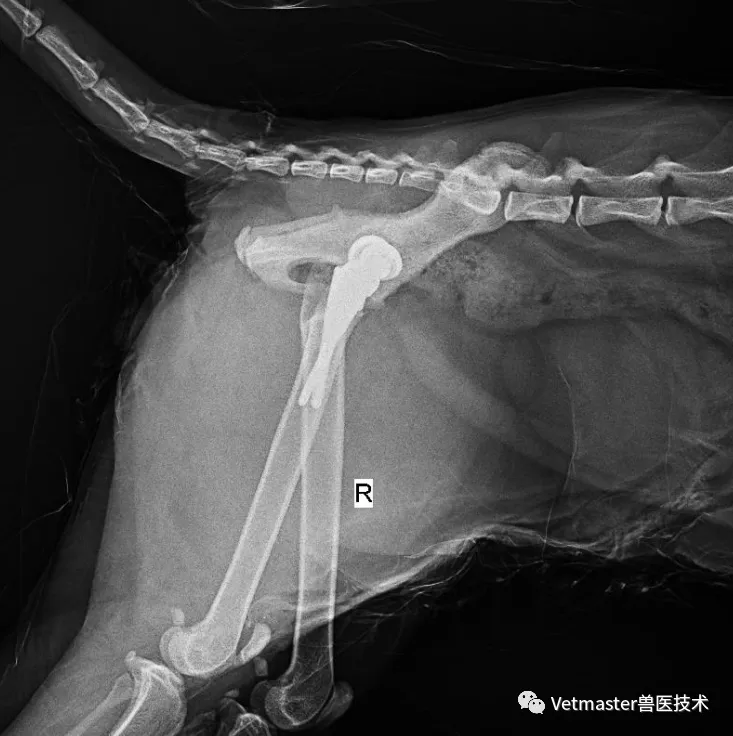
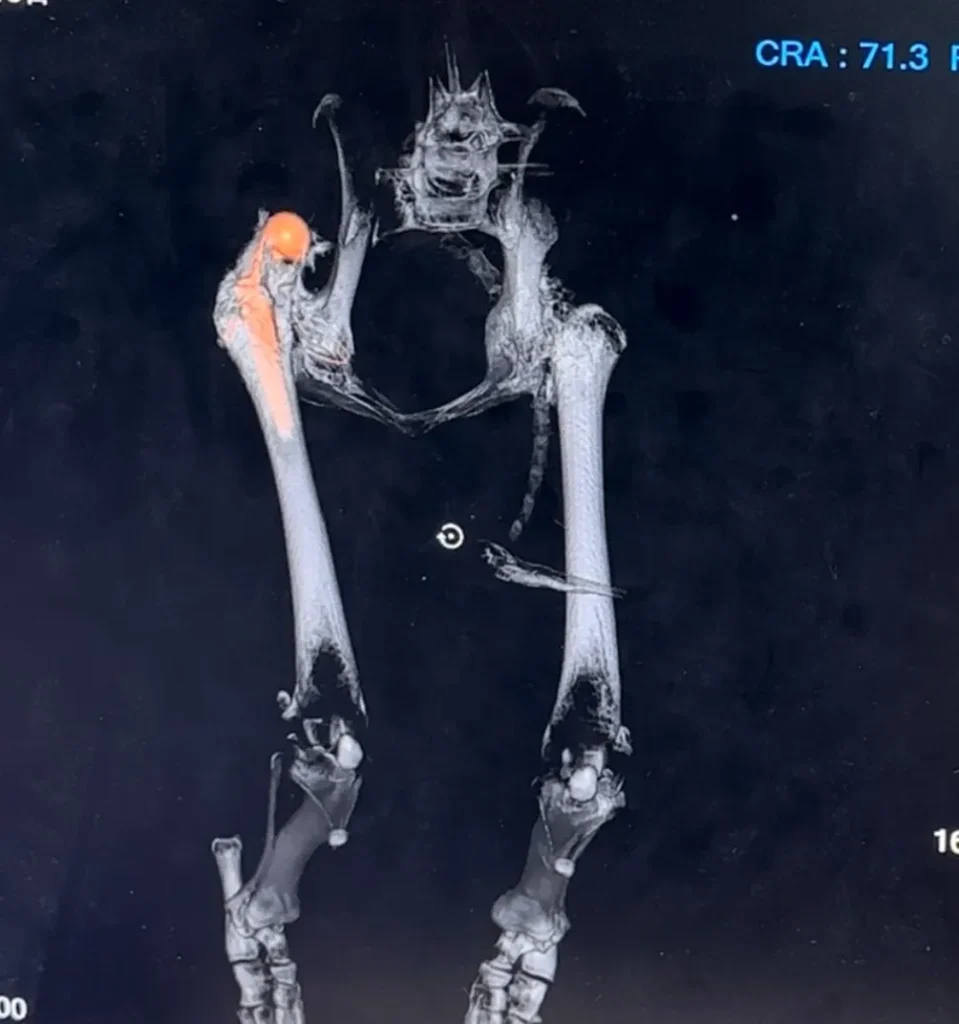
We performed orthogonal digital radiographs and a high-resolution 3D CT reconstruction. Looking at the scans, a glaring mechanical contradiction immediately jumped out at me:
- The acetabular cup was seated at an exceptionally closed abduction angle of roughly 30° (having been adjusted down from 25° during previous revisions).
- In classical orthopedic biomechanics, an overly steep, closed acetabular cup (sub-35°) predisposes an animal to ventral (downward) impingement and luxation, as the prosthetic neck levers against the ventral rim during adduction.
- Yet this dog was consistently dislocating dorsally (upward)!
Why? Because after four aggressive open surgeries, the dorsal hip capsule, the gluteal insertions, and the deep rotators (gemelli, internal obturator) were entirely non-functional. They were either torn to shreds, avulsed from their bony footprints, or replaced by friable, inflamed granulation tissue.
When periarticular soft-tissue tension drops to zero, textbook radiographic angles become completely irrelevant. The previous surgeons kept chasing cup angles, not realizing that without muscular and capsular restraint, no conventional fixed-bearing cup could keep the femoral head contained. Every time the dog took a step, the hamstring pull easily dragged the femoral head straight out the back door.
3. The Revision Strategy: Dual-Mobility and Artificial Ligament Suspension
Simply swapping out the cup or tweaking the version by another five degrees would have resulted in luxation number five. We needed a dual-track solution:
- Mechanical Anti-Dislocation Geometry: Replace the conventional articulation with the Vetmaster biological dual-mobility system. A dual-mobility implant incorporates a large, mobile polyethylene bearing surrounding a ceramic femoral head, which in turn articulates inside the metal shell. This mechanism provides a massive jump distance (the physical height the head must displace before clearing the cup margin) and an expansive range of motion before neck impingement occurs.
- Soft-Tissue Reconstruction: Rebuild the destroyed dorsal envelope using synthetic ligament augmentation to recreate physical tethering and resist dorsal migration during the critical early recovery phase.
4. Inside the Operating Theater: The "Lift Test"
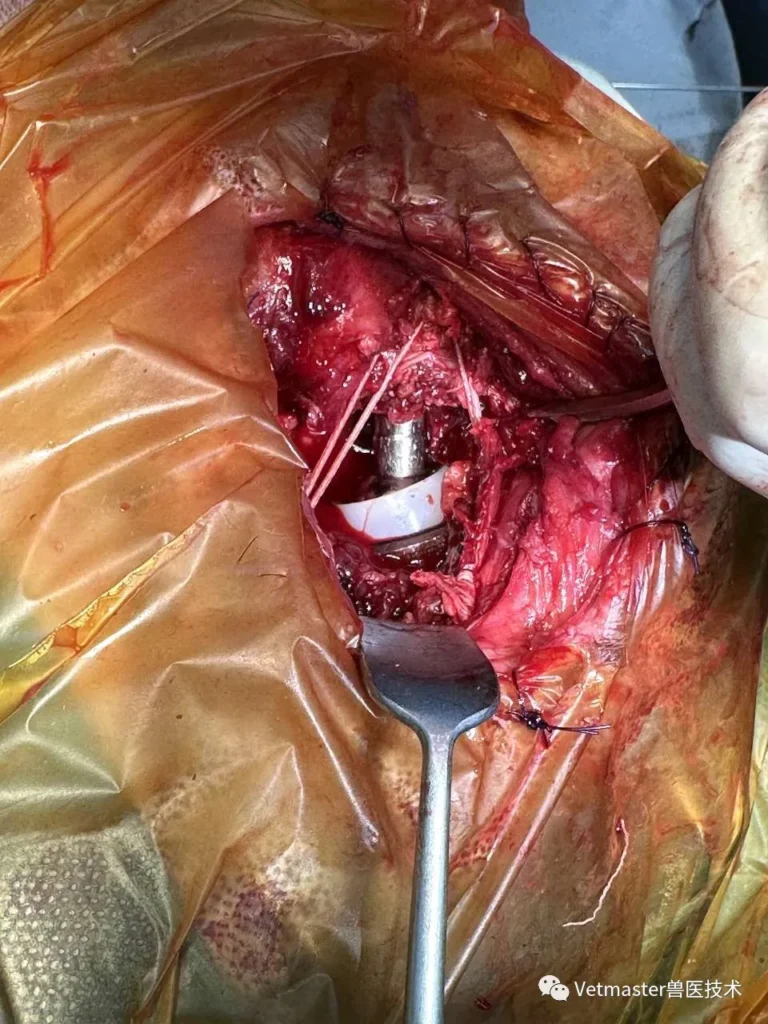
Entering the surgical field confirmed our worst radiographic suspicions. There was virtually no viable joint capsule left.
To demonstrate the extent of the failure, we reduced the existing prosthetic head back into the cemented cup. With minimal effort, using a pair of bone-holding forceps to gently tug the neck, the head slid out effortlessly with zero resistance. It had less stability than a marble sitting in a saucer.
We proceeded systematically:
- We thoroughly debrided the scar tissue and friable granulation bed while protecting the sciatic nerve.
- We anchored high-tensile synthetic ligaments to the dorsal acetabular rim and the greater trochanter, weaving a robust scaffold to recreate dorsal suspension.
- We prepared and seated the Vetmaster biological dual-mobility cup and reduced the ceramic head within the mobile bearing.
Once reduced, we conducted our ultimate intraoperative stability check. I clamped the bone-holding forceps onto the prosthetic femoral neck and applied firm, upward traction. We were able to gently lift the entire 22.5 kg dog slightly off the operating table solely by the prosthetic neck.
The dual-mobility construct held with absolute, uncompromising rigidity. There was zero subluxation, zero toggle, and smooth, fluid motion across the entire physiological arc. We secured our synthetic ligament suspension over the dorsal aspect, closed the deep fascial layers meticulously, and completed the closure.
5. The Anxious Post-Op Watch and Long-Term Recovery
Because of the four previous failures, the owner was like a bird startled by the mere twang of a bow. Over the first few days of hospitalization, any slight shift in the dog's posture sparked panic that the hip had popped out again.
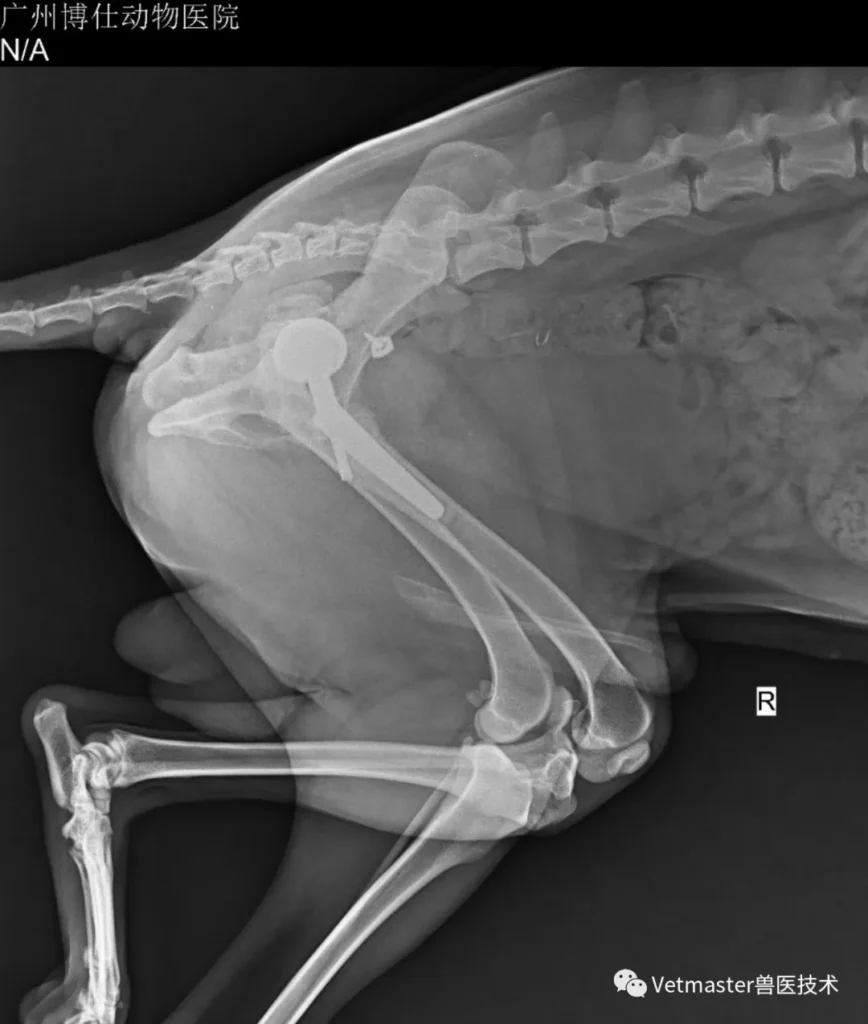
To reassure the owner, we took serial check radiographs. The implants remained perfectly seated: the dual-mobility head was centered cleanly, the cup orientation was stable, and the synthetic ligament maintained dorsal containment.
By day four—the exact timeframe when all previous surgeries had collapsed—the hip remained rock-solid. More importantly, the dog was actively bearing weight on the limb with confidence.
Within a week, we had him walking comfortably outside under double-leash support (a forelimb lead and a pelvic support sling to prevent slips). The gait was fluent, rhythmic, and symmetrical. After two months of living through a surgical nightmare, the Border Collie walked out of our hospital on four sound legs.
6. Clinical Takeaways from a Quadruple Revision
This case holds vital lessons for every orthopedic surgeon performing or managing total hip replacements:
- Stop Chasing Angles When Soft Tissues Are Gone: When an implant repeatedly luxates despite acceptable component positioning, the problem is no longer geometric—it is biologic and capsular. Repeatedly steepening the cup only introduces new impingement vectors without addressing the absent soft-tissue envelope.
- Dual-Mobility Is Essential for Revision Surgery: In revision cases where multiple previous surgeries have compromised muscular tension, traditional single-mobility heads carry unacceptable failure rates. Dual-mobility technology provides the physical jump distance required to survive in an unstable soft-tissue environment.
- Synthetic Augmentation Restores the Biological Barrier: When the native capsule is destroyed, you cannot rely on scar tissue alone to form a functional neo-capsule. Using synthetic ligament prostheses to bridge the defect provides immediate mechanical backup while the deeper tissues mature.
Revision total hip replacement is unforgiving, but with disciplined biomechanical reasoning, even a quadruple failure can be given a second chance to run.