
Bone Ingrowth vs. Acrylic Glue: Why Biological Total Hip Replacement Is the Definitive Choice for Cats and Small Dogs
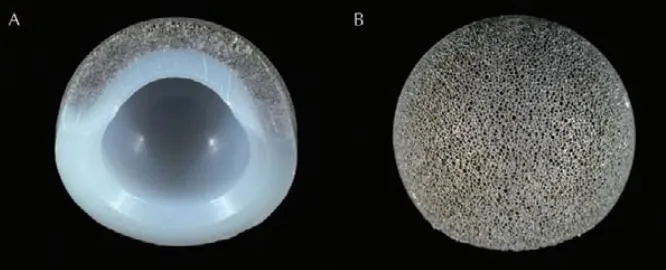
A dangerous myth has circulated in veterinary orthopedics for decades: that delicate, lightweight patients like cats and toy-breed dogs are "adequately served" by 1970s-era acrylic bone cement. Having performed both cemented and cementless procedures over my twenty-three-year career—and having revised far too many loose, infected cement mantles—my clinical conviction is absolute. Bone cement is an inert mechanical grout that never achieves biological fusion; worse, its exothermic curing risks thermal necrosis and Bone Cement Implantation Syndrome (BCIS). Given that cats and small dogs routinely live 15 to 20 years and generate extreme multi-body-height jump forces, relying on a 1 mm plastic mantle is a ticking biomechanical time bomb. Biological 3D-printed titanium implants that achieve true living osseointegration—paired with anti-dislocation dual-mobility articulation—are the only responsible choice. Over the past seven years and through my journey past 1,000 joint replacements, my operating room has maintained an uncompromising 100:1 ratio of biological to cemented hips. Here is the unvarnished science behind that decision.
Carrying the Craft to Bangkok: Feline Total Hip Replacement Keynote at the 17th VPAT Congress
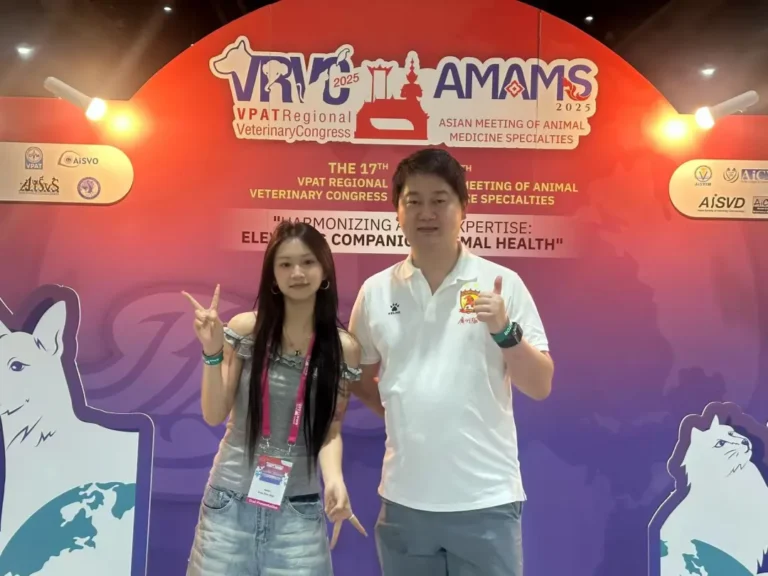
In June 2025, I had the honor of stepping onto the keynote stage in Bangkok at the 17th VPAT (Veterinary Practitioner Association of Thailand) Congress to present our clinical work on Feline Total Hip Replacement (THR). Delivering an extensive keynote entirely in English to hundreds of veterinary surgeons and university professors from across Southeast Asia was a fresh and deeply rewarding milestone. Feline hip arthroplasty is a demanding frontier requiring microscopic precision to match tiny acetabula, stovepipe femurs, and extreme jumping biomechanics. Sharing our biological dual-mobility protocols and long-term recovery data was about more than mechanics—it was about proudly representing the clinical heritage of South China Agricultural University (SCAU) and proving that Chinese veterinary innovation is ready to elevate standards and relieve animal suffering wherever it is needed.
Salvaging a Disaster: Revision of a Four-Times Luxated Total Hip Replacement in a Border Collie Using a Dual-Mobility System
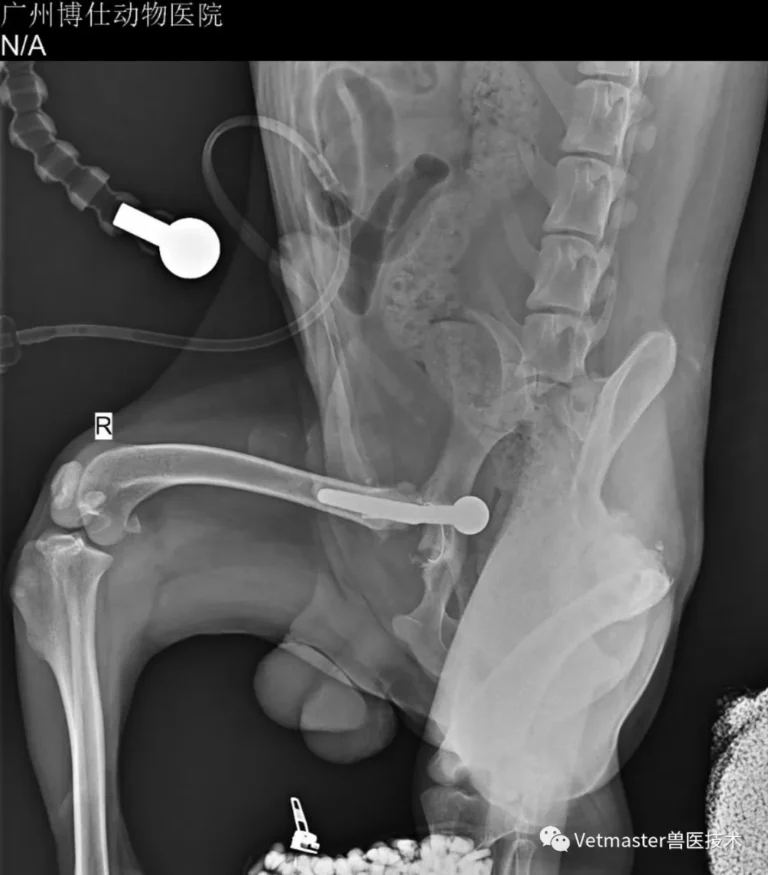
When this desperate owner drove over 1,000 kilometers to bring his 5.5-year-old, 22.5 kg Border Collie to Guangzhou Boss Animal Hospital, the dog was facing his fifth hip surgery in just over two months. Following an initial hybrid replacement at another clinic, the dog had suffered four consecutive dorsal hip luxations, each recurring within two to five days despite repeated attempts to alter cup angles down to an extreme 25°. Analyzing the patient's CT, I identified a striking biomechanical contradiction: an overly closed cup should cause ventral luxation, yet this dog kept popping out dorsally—proving the dorsal muscular and capsular envelope had been completely destroyed. My colleague Dr. Yu Jiezhou and I revised the joint using the Vetmaster cementless dual-mobility system reinforced with synthetic ligament suspension. By replacing mechanical friction with dual-mobility jump distance, we achieved rock-solid stability—demonstrated intraoperatively by gently lifting the dog off the table by the femoral neck without dislocation. Today, the dog walks soundly, free from the revision nightmare.
Sequential Bilateral Biological Total Hip Replacement in a British Shorthair Cat: Anatomy, Technique, and Overcoming Contralateral Artifacts
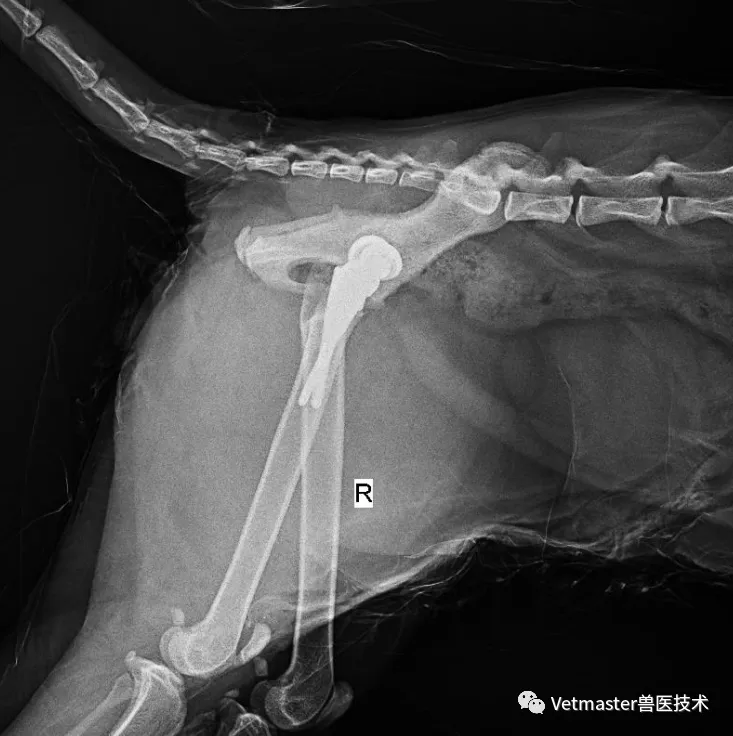
Feline hip dysplasia is vastly underdiagnosed because cats are masters at masking chronic orthopedic pain. In this case, a 2-year-old male British Shorthair weighing 5.8 kg presented with severe bilateral hip laxity, advanced articular wear, and marked lameness. Cats possess unique anatomy: an exceptionally tiny acetabulum paired with a straight, "stovepipe" femoral canal, along with explosive jumping biomechanics requiring extreme range of motion. To restore lifelong, pain-free athletic ability without dislocation, I performed sequential bilateral cementless total hip replacements (THR) using the Vetmaster dual-mobility system (12 mm cup, #3 stem). This report details the technical execution of both stages—including the specific intraoperative challenge during the second stage, where the contralateral metal prosthesis blocked lateral fluoroscopic cup measurement, requiring precise C-arm patient leveling and mechanical alignment guidance.