
Carrying the Craft to Bangkok: Feline Total Hip Replacement Keynote at the 17th VPAT Congress
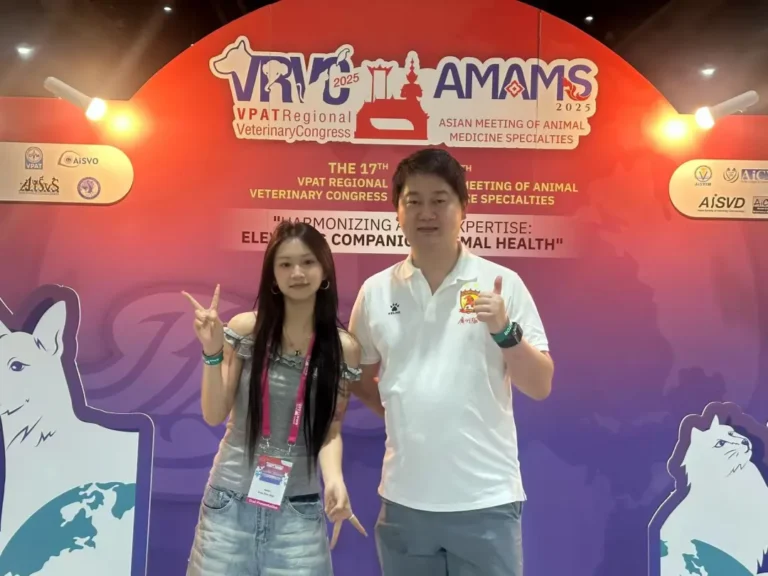
In June 2025, I had the honor of stepping onto the keynote stage in Bangkok at the 17th VPAT (Veterinary Practitioner Association of Thailand) Congress to present our clinical work on Feline Total Hip Replacement (THR). Delivering an extensive keynote entirely in English to hundreds of veterinary surgeons and university professors from across Southeast Asia was a fresh and deeply rewarding milestone. Feline hip arthroplasty is a demanding frontier requiring microscopic precision to match tiny acetabula, stovepipe femurs, and extreme jumping biomechanics. Sharing our biological dual-mobility protocols and long-term recovery data was about more than mechanics—it was about proudly representing the clinical heritage of South China Agricultural University (SCAU) and proving that Chinese veterinary innovation is ready to elevate standards and relieve animal suffering wherever it is needed.
Sequential Bilateral Biological Total Hip Replacement in a British Shorthair Cat: Anatomy, Technique, and Overcoming Contralateral Artifacts
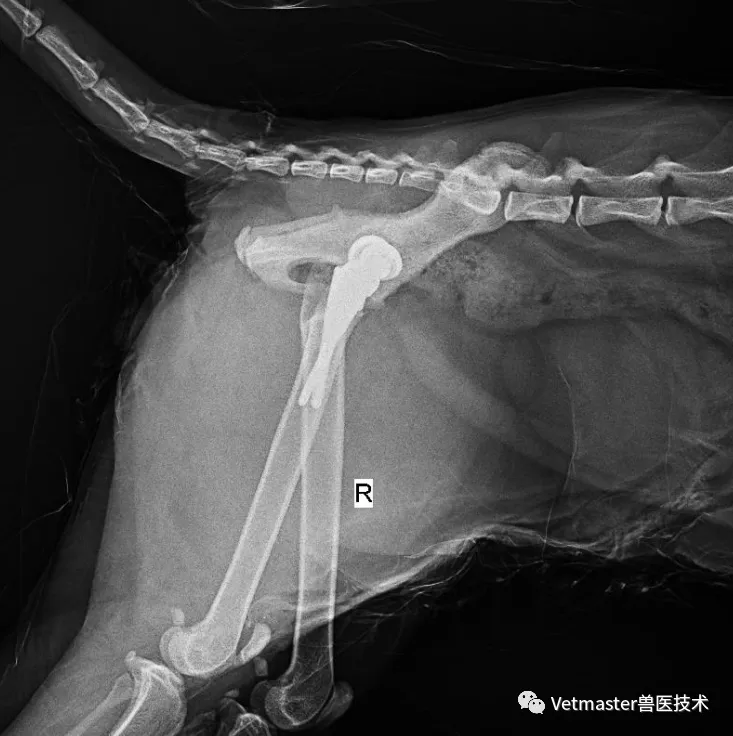
Feline hip dysplasia is vastly underdiagnosed because cats are masters at masking chronic orthopedic pain. In this case, a 2-year-old male British Shorthair weighing 5.8 kg presented with severe bilateral hip laxity, advanced articular wear, and marked lameness. Cats possess unique anatomy: an exceptionally tiny acetabulum paired with a straight, "stovepipe" femoral canal, along with explosive jumping biomechanics requiring extreme range of motion. To restore lifelong, pain-free athletic ability without dislocation, I performed sequential bilateral cementless total hip replacements (THR) using the Vetmaster dual-mobility system (12 mm cup, #3 stem). This report details the technical execution of both stages—including the specific intraoperative challenge during the second stage, where the contralateral metal prosthesis blocked lateral fluoroscopic cup measurement, requiring precise C-arm patient leveling and mechanical alignment guidance.