1. Two Opposing Paradigms: Acrylic Grout vs. Living Symbiosis
To understand why veterinary orthopedic surgeons are divided over hip replacement techniques, one must look at how an artificial stem anchors within living bone:
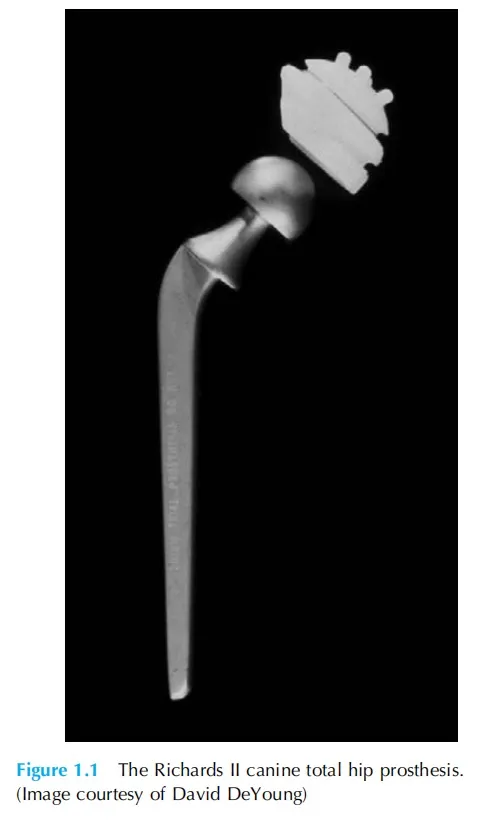
A. Cemented THR: The 1970s Acrylic Grout
Cemented hip arthroplasty relies on polymethylmethacrylate (PMMA), commonly called bone cement. In crude chemical terms, PMMA behaves exactly like the two-part epoxy glue you buy in a local hardware store. A liquid monomer is poured into a polymer powder, stirred, and packed into the femoral canal. As it cures, an intense exothermic reaction generates high heat, solidifying the plastic into a mechanical space-filler.
Its stability equation is static:
- Initial Stability: Physical occupation by hardened cement.
- Final Stability: Physical occupation by hardened cement.
PMMA forms zero biological bond with host bone. It does not osseointegrate; it cannot remodel; it never heals. It is an inert, artificial wedge.
B. Biological (Cementless) THR: True Living Symbiosis
Biological total hip replacement anchors via titanium and specialized alloy implants engineered with three-dimensional porous micro-architectures that mimic natural trabecular bone.
Its stability equation is biological:
- Initial Stability: Immediate, high-precision frictional press-fit.
- Final Stability: Active osteoblast migration and direct bone ingrowth—the implant lives and remodels with the bone.
As a foreign veterinary colleague once memorably put it to me: "Cement is not a living thing; a biological stem lives with the bone."
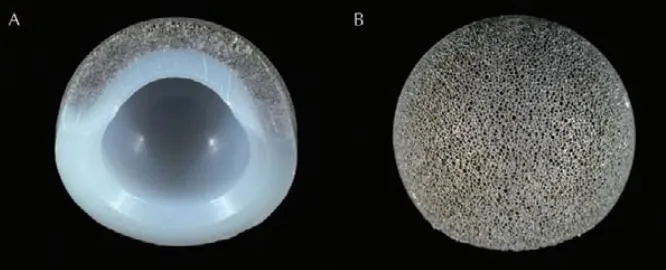
2. The Hidden Pathology of Bone Cement (PMMA)
Why did forward-thinking surgeons begin abandoning bone cement in small animal orthopedics? The reasons are rooted in cellular necrosis and systemic toxicity:
- Thermal Injury and Interface Loosening:
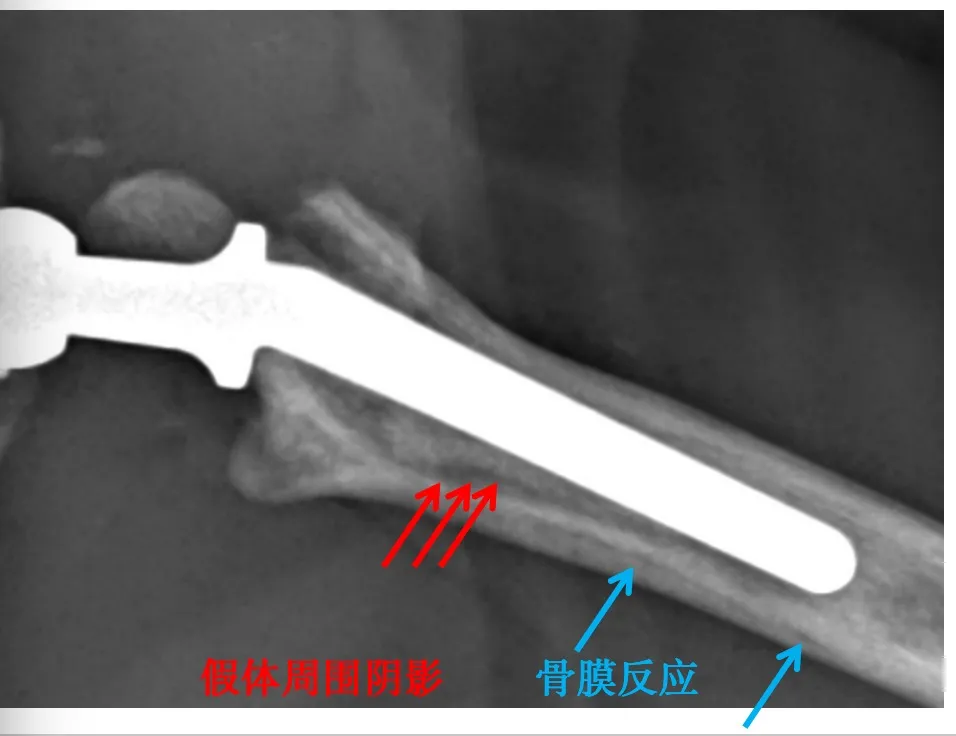
As PMMA polymerizes inside the closed confines of a femoral canal, the chemical reaction generates severe local heat. This thermal spike can scorch adjacent endosteal bone, destroying local microvascular perfusion. The resulting necrotic bone layer provides poor long-term structural support. Over years of repetitive cyclical loading, this thin, 0.5–2.0 mm cement mantle micro-fractures, inevitably creating radiolucent shadow zones, periosteal reactions, and gross aseptic loosening. - Bone Cement Implantation Syndrome (BCIS):
This is an acute, life-threatening hazard that human orthopedic and anesthesia teams treat with immense vigilance. During cement pressurization, intramedullary hypertension forces methylmethacrylate monomers, marrow fat, and tissue thromboplastins into the venous circulation. This triggers sudden intraoperative hypotension, cardiac arrhythmias, pulmonary micro-embolisms, shock, and cardiac arrest. Comprehensive literature reviews (such as Woo et al.) document that BCIS-induced cardiac arrest occurs in 0.6% to 10% of cemented human procedures, with mortality rates between 0.02% and 0.5%. In fragile or elderly animal patients, it remains an unpredictable anesthetic hazard. - The Revision Nightmare:
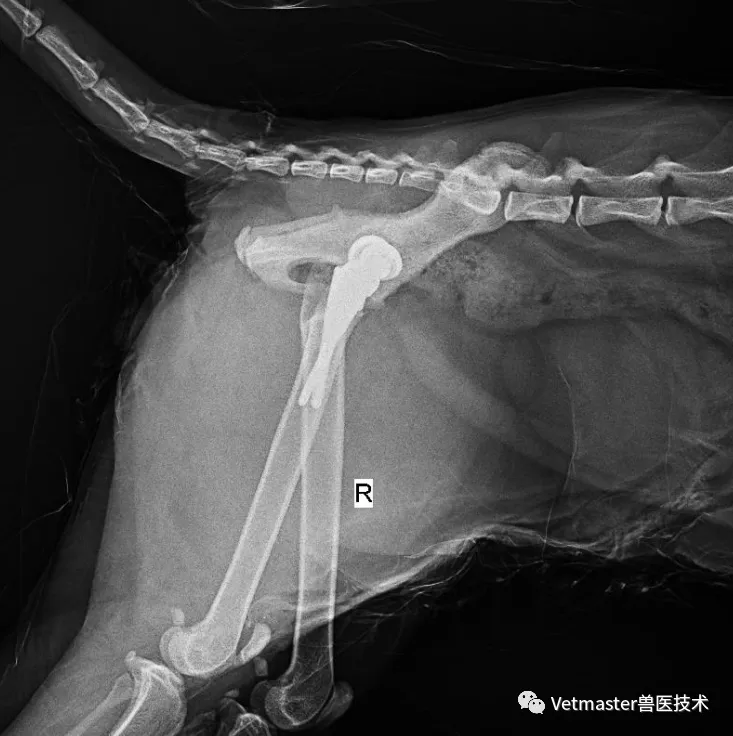
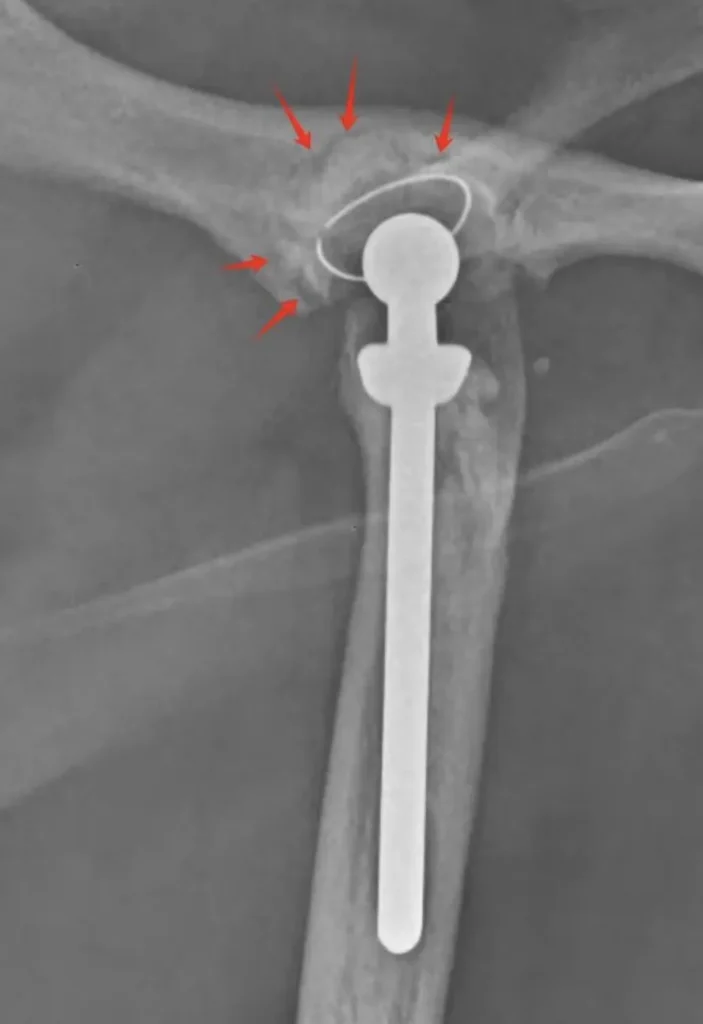
Early in my career, I placed my share of imported cemented systems. Years later, some of those patients returned to Guangzhou Boss Animal Hospital:- A Shiba Inu presented three years post-op with a loose cemented stem surrounded by wide radiolucent halo lines and severe periosteal reaction.
- A cat presented with a loose cemented implant and osteolysis.
- Multiple small dogs presented where their all-polyethylene, unbacked cemented cups had experienced severe dorsal rim wear, requiring complex revisions.
If you have ever had to spend three exhausting hours carefully chiseling and drilling petrified, fragmented acrylic cement out of a fragile, paper-thin femoral cortex just to salvage a leg, you will never casually reach for bone cement again.
3. The Small Animal Paradox: 20-Year Lifespans and Jumping Biomechanics
There is a widespread, lazy misconception in our profession: "Because cats and toy-breed dogs are small and lightweight, a simple cemented hip is good enough."
That thinking has the biology completely backward. In reality, small animals present a far harsher biomechanical environment than large dogs:
- 15- to 20-Year Lifespans:
In human medicine, bone cement is primarily reserved for low-activity, elderly geriatric patients whose biological bone healing is compromised and whose remaining life expectancy is ten to fifteen years. But a cat or a toy poodle is not an eighty-year-old human! Cats routinely live into their late teens and twenties. A two-year-old cat receiving a cemented hip will subject that thin plastic mantle to fifteen or eighteen years of relentless mechanical loading. Inert acrylic cement cannot survive that long without micro-fatigue and aseptic breakdown. A biological implant, by contrast, becomes stronger over time as bone remodels through its porous lattice. - Extreme Range of Motion & Jump Distance:
Cats are anatomical contortionists. They can jump eight to nine times their body height, perform mid-air twists, and hyperextend their hindquarters into extreme angles.
Cemented cups are fundamentally restricted to fixed-bearing liners. In tiny feline sizes, a fixed cup has a shallow jump distance—meaning the femoral head only has to displace a couple of millimeters laterally before popping out over the cup rim.- A published study on five cats undergoing cemented THR reported a 20% dislocation rate (one out of five), alongside cement leakage causing periosteal reactions in the distal canal.
- A major 10-year UK multicenter study of 44 cats (56 hips) treated with cemented THR documented an overall complication rate of 19.6% (11/56).
4. 3D-Printing Innovation vs. the "Sour Grapes" Narrative
When domestically developed 3D-printed biological stems began transforming Chinese veterinary orthopedics, certain manufacturers who lacked metal additive manufacturing capabilities began spreading rumors across social media:
"3D-printed stems are dangerously weak! The printing process makes the metal brittle, and thin micro-stems will snap under load. Forged stems or bone cement are the only reliable options!"
I have to chuckle at that rhetoric. In Cantonese, we call this the classic fable of the fox declaring the out-of-reach grapes to be sour.
The reality?
- Global pioneer BioMedtrix in the United States fully transitioned its commercial biological BFX line to 3D printing back in 2016.
- Europe’s premier cementless systems have engineered micro-biological implants for felines for years without ever touching bone cement.
- High-end 3D-printed titanium alloys produced under modern Electron Beam Melting (EBM) and Laser Powder Bed Fusion (LPBF) have undergone rigorous third-party mechanical testing, meeting and exceeding state-recognized standards (such as our T/GDAAV 1011—2024 group standard).
Attacking 3D printing is nothing more than commercial anxiety from manufacturers stranded on the wrong side of technological progress.
5. The 100:1 Verdict: Choosing the Living Solution
Is biological total hip replacement easy? Absolutely not.
Biological fixation demands uncompromising surgical discipline. You cannot rely on a pool of acrylic glue to fill your errors. Your reaming must be concentric to the fraction of a millimeter; your canal broaching must achieve a tight, rotational press-fit; and your implant size must fill 85% or more of the proximal canal without splitting the cortex. It has a steeper learning curve, and the hardware is more technologically complex.
Yet, as a surgeon standing before an owner who has entrusted their companion’s future to my hands, the moral choice is obvious.
Since 2019, across the hundreds of total hip replacements I have performed—and having officially surpassed the 1,000-case threshold earlier this year in 2026—my ratio of biological to cemented implants has remained roughly 100:1. I reserve bone cement only for rare, extreme salvage cases where severe cortical bone stock loss leaves zero cancellous bed for bone ingrowth. In every other scenario, I choose biological.
When we operate on an animal, we are not looking for a six-month Band-Aid. We are building a joint that must outlast the animal itself. Biological fixation is the only method that honors that promise.