1. Barefoot on the Red Earth
When I was a boy, my parents took me to live in the countryside for a period. I spent my days clamoring to wander outside, tracing irrigation ditches, riverbanks, and dirt trails with the neighborhood kids.
At first, I wore cheap plastic sandals. But I quickly noticed that the local village kids—and many of the working farmers—simply went barefoot. Curious, I kicked off my sandals and tried it. Despite the inevitable scoldings from my family, I instantly fell in love with that sensation: the raw, tactile lightness of skin meeting earth, unfiltered and free.
By the fourth grade, our class was assigned to an outlying branch campus. With fewer teachers around, the playground rules were practically nonexistent. The second the bell rang, someone would kick off their shoes, and the rest of us would follow without hesitation, tearing across the dirt lot in games of tag. For that entire school year, I spent more time barefoot than shod. Eventually, fifth grade forced my feet back into the stiff canvas of our "Three Balls" brand cleated shoes, but the root of the "barefoot mentality" had already buried itself deep in my psyche.
To this day, I have never lost that feeling: a person with bare feet moves faster, feels the ground directly, and has absolutely nothing to lose.
2. Pragmatism, Posturing, and the "Guru" Era
Years later, I went to veterinary school at South China Agricultural University and stepped into small animal clinical practice back in 2002.
In those early days, national conferences and clinical seminars had a rigid, unspoken hierarchy:
- Tier 1 was exclusively reserved for Western clinicians flown in from abroad.
- Tier 2 belonged to visiting veterinarians from Hong Kong and Taiwan.
- Tier 3 went to colleagues from Beijing.
I found this puzzling. Here in Guangdong, bordering Hong Kong, we were at the vanguard of economic reform; our veterinary faculties had started early, and several of our senior professors had trained extensively in Western institutions. We had formidable clinical volume and hands-on skill. Why weren't our local clinicians stepping onto those podiums to teach?
The answer was characteristically Cantonese: we were too pragmatic. Most clinicians in our region just wanted to keep their heads down, focus on surgery, make a decent living, and avoid the limelight. We hated posturing and showing off.
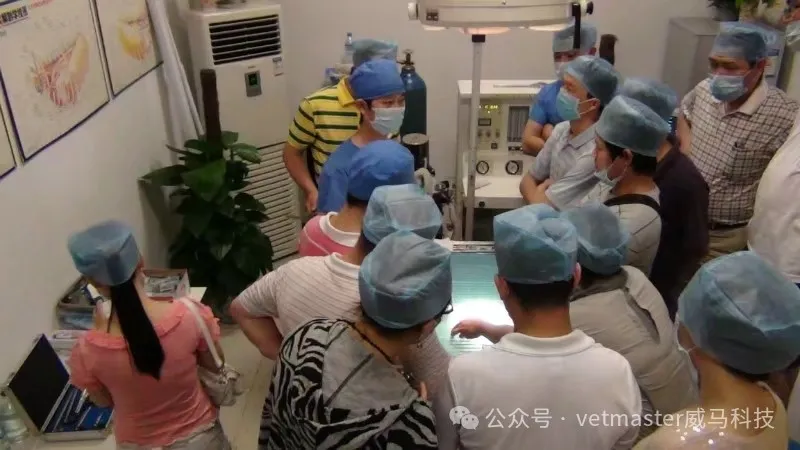
Over time, however, I realized that quiet humility has a dangerous downside: it leaves the podium open to charlatans.
Ten to fifteen years ago, I watched so-called "gurus" lecturing to hundreds of practitioners on complex procedures like TTA (Tibial Tuberosity Advancement) inside online QQ groups. In reality, some of these speakers had never even laid hands on the specialized implants, let alone operated on a live dog's stifle—they had simply downloaded a few foreign slides and packaged themselves as authorities. Eager young clinicians soaked up these watered-down lectures, assuming this was what true orthopedics looked like. Meanwhile, surgeons who actually understood the anatomy stayed silent.
I realized that keeping quiet was no longer a virtue. Someone had to step forward and cut through the hype.
After all, a barefoot person has nothing to fear from the shod. And besides, I was about to arm myself with real, heavy academic shoes.
3. Founding SAO: From "Heretics" to "Orthodoxy"
That shared frustration brought me into contact with Dr. Li Derong from Chongqing and a few other kindred spirits during the early days of blogging. We decided to shake up the landscape, founding SAO (Small Animal Orthopedics) to deliver rigorous, no-nonsense orthopedic education across China.
To our surprise, SAO caught fire almost immediately and remained a dominant training force for over a decade.
Within our circle, I had the highest academic credentials—pursuing my master's and doctoral degrees—and I could readily dissect the original English orthopedic literature. Colleagues immediately branded me part of the "Academic School." Deep down, however, I knew how the conservative veterinary establishment viewed us: they thought we were wild, dangerous heretics.
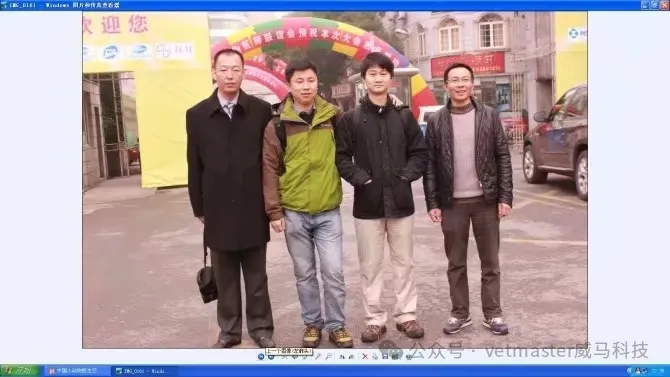
Back around 2012 to 2014, the self-proclaimed "orthodox" mainstream practiced very basic plating and pinning. Everything I championed—linear and circular external skeletal fixators (ESF), double-plating for complex comminuted fractures, TTA, and especially canine Total Hip Replacement (THR)—was mocked. Colleagues whispered behind my back: "Why would anyone put two plates on one bone? Why would any dog in China ever need an artificial hip? It's absurd. He's teaching foreign heresy."
They considered themselves the orthodox gatekeepers of Mount Hua; fine by me—that made me the proud outsider from the wild sects.
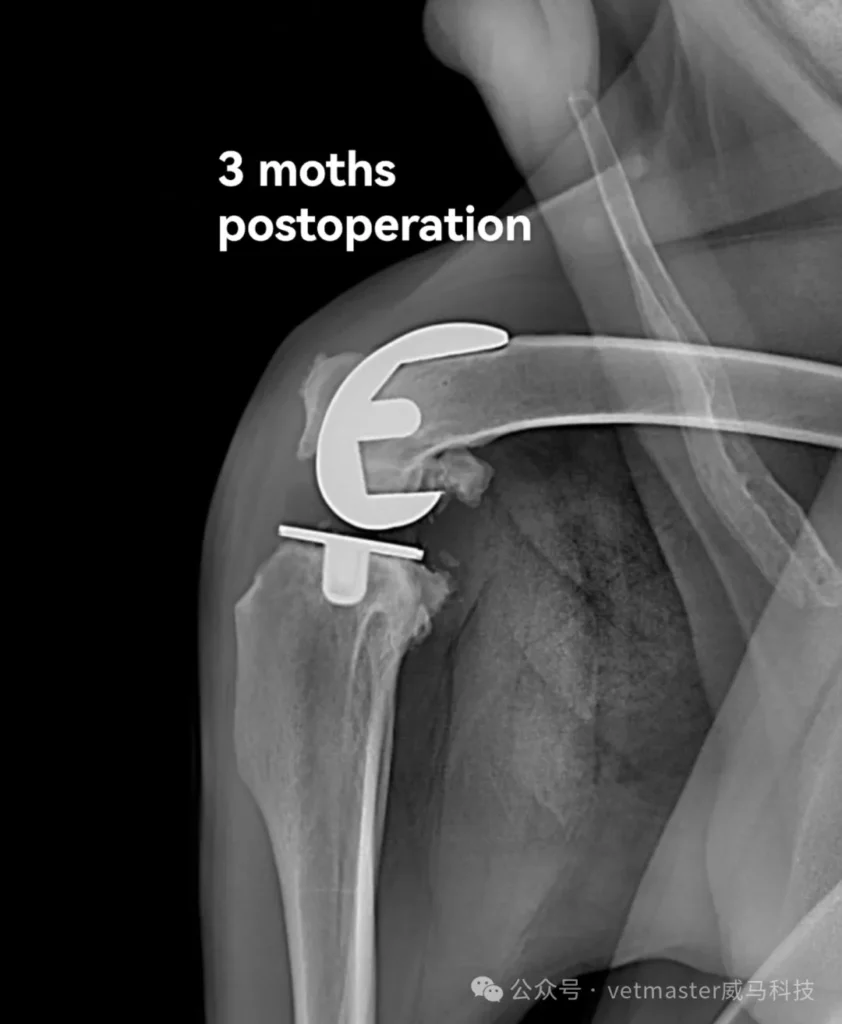
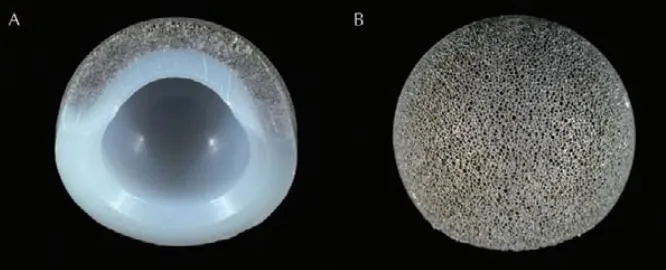
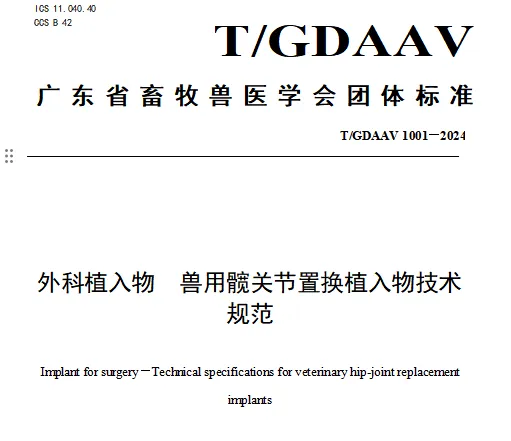
Years rolled on. As I completed my doctoral research on veterinary biomaterials, published peer-reviewed papers, patented surgical instruments, and logged hundreds of successful joint replacements, the irony came full circle. The very techniques once condemned as "unnecessary heresies" became recognized as standard clinical baselines across China. The very clinicians who had once scoffed at canine total hips began quietly enrolling in my masterclasses to learn how to do them.
Suddenly, the industry rebranded me: I was no longer the "wild heretic"; now I was hailed as the "orthodox academic authority."
I had to laugh. The truth is, if I showed them the experimental joint revision strategies, complex osteotomies, and custom 3D-printed implants I am testing in my operating room today, they would probably brand me a heretic all over again for the next ten years.
4. Holding the Line Against Corporate Capital
In 2015, institutional venture capital flooded the Chinese pet healthcare sector.
Almost overnight, the corporate narrative took over: standalone clinics were declared dead, and the future supposedly belonged only to massive corporate chains boasting multi-million-dollar lobbies, lavish reception areas, and centralized corporate management. Many of those trumpeting this narrative joined the corporate ranks, hosting seminars to convince independent clinicians that resistance was futile.
The playbook was aggressive. If an independent clinic refused to sell out, corporate chains would scout storefronts fifty meters away, pour money into a glossy facade, slash service prices, and attempt to poach your staff to choke you out. Many independent owners panicked and sold their life’s work.
I never bought into the corporate mythology.
My staffing and clinical philosophy has always been simple:
As long as my surgical clinic has me, one skilled surgical assistant, and one vigilant anesthetist, we will never starve. If we have a great receptionist out front, even better.
I am a craftsman, not a corporate asset manager. I don't care about expansive reception lobbies, corporate scripts, or inflated EBITDA multiples. I care about laminar-flow cleanrooms, uncompromised asepsis, and solid cortical purchase on a locking screw.
When capital expanded, I didn't retreat. In 2017, when we launched our surgical referral center in Nanshan, Shenzhen, we chose a street that already had four major corporate hospitals within a hundred meters. In 2019, when I founded Guangzhou Boss Animal Hospital, I looked down the road and saw three chain hospitals within fifty meters.
I smiled, felt that familiar surge of adrenaline, and opened our doors right next to them.

I knew our competitive edge: we don't dilute ourselves with pet grooming, boarding, or high-margin retail gimmicks. We run a pure surgical and medical referral center. When a difficult fracture fails elsewhere, when a hip replacement luxates four times at another clinic, or when a juvenile dog needs an intricate pelvic osteotomy, owners don't care about a marble reception desk—they care about the hands holding the scalpel.
5. Remaining the Barefoot Craftsman
After more than twenty-three years in the operating theater, through all the industry booms, bubbles, and corporate tides, I remain at heart that barefoot boy from the countryside.
In modern veterinary medicine, there will always be the "shod"—those weighed down by corporate quotas, venture capital metrics, marketing consultants, and manufactured prestige. Their shoes are expensive, but they cannot feel the ground beneath their feet.
And then there are the "barefoot"—those who travel light, stay grounded in raw clinical reality, and rely entirely on the truth of their hands and the outcome of their patients.
Trends will come and go, capital will inflate and collapse, but clinical craftsmanship endures.
The story of the barefoot and the shod is far from finished.