1. The Moscow Amphitheater: Presenting Chinese Knee Surgery to the World
Back in December 2024, during the depths of the Russian winter, I landed in Moscow.
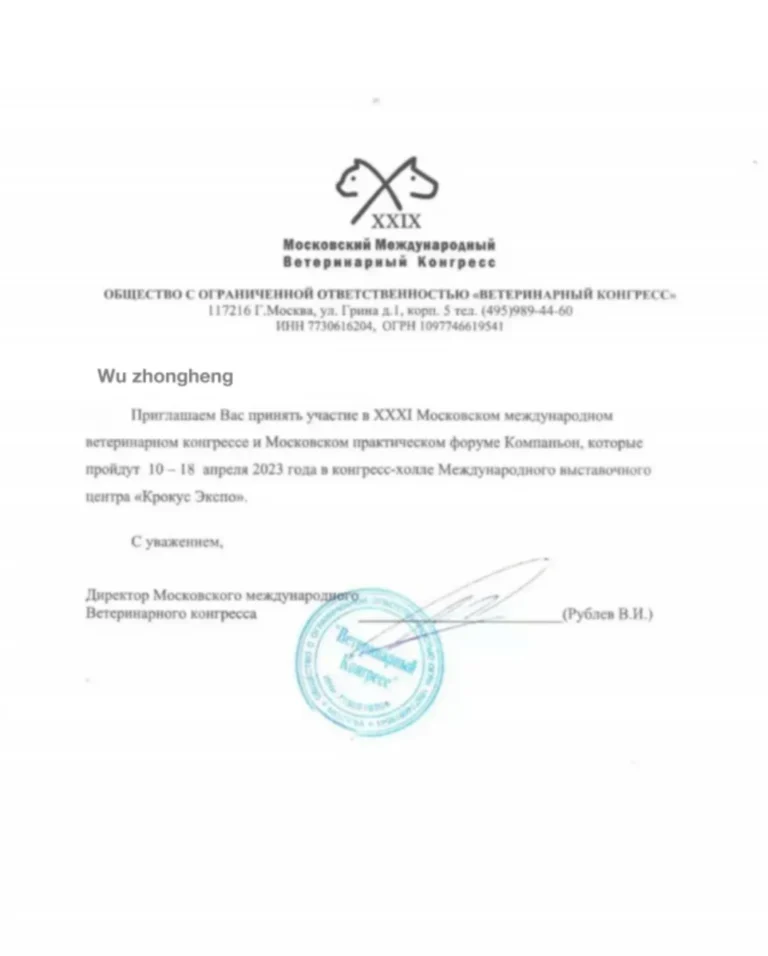
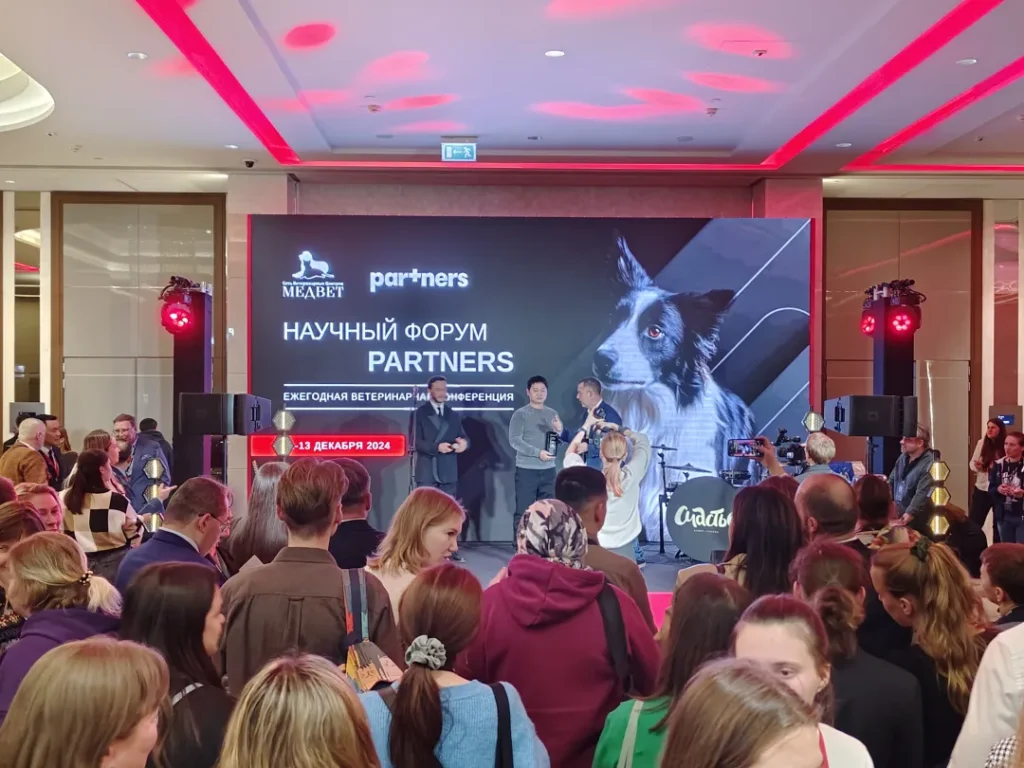
I was there as an invited keynote speaker at the Partners Science Forum Annual Veterinary Congress, one of the most prominent academic gatherings on the Eurasian veterinary calendar. My mission was straightforward and dear to my heart: to share the clinical experience, 3D-printed biological designs, and surgical protocols that my team and I have developed in small animal total knee arthroplasty (TKA) over the preceding years.
Looking out across the grand amphitheater packed with hundreds of Russian veterinary surgeons was a surreal experience. My presentation was delivered in English, accompanied by simultaneous Russian translation through the delegates' headsets.
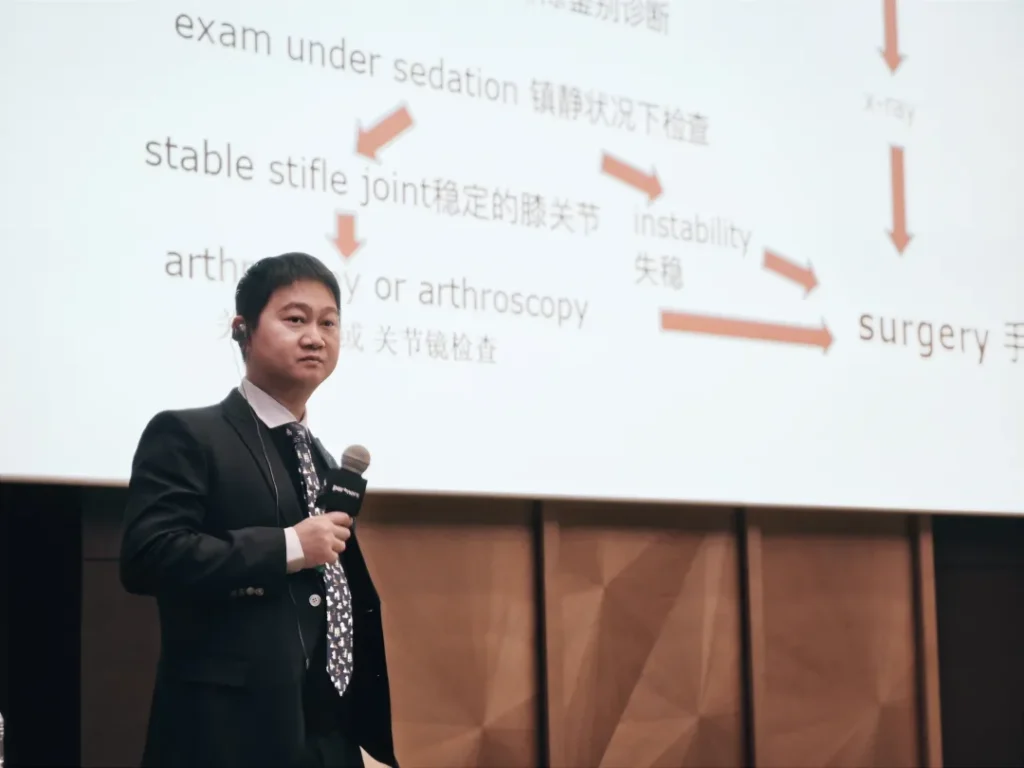
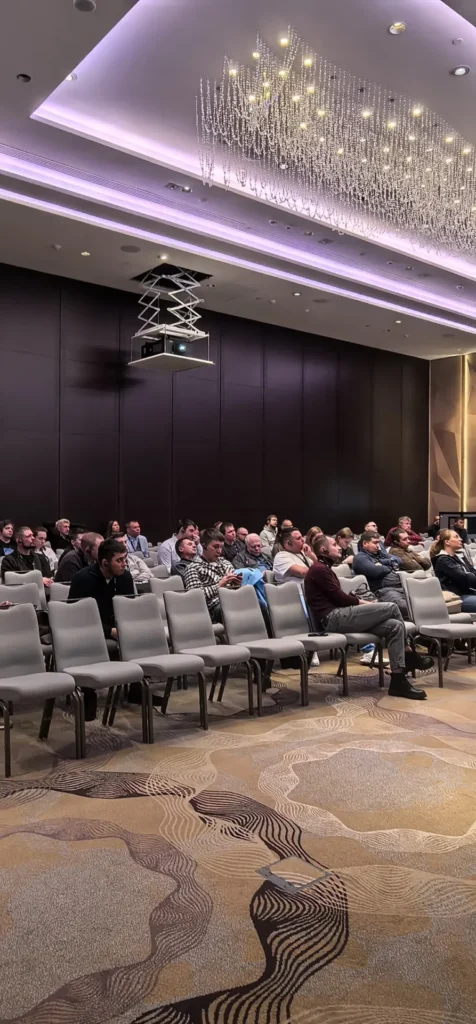
My sincere gratitude goes to Nestlé Purina for fully sponsoring my entire itinerary for this Russian tour—yes, the very same Nestlé Purina that manufactures pet food! Their generous academic support built a vital cross-border bridge, allowing independent clinical research from southern China to be heard on a premier European stage.
2. Comrades on the Road: Winning Over the Russian Audience
I had the immense privilege of traveling to Moscow alongside my longtime friend and renowned veterinary orthopedic surgeon, Dr. Xu Dongxing, who delivered an exceptional masterclass on advanced small animal fracture fixation.
Teaching in Russia is an exhilarating experience because Russian clinicians have an unmistakable professional character. As I observed in my travel notes, Russian veterinarians are refreshingly blunt, bold, and fiercely direct. Unlike the more reserved, deferential atmosphere typical of domestic classrooms, Russian surgeons don't nod politely if they have doubts—they fire questions directly at the podium, challenging your biomechanical premises and demanding proof.
I loved every second of it.
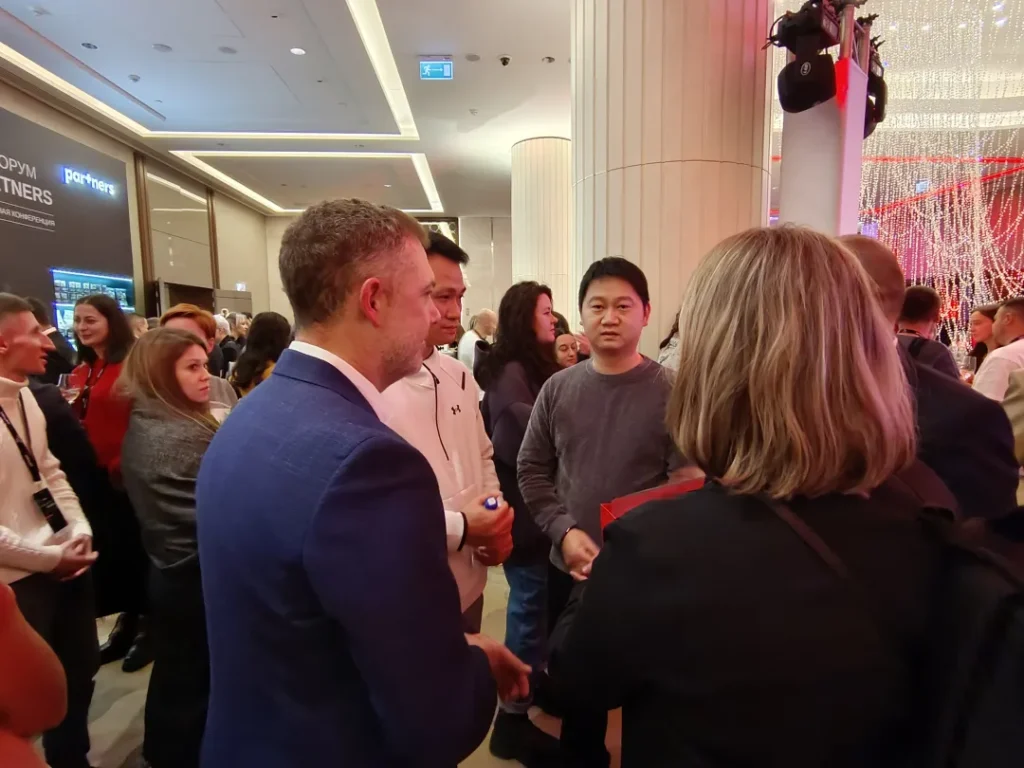
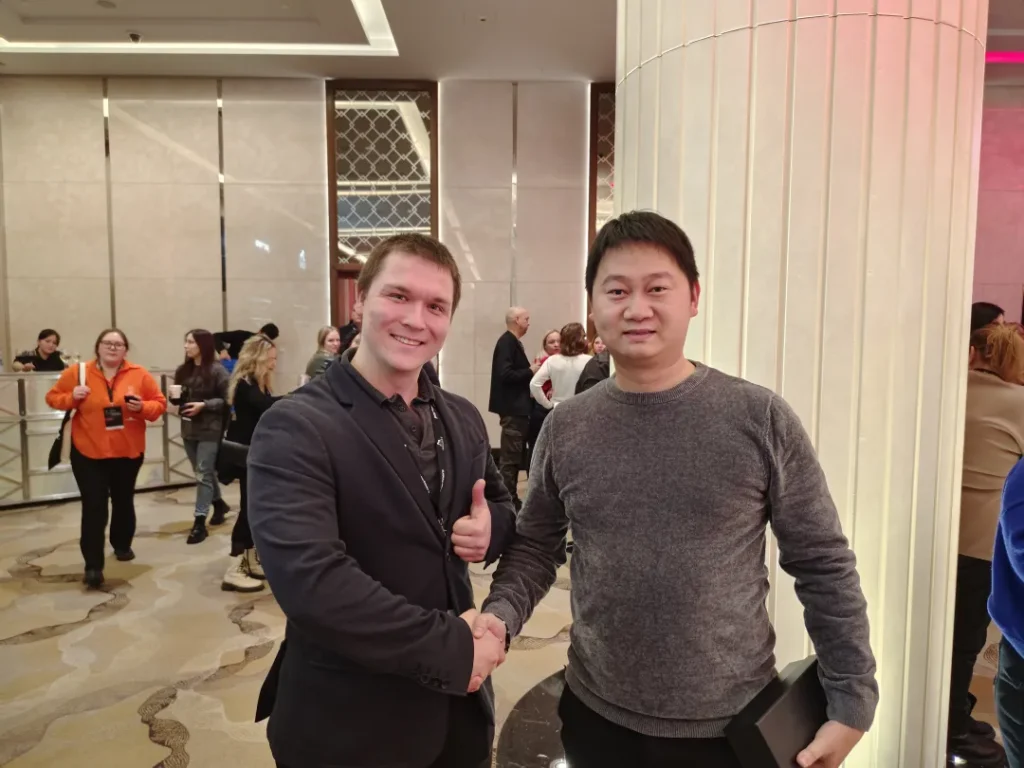
When you stand on a foreign stage backed by genuine clinical data, orthogonal follow-up radiographs, and unedited operative videos of active dogs walking pain-free on biological knee implants, you don't need marketing fluff. Once they saw the cold evidence and understood the engineering behind our dual-mobility knee system, their skepticism dissolved into genuine warmth and profound professional respect. By the end of the sessions, a crowd of clinicians had gathered around the podium to exchange contact details, examine our surgical jigs, and discuss specific cases—earning me a wonderful circle of dedicated Russian colleagues and veterinary fans.
3. An Unexpected Honor: The Professional Excellence Award
At the closing ceremony of the congress, the organizing committee took the stage to announce their special recognitions. To my complete surprise, they called my name.
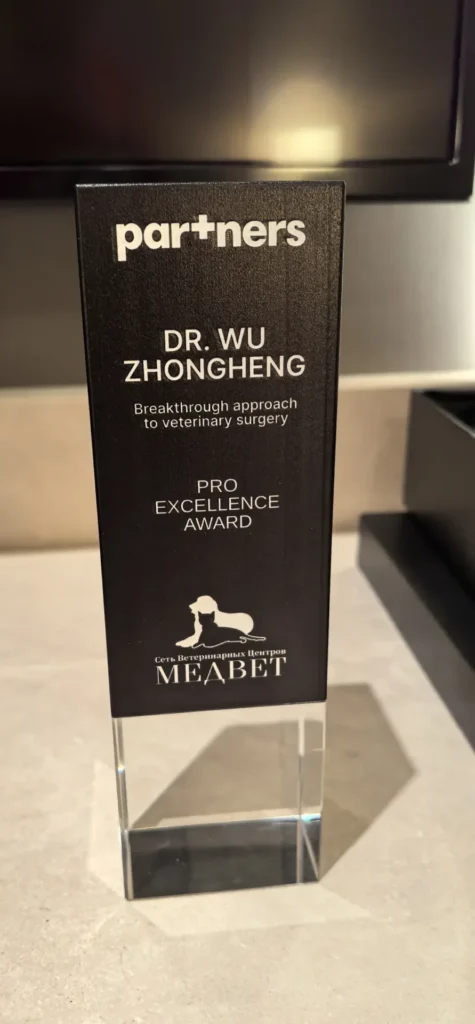
The committee presented me with the congress's Professional Excellence Award, specifically honoring the pioneering breakthroughs our team has achieved in advanced veterinary surgical techniques.
Standing on that stage in Moscow, holding the award certificate, was a deeply humbling moment. I couldn't help but smile and joke to my friends: "To be honest, this is an honor I haven't even received back home in China!"
Jokes aside, holding that certificate felt like quiet, hard-won vindication. It validated that the thousands of grueling hours spent in the operating rooms of Guangzhou Boss Animal Hospital, the iterative implant testing alongside our colleagues at South China Agricultural University, and our refusal to settle for copycat engineering were performing at the highest international benchmark.
4. A Guangzhou Native's First Snow
Yet, when I look back on that journey across the Eurasian continent, the memory that remains brightest in my mind didn't take place under the spotlights of the lecture hall.
It happened outside, on the quiet streets of Moscow.
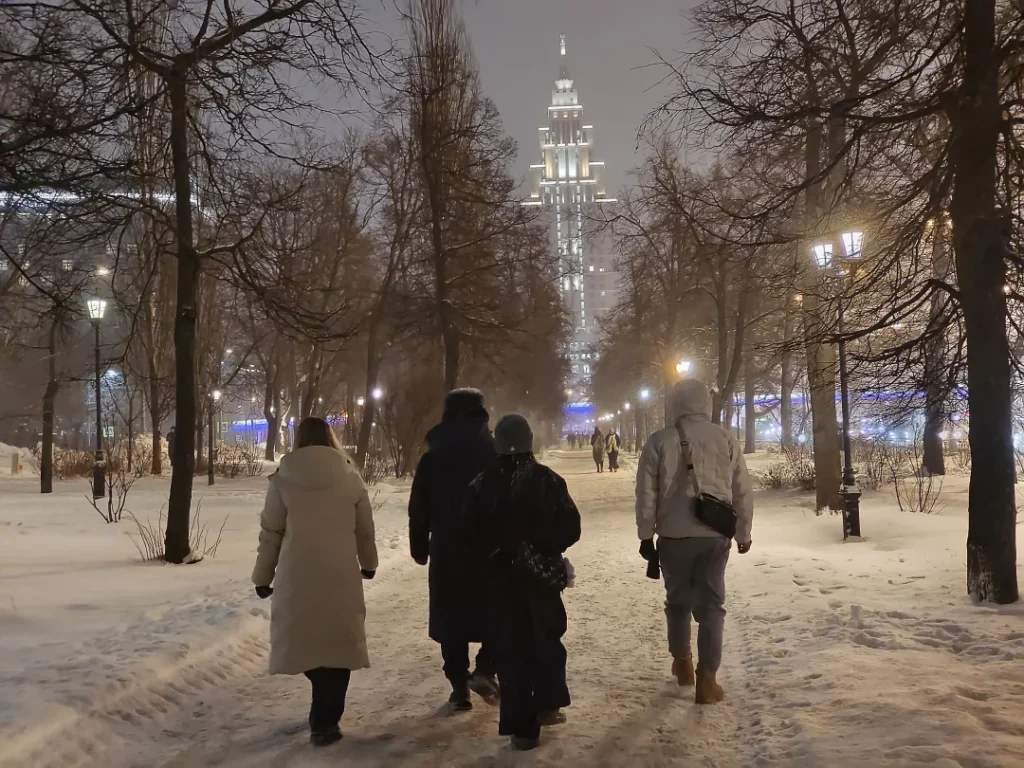
Having lived my entire life in Guangzhou, deep in the subtropical south of China, winter to me had always meant cool rain, damp winds, and green ficus trees. I had never experienced a true, sub-zero northern winter. In all my decades on this earth, I had never once seen snow falling from the sky.
Stepping out of the heated convention hall into the crisp Moscow night air, I looked up. Heavy, silent flakes of white were drifting lazily beneath the amber streetlamps, coating the cobblestones, the vehicles, and my coat in a soft, pristine blanket.
For a few minutes, the orthopedic surgeon, the clinical director, and the published researcher completely vanished. I stood on the sidewalk catching snowflakes in my bare hands, feeling a wave of unexplainable, almost childlike excitement washing over me. Watching that quiet, snow-swept city wrapped in white was a moment of pure, grounding peace that I will carry with me for the rest of my days.
5. Carrying the Voice of Chinese Surgery Forward
This expedition to Moscow marked an important psychological threshold.
For decades, veterinary medicine in China was cast purely in the role of a passive student—spending vast sums to bring foreign instructors over, translate Western textbooks, and purchase imported hardware. But that era of unilateral learning is drawing to a close.
From Moscow to Bangkok and across the Asia-Pacific, Chinese veterinary surgeons are now stepping onto international podiums not to imitate, but to contribute original surgical solutions, robust clinical registries, and innovative biomechanical systems designed and proven on our own front lines.
I am proud to have carried the banner of South China Agricultural University and Guangzhou Boss Animal Hospital to the snows of Moscow. And wherever our orthopedic colleagues gather across the globe, I will continue to ensure that the dedicated, hardworking voice of Chinese surgery is heard loud and clear.