1. Fading Silk Banners and an Inverted World
Without quite realizing it, over twenty-three years have slipped past the surgical table since I first scrubbed in as a young assistant back in 2002.
If you walk into Guangzhou Boss Animal Hospital today, you won't find walls lined with glossy red appreciation banners. The silk banners pet owners gifted me years ago now sit quietly in a storage corner, their gilded characters slowly fading to yellow. Outside our clinic windows, the veterinary landscape has turned completely upside down.
As a surgeon who has earned a quiet reputation across the country, I am living through an odd, disorienting cultural moment. On my phone screen, I watch peers clowning in front of cameras, chasing viral soundbites, and manufacturing exaggerated drama. Meanwhile, genuine, painstakingly documented clinical cases—hours of microscopic reaming, complex osteotomies, and rigorous follow-up data—sink into the algorithmic abyss like stones dropped into a bottomless well, barely stirring a ripple.
In the dead of night, after a grueling day of joint reconstructions, I frequently find myself staring into the dark and asking: Has holding the line on quiet, uncompromised professionalism truly become a crime in this new era?
2. The Irony of "Going Viral" in an Upside-Down Age
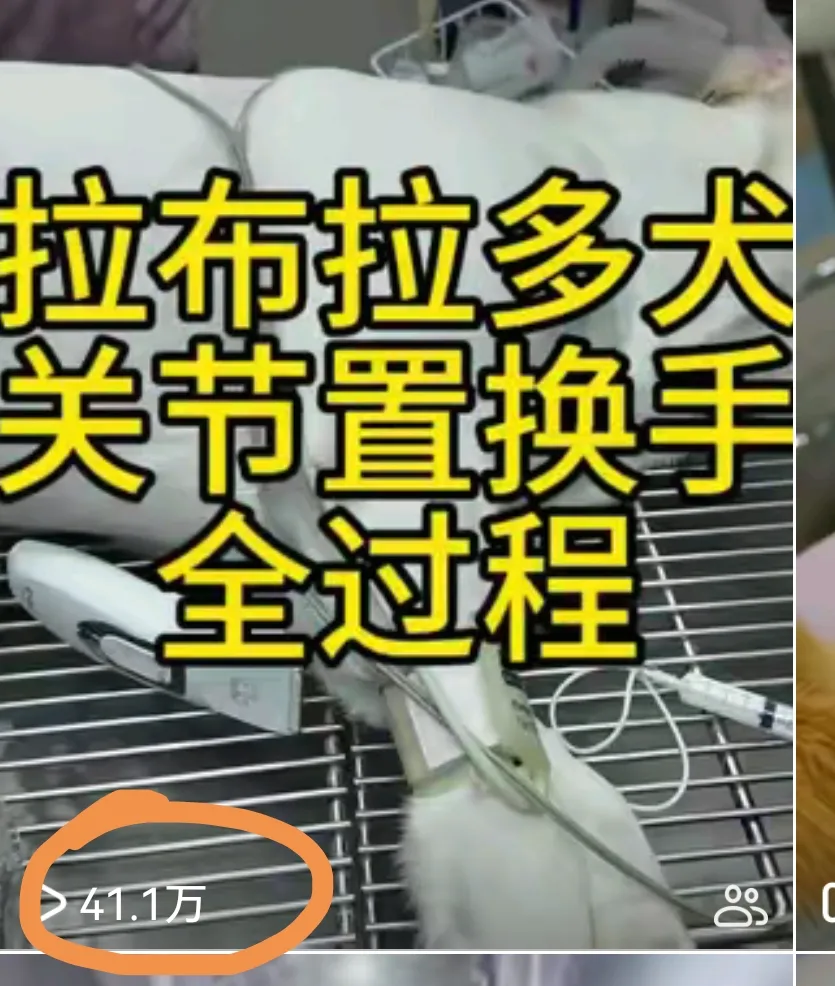
Back in 2024, I took the rare step of editing an exhaustive, step-by-step surgical video of a canine total hip replacement (THR). My goal was simple and earnest: to demystify the procedure for colleagues, walking through every anatomical landmark, every broaching angle, and every nuance of biological press-fit fixation. I naively believed that an authentic, rigorous surgical record would naturally cut through the noise.
What followed was a masterclass in modern irony.
The video did end up going viral—not because viewers were captivated by the micron-level seating of the porous cup, but because an avalanche of human medical doctors swarmed the comment section. Stung by national centralized procurement policies that had drastically slashed profit margins on human hardware, they flooded the video with cynical laments: "Dogs are treated better than humans!" "Does this come with national health insurance?" "What’s the DRG quota on a canine hip?"
Because human healthcare policy had shifted, my veterinary orthopedic surgery was suddenly drafted into becoming a lightning rod for societal frustration.

Meanwhile, a slapstick video published that very same week—a mindless compilation of "veterinary bloopers" and exaggerated office mishaps—harvested over a million likes overnight. In Cantonese, we have a phrase for this kind of absurdity: it is a complete inversion of heaven and earth.
My social channels are filled with hundreds of real cases: high-difficulty revision arthroplasties, 3D CT reconstructions, spinal laminectomies, and multi-year radiographic reviews. Each post represents the hard-won crystallization of over two decades of blood, sweat, and focused clinical craft. Yet in an information-saturated landscape, they sit like artifacts in an empty museum: undeniably priceless, yet passed over by crowds rushing toward cheap laughs.

3. A Mentor’s Creed: A Surgeon, Never an Actor
There were moments when well-meaning friends from the digital content world pulled me aside: "Dr. Wu, your videos are far too academic. Regular pet owners don’t understand this stuff and they don’t care. Why not add some funny background music? Act a little crazy? Play the clown for the algorithm?"
I smiled and shook my head. But inside, a wave of sadness washed over me. When did clinical competence become a handicap?
Every time the temptation to chase cheap traffic enters my mind, a blunt, stubborn voice rings out in my head:
"You are a doctor, not an actor."
That stubbornness wasn't invented by me. I inherited it directly from my graduate school mentor—a government-sponsored, Japanese-educated veterinary professor whose professional obstinacy ran far deeper than mine. Decades ago, he passed down a principle that has anchored my entire adult life:
"As a veterinary clinician, if you can truly master one single craft in your lifetime, that is already exceptionally hard. Do that, and the rest will take care of itself."
Those words are my final line of defense.
No sensationalism. No playing the victim. No acting the clown. Just uncompromising professional reality. That is my absolute bottom line.
4. The 958th Surgery at Midnight
I do not look down on digital platforms; I simply refuse to let entertainment cheapen the sacred gravity of medical practice. My choice is to document the unembellished reality of the operating theater: the tension of the soft tissues, the honest biology of bone ingrowth, the cold evidence of orthogonal radiographs, and the transparent confrontation of surgical risk.
This road is agonizingly slow, demanding, and often solitary. But every single footstep is planted on solid bedrock.
Whenever an exhausted owner walks into our clinic carrying a dog from thousands of miles away and says, "Dr. Wu, I didn't come here because of an advertisement; I came because I watched your surgical case breakdown and I trusted your hands," that single sentence vindicates every quiet, lonely midnight I have ever spent at this desk.
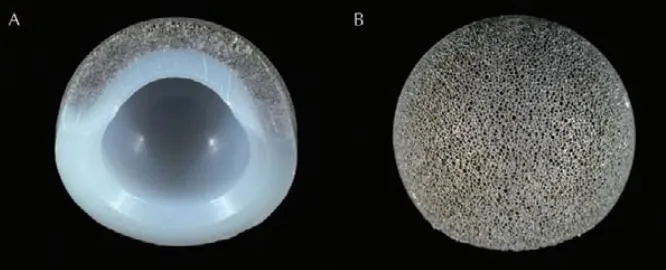
I remember late one evening in the autumn of 2025, sitting in the quiet hospital office editing the case file of the 958th animal total hip replacement of my career. On my monitor, the surgical field was clean, the reaming depth was exact, and the dual-mobility cup was seated with textbook perfection. It captured the truest, most authentic version of who I am.
That video never broke any view records. The algorithms didn't care. But I wouldn't trade that quiet integrity for ten million empty likes.
Trends will flare up and burn out. Traffic algorithms will change and become obsolete. But the value of medical craftsmanship, accountability, and reverence for living creatures is permanent.
In an era of relentless noise, someone has to remain behind to guard what this profession was always meant to be.
I am more than happy to be that stubborn guardian.