1. Case Background and Surgical History
1.1 Previous Multiple Procedural Failures
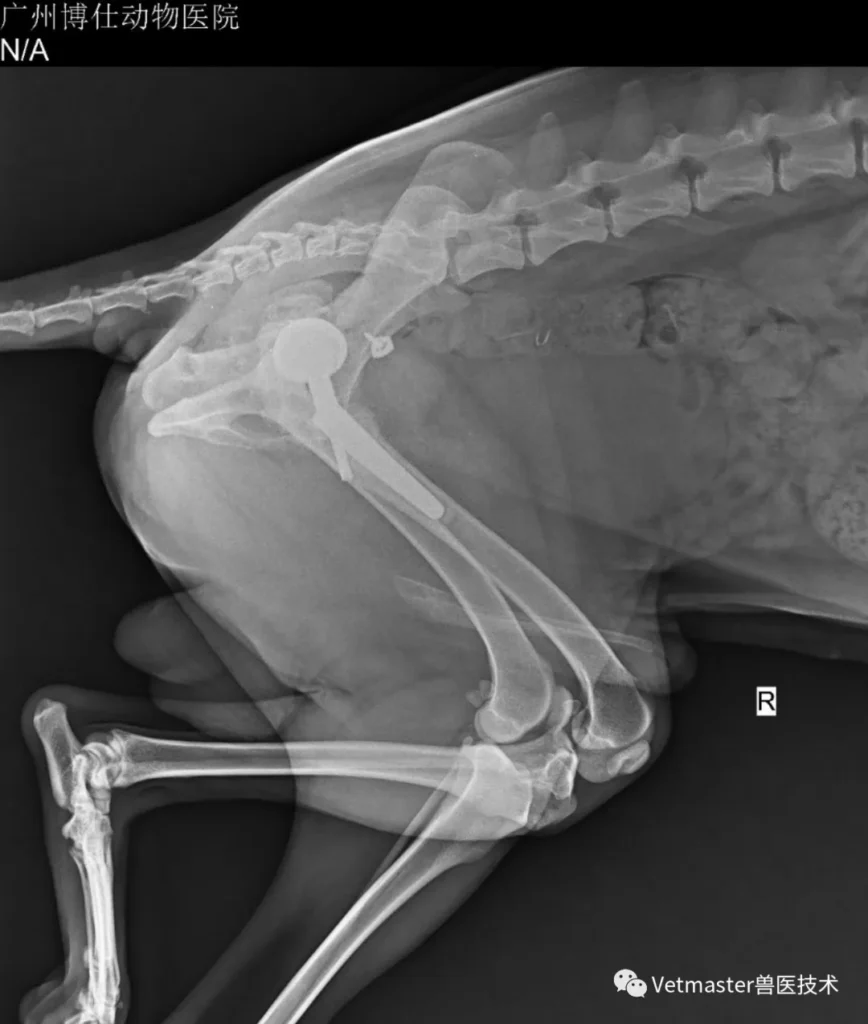
The patient was a 22.5kg male Border Collie. The dog initially underwent a right-side total hip replacement using a biological stem and a cemented cup at an outside clinic, but experienced dorsal luxation four days post-operation. Over the following two months, three subsequent revision surgeries were performed, attempting to adjust the acetabular cup abduction angle (from 40° down to 25°) and modify the stem neck length. However, all attempts resulted in recurrent dorsal luxations within 2 to 5 days.
2. Diagnostic Evaluation and Imaging Analysis
2.1 Biomechanical Abnormality Characteristics
Upon referral to Guangzhou Boshi Animal Hospital, the patient exhibited significant soft tissue compromise. Imaging evaluation revealed that despite the previous revision lowering the cup abduction angle to approximately 30°—which theoretically should prevent dorsal luxation—the implant continued to displace dorsally. 3D CT reconstructions further confirmed the instability of both the implants and the joint capsule structures.
3. Surgical Revision Strategy
3.1 Application of Dual-Mobility System and Soft Tissue Augmentation
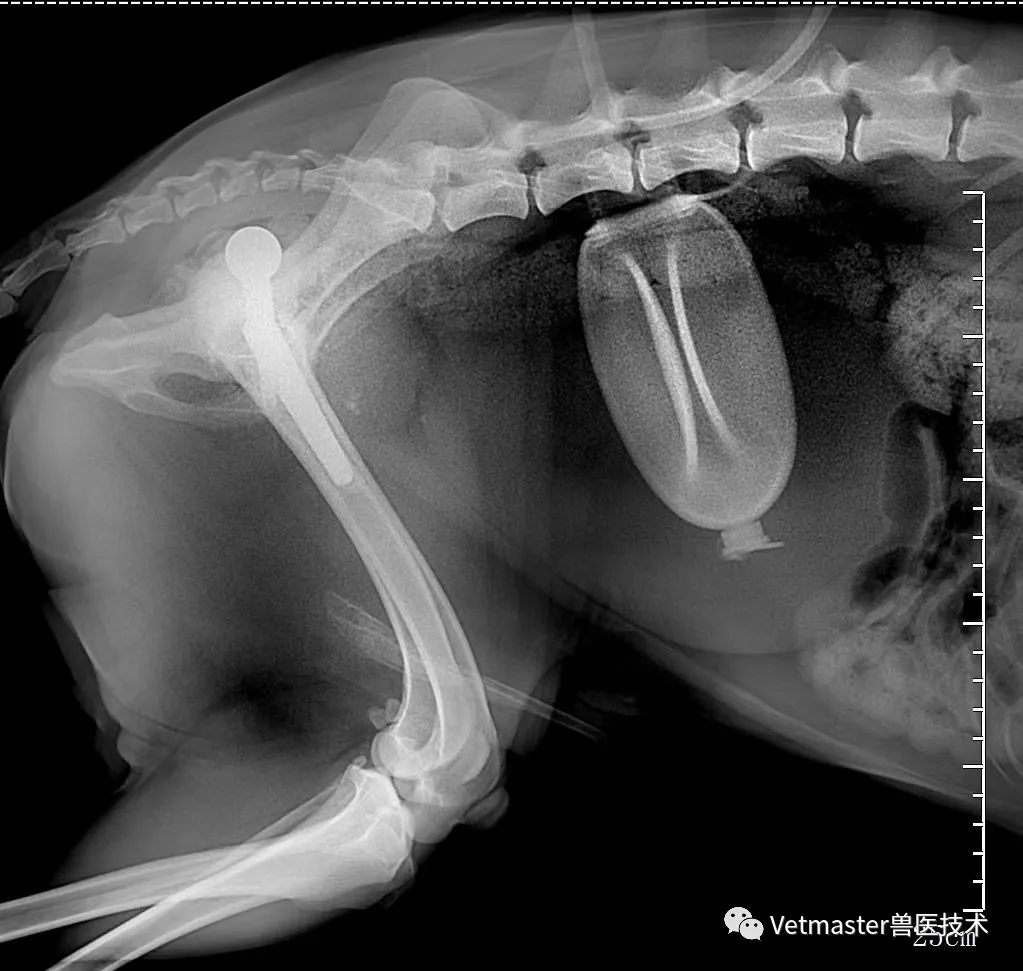
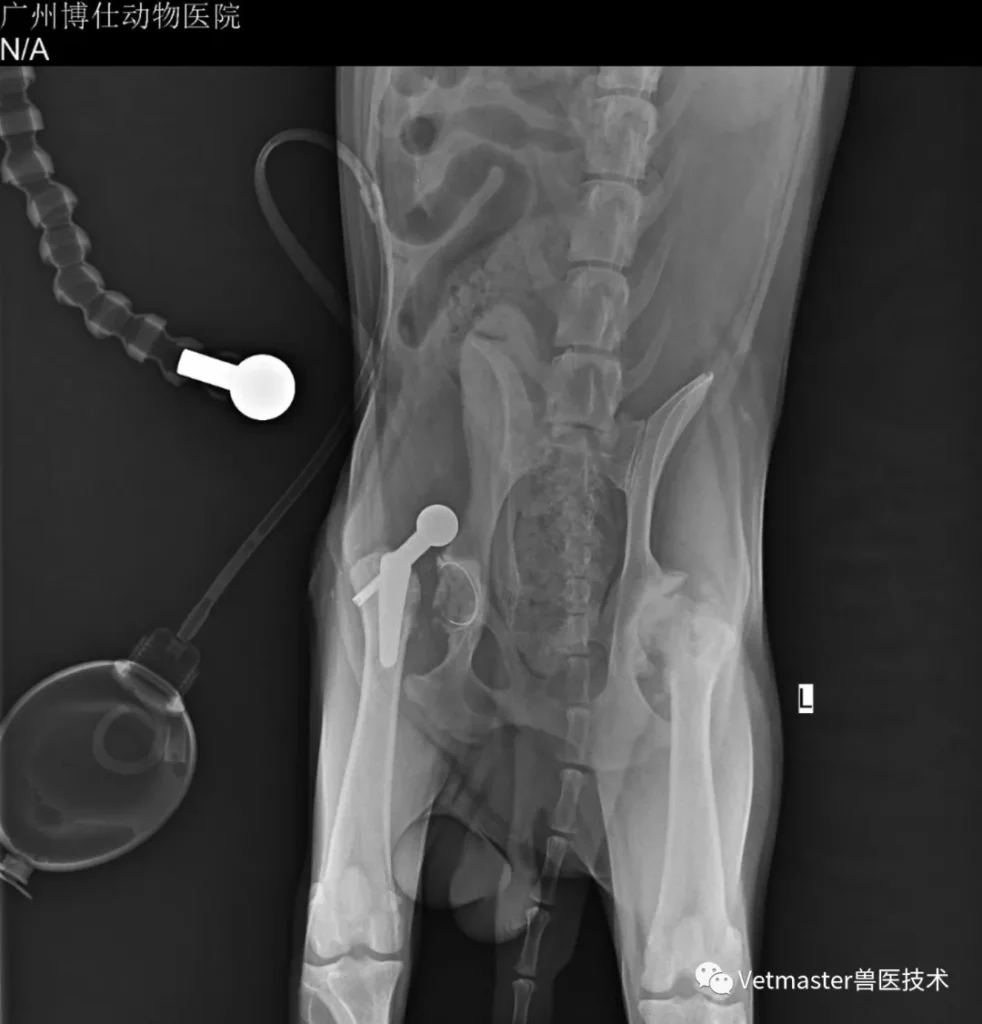
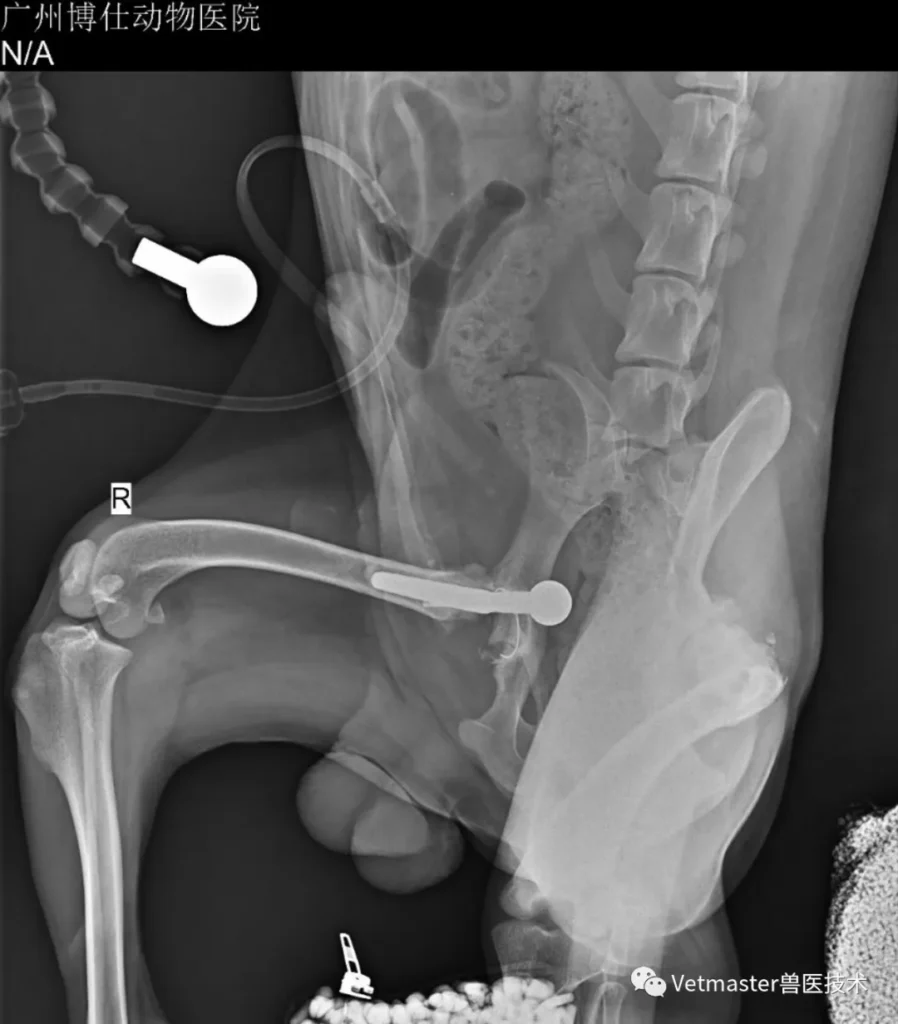
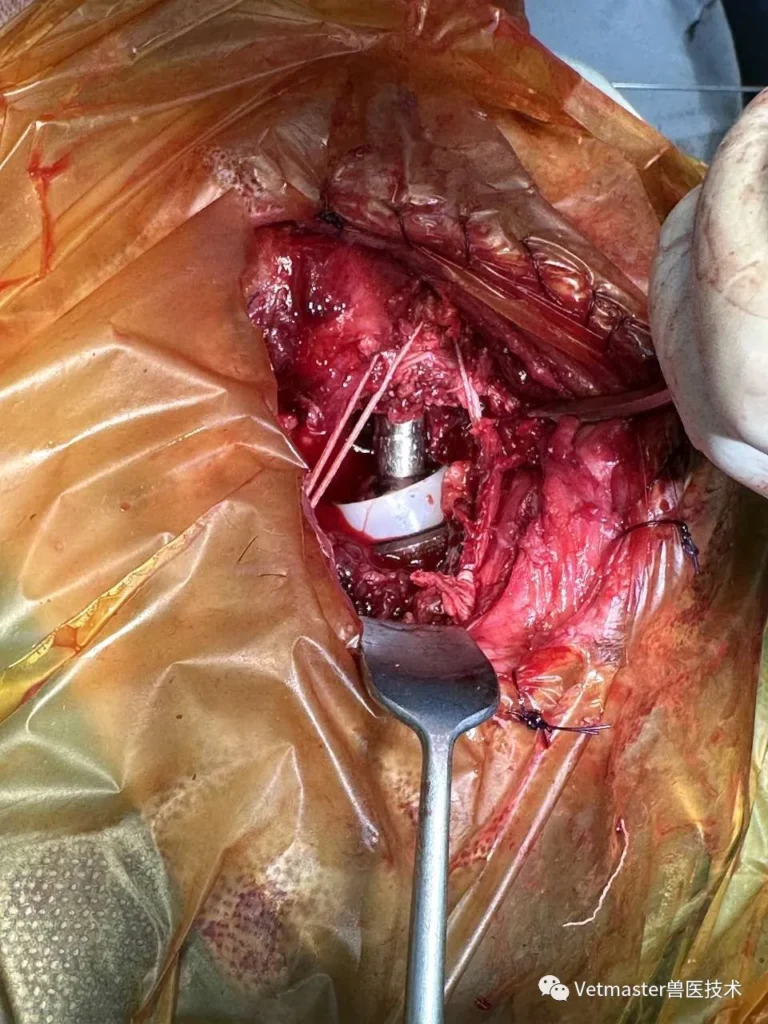
Given that the local musculature had lost its primary retentive and stabilization capacity, simply adjusting the prosthesis angle was insufficient. The surgical team elected to perform a fifth procedure using the Vetmaster biological dual-mobility hip system. Intraoperatively, the existing implants were found to be easily luxated after reduction. To restore stability, artificial ligaments were utilized to reinforce the damaged soft tissues. The dual-mobility head design provided a larger safe range of motion, significantly reducing the risk of further luxation.
4. Surgical Outcome and Rehabilitation
4.1 Post-operative Assessment and Functional Recovery
Post-operative radiographs confirmed ideal implant positioning and secure fixation. Following several days of clinical observation, the patient showed no signs of re-luxation. Video documentation demonstrated that the Border Collie could perform well-supported weight-bearing ambulation with a near-normal gait. This successful revision demonstrates the definitive therapeutic value of the dual-mobility system in managing complex cases with extreme soft tissue instability.