
1. Case Background and Physical Examination
1.1 Patient Profile
The patient was a 4-year-old male Pomeranian. The owner reported that the dog had congenital patellar luxation and had exhibited an abnormal gait throughout its life.
1.2 Clinical Signs and Diagnosis
The patient was moderately overweight. Physical palpation confirmed Grade 3 bilateral medial patellar luxation. During the examination, joint motion was found to be obstructed, accompanied by a noticeable grating sensation.
2. Radiographic Evaluation and Treatment Planning
2.1 Radiographic Feature Analysis
X-ray findings revealed subchondral sclerosis and osteophyte formation in the trochlear grooves of both hind limbs, indicating the development of degenerative osteoarthritis.
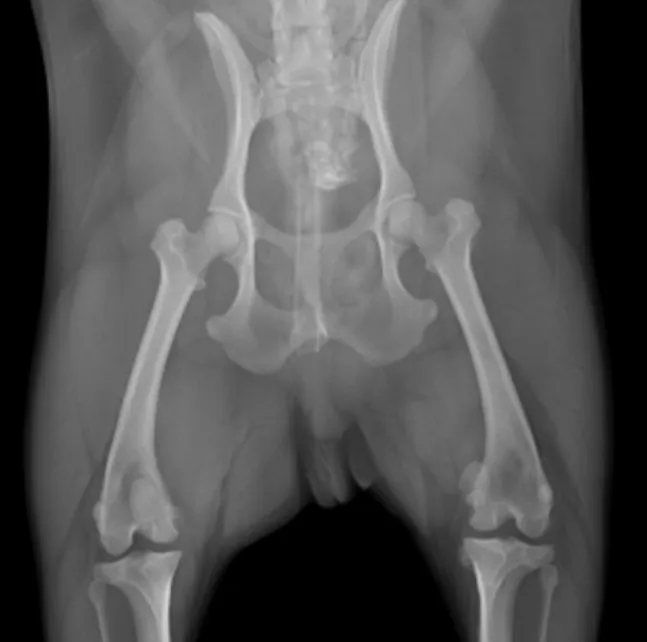
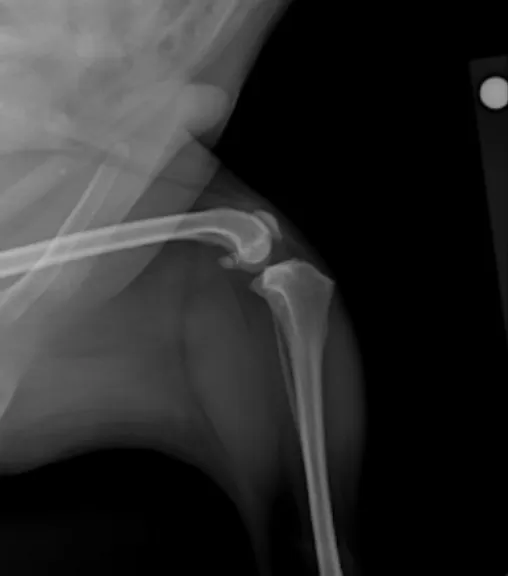
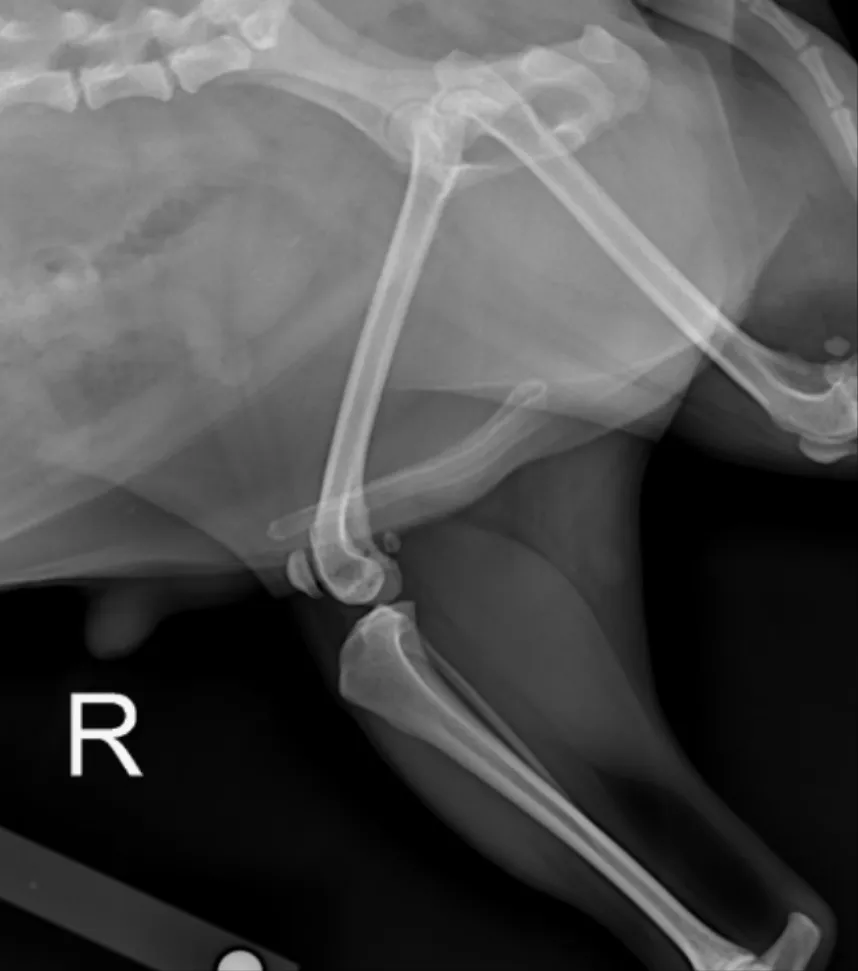
2.2 Rational for Selecting PGR
Considering that degenerative osteoarthritis is an irreversible process, traditional trochlear deepening procedures would be insufficient to address the pain caused by cartilage erosion. The medical team recommended Patellar Groove Replacement (PGR), prioritizing the more severely affected left limb.
3. Surgical Procedure
3.1 Intraoperative Pathological Findings
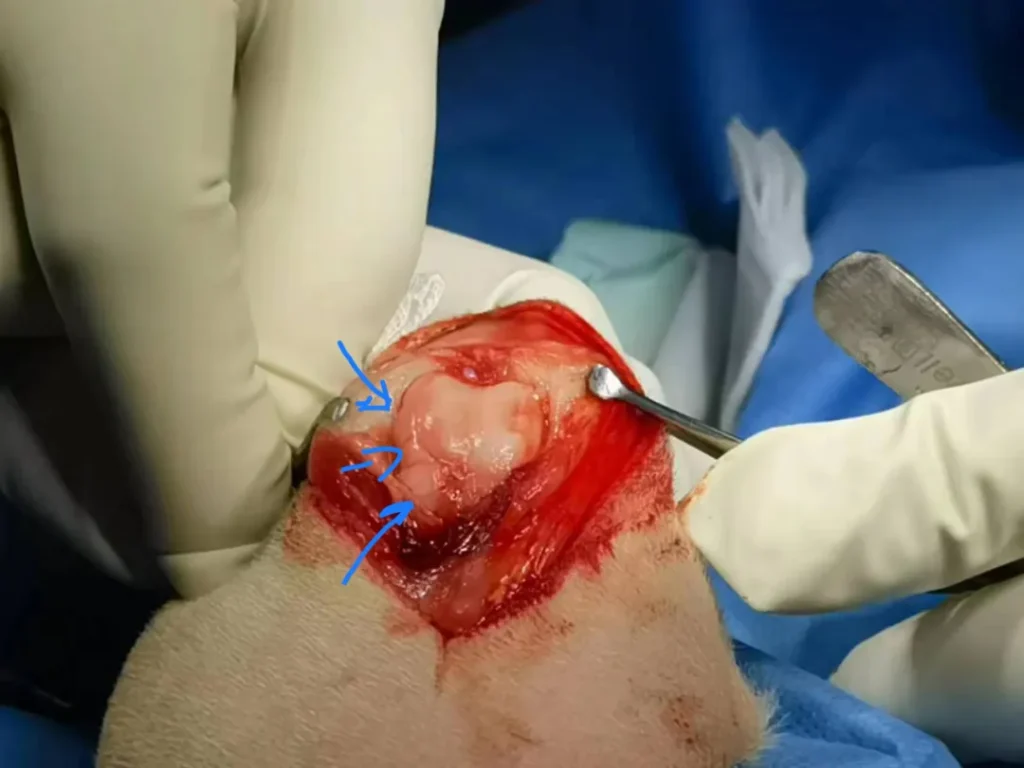
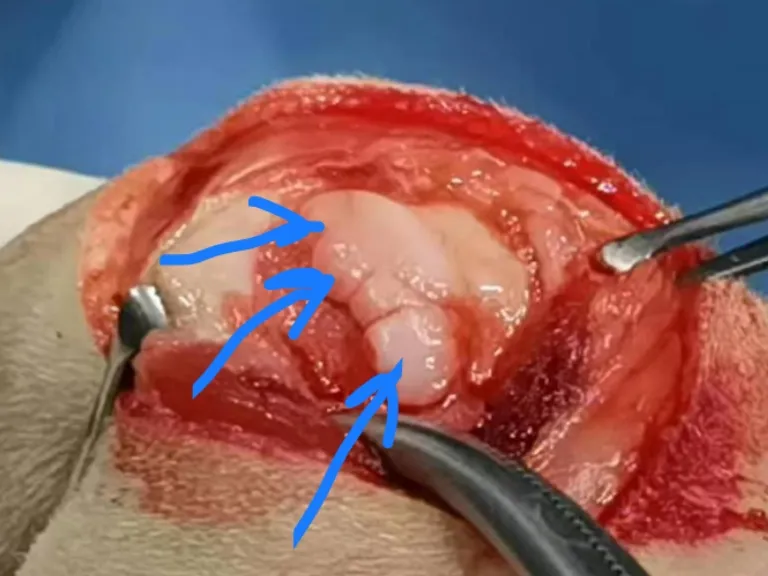
Upon opening the joint capsule, massive articular hyperplasia and severe cartilage wear on the trochlear ridges were directly visible. These findings corroborated the preoperative radiographic diagnosis. Once articular cartilage is eroded, joint lubrication decreases, leading to increased friction and chronic pain.
3.2 Implant Application and Technical Details
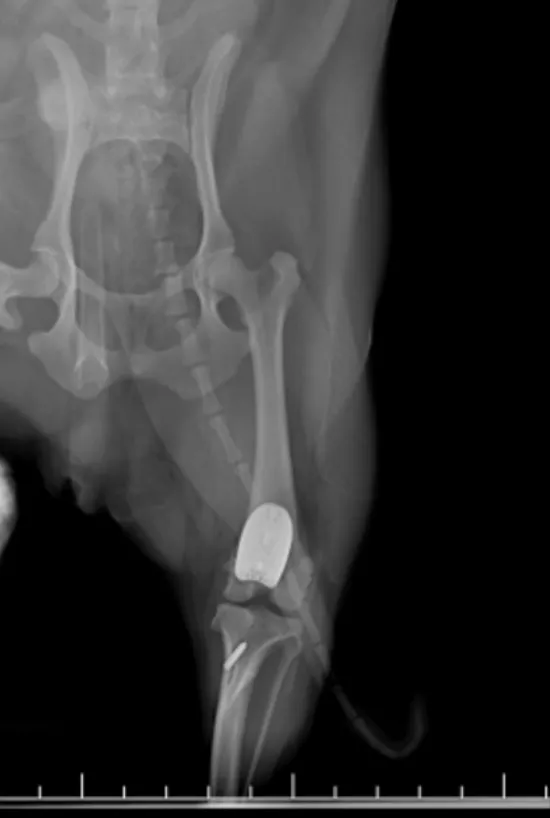
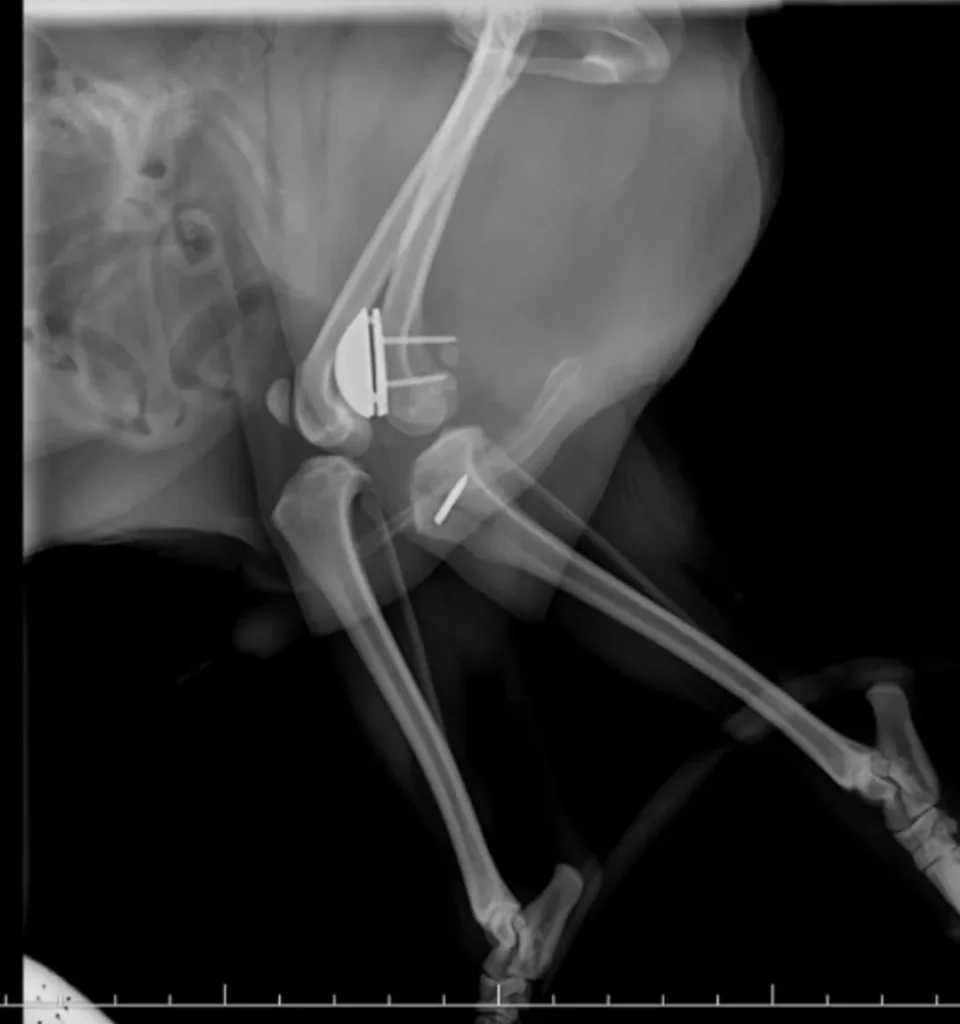
A large 3# PGR prosthesis was utilized to replace the trochlear groove, leveraging its ultra-smooth surface to reduce locomotive friction. Concurrently, a TTTT tibial tuberosity transposition was performed and stabilized with Kirschner wires. Post-operative testing confirmed that the patella tracked smoothly over the metal prosthesis.
4. Clinical Reflections and Conclusion
4.1 Reflections on the "Surgery Machine" State
Due to a gap in my consultation schedule in Shanghai, the accumulated surgical volume forced me back into a high-intensity "surgery machine" mode. In specialized practice, frequent repetition of similar procedures enhances precision and speed, thereby minimizing soft tissue trauma and lowering infection risks.
4.2 Principles and Indications of PGR Surgery
The core value of PGR surgery lies in using a smooth metal interface to resolve trochlear wear caused by chronic luxation. it is particularly indicated for cases involving multiple revision failures or severe concurrent osteoarthritis.
4.3 The Decisive Value of Early Intervention
One of my core surgical principles is to solve problems with the simplest effective method and avoid complex implants whenever possible. Although PGR can improve a severely worn joint, native, viable cartilage is always superior to a metal substitute. Therefore, I strongly recommend immediate surgery for Grade 2 or higher patellar luxation. Early treatment yields better outcomes and prevents the eventual necessity of expensive salvage procedures like PGR.