
1. Case Background and Diagnostic Evaluation
1.1 Patient Profile
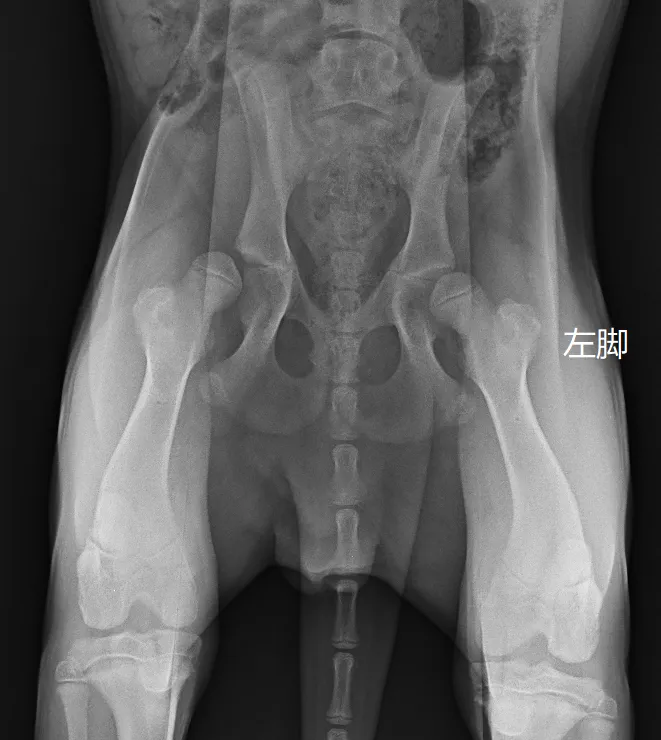
The patient was a male Golden Retriever, aged 6 months and 24 days, weighing 23 kg. The owner reported an abnormal hind limb gait.
1.2 Radiographic and Physical Metric Measurements
Detailed examination under sedation confirmed hip laxity. The right hip had a Distraction Index (DI) of 1.03, a luxation angle of 21°, and a reduction angle of 38°. The left hip had a DI of 0.71, a luxation angle of 18°, and a reduction angle of 37°. Based on these metrics, the right side was deemed unsuitable for DPO due to extreme laxity (DI > 0.85), while the left side met the surgical criteria.
2. Surgical Intervention Strategy
2.1 Implementation of DPO Surgery
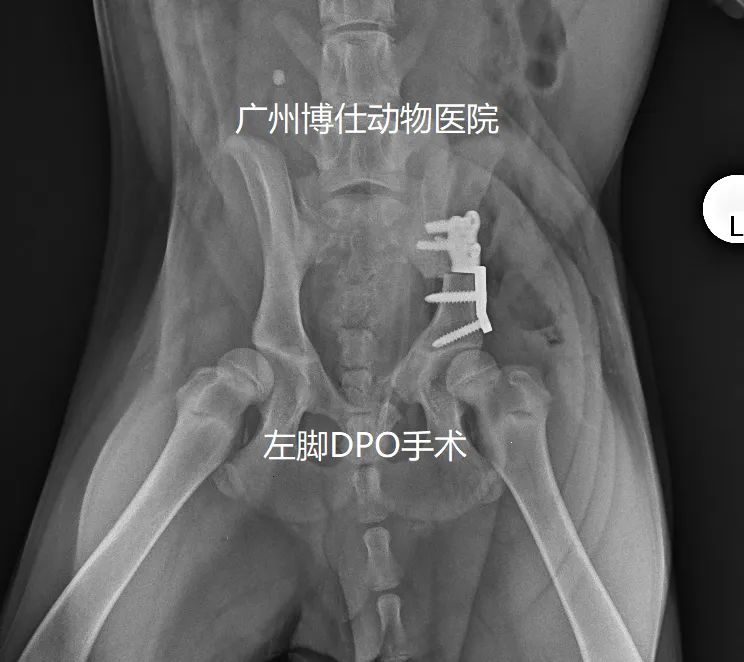
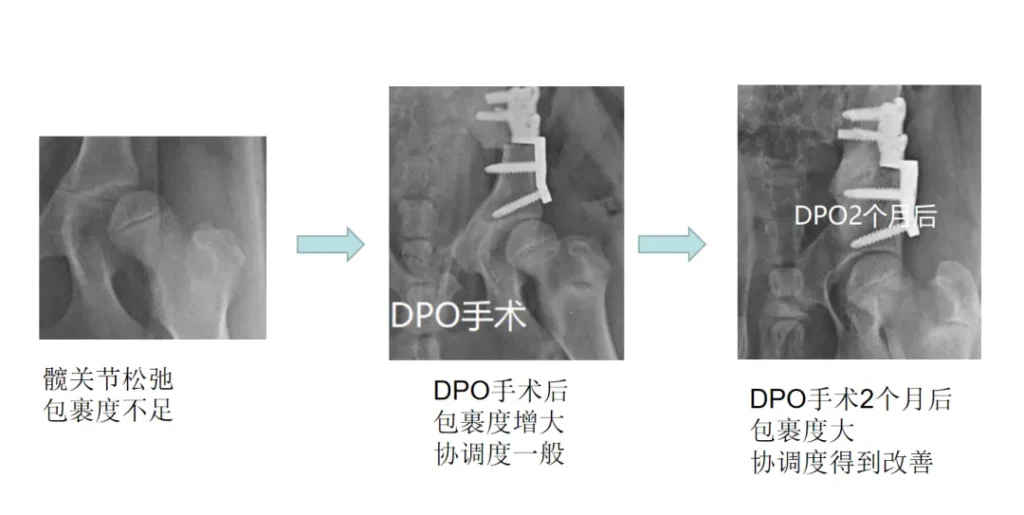
The surgical team performed a Double Pelvic Osteotomy (DPO) on the left hip. The objective of this procedure is to rotate the acetabulum to increase femoral head coverage before skeletal maturity (typically 5-8 months of age), thereby correcting joint incongruity at its source.
3. Postoperative Follow-up and Efficacy Assessment
3.1 Immediate Radiographic Feedback
Immediate postoperative radiographs confirmed a substantial increase in acetabular coverage on the left side, effectively arresting the progression toward luxation.
3.2 Mid-term Recovery Performance
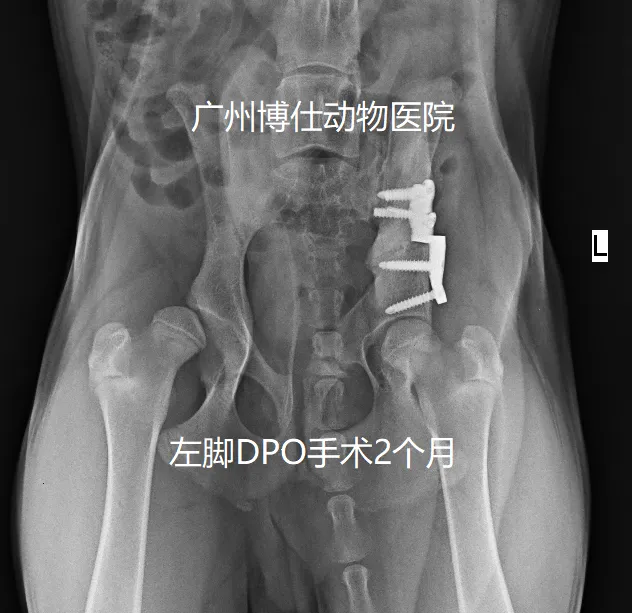
Re-evaluation at two months showed further improvement in joint congruity as the femoral head continued to grow within the repositioned acetabulum.
3.3 Functional Muscle Reconstruction
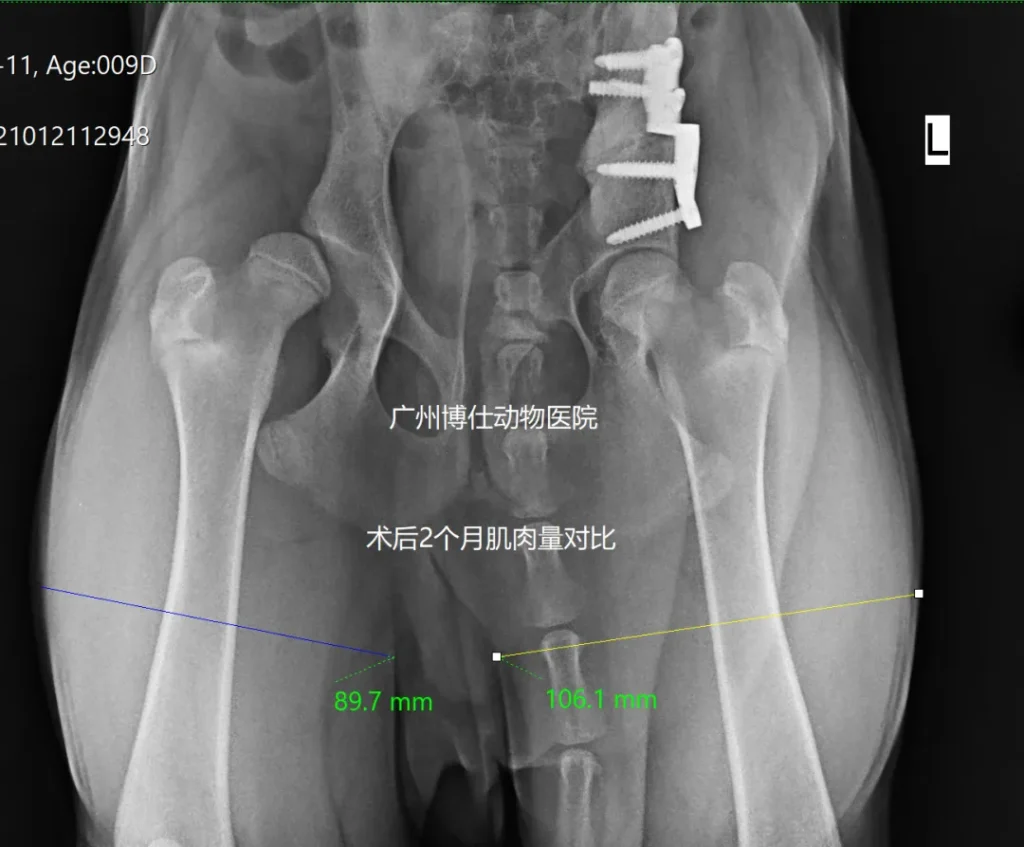
Measurements revealed that the muscle diameter of the operated left limb was approximately 20% larger than that of the non-operated right limb. This data provides objective evidence of the surgery’s positive impact on weight-bearing function and the reversal of muscle atrophy.
4. Clinical Reflections and Conclusion
4.1 The Decisive Importance of Early Diagnosis
The earlier hip dysplasia is screened, the better the opportunity for correction; the ideal window is between 4.5 and 9 months of age. Early intervention not only slows disease progression but, most importantly, allows the animal to retain its "normal, healthy" native joint, avoiding the need for salvage procedures like total hip replacement later in life.
4.2 Technical Heritage and Clinical Challenges
DPO surgery involves complex preoperative assessments and precise intraoperative maneuvers. I introduced this technique to China after studying it under the inventor, Dr. Aldo Vezzoni, in Italy. Despite the challenges in diagnosis and execution, its long-term value for animal welfare is irreplaceable.